

The short answer
For most Delaware homes, a well made Grade 2 deadbolt with a reinforced strike and long screws into the framing is the right choice. Grade 1 is worth it on doors that take heavy use or face higher risk. Grade 3 is acceptable only on low risk doors, and only with the strike upgraded.
Grades come from industry standards developed for builders hardware, and they are based on standardized tests of how the lock stands up to repeated use and to specific kinds of force. Grade 1 is the most demanding level, Grade 3 the entry level. The grade is a genuinely useful way to compare products, because it means the lock has been tested against a published standard rather than simply described as strong on the box.
What the grade does not measure is your door and frame. Most forced entries on homes do not break the deadbolt at all. They break the wood around it. That is why the strike plate and the screws holding it often matter more than moving up a grade.
The grades
What each grade means in practice.
Tested durability and strength, not a marketing label.
Grade 1. The highest grade in the common system, originally aimed at commercial and institutional doors that see heavy traffic. A Grade 1 deadbolt has been tested to the most demanding level for repeated operation and for resistance to the standard force tests. On a home, it is a sound choice for a main entry that is used constantly, a door out of sight of the street, or a household that wants the most robust hardware available.
Grade 2. The middle grade, and the sweet spot for most residential doors. Grade 2 deadbolts are tested to a level well suited to normal household use and offer meaningful resistance to force. A good Grade 2 deadbolt, properly installed with a reinforced strike, protects most homes very well.
Grade 3. The entry level, and the grade most often found on builder hardware in new subdivisions. It meets a published standard, which is better than no standard, but it is the least robust of the three. It is acceptable on low risk doors, such as a door onto a fenced yard that is also secured by other means, but it is worth upgrading on primary exterior doors.
Some residential hardware also carries a separate rating system that scores security, durability and finish separately, often shown with letters on the package. Where you see that, it adds useful detail, particularly on how well the finish will hold up outdoors.
Compare
Grades side by side.
| Grade | Typical use | Where it fits in a home |
|---|---|---|
| Grade 1 | Commercial, institutional, high traffic doors | Main entries used constantly, doors hidden from view, homeowners wanting maximum durability |
| Grade 2 | Light commercial and quality residential | Most front, back and side doors in most homes |
| Grade 3 | Basic residential | Low risk secondary doors, only with an upgraded strike |
| No stated grade | Unknown | Avoid on any exterior door unless you can confirm the testing |
Beware the grade that is implied, not stated
Some packaging uses phrases like commercial style, heavy duty or maximum security without naming a grade. If a product has been tested to a grade, the maker nearly always says so plainly. If the grade is missing, assume it was not tested or did not reach one.
The part that matters more
The strike, the screws and the frame.
When a door is kicked, the force lands on the bolt, and the bolt pushes on the strike plate in the door frame. If the strike is a thin plate held by two short screws into the soft jamb, the jamb splits and the door swings open with the deadbolt still extended. The lock did its job. The frame did not.
This is the most common way residential doors fail, and no deadbolt grade prevents it by itself. What prevents it is a heavy strike plate, ideally a reinforced box strike, fastened with long screws that pass through the jamb and the gap behind it into the solid framing of the wall. That one upgrade is inexpensive and does more for kick resistance than any other single change on most doors.
Many better deadbolts include a reinforced strike and longer screws in the box. Many do not, and many installers reuse the old strike and screws. When you buy a deadbolt, check what strike comes with it, and make sure long screws go into the framing whoever installs it.
Hinges matter too. Once the strike side is strong, a door with short hinge screws can fail at the hinge side instead. Replacing at least one screw in each hinge with a longer one that reaches the framing is a quick, cheap improvement. Our door frame guide covers the whole door.
Beyond the grade
Other things to check on a deadbolt.
- Bolt throw. How far the bolt extends into the frame. Look for a full length throw, commonly around an inch on good residential deadbolts, so it reaches well past the jamb into the strike.
- Bolt construction. A solid steel bolt, or one with a hardened insert that resists sawing, is better than a hollow or soft one.
- Cylinder quality. The cylinder decides how well the lock resists picking and other manipulation. Higher grade deadbolts often have better cylinders, but not always. Some deadbolts offer upgraded or restricted cylinders.
- Rekeyability. A deadbolt that can be rekeyed easily, and matched to your other locks, is more practical over years of ownership.
- Exterior housing. A solid, tapered or loosely spinning exterior collar is harder to grip with tools than a plain one.
- Finish rating. An exposed door in coastal or humid air needs a finish that resists corrosion, or the lock will look tired within a few seasons.
- Fit. Door thickness, backset and bore must suit the deadbolt, or the installation will be compromised.
Single or double cylinder
A key on both sides?
A single cylinder deadbolt has a key outside and a thumb turn inside. A double cylinder deadbolt needs a key on both sides. Double cylinders are sometimes chosen for doors with glass beside the lock, so a burglar who breaks the glass cannot reach in and turn the thumb turn.
The trade off is serious. In a fire or other emergency, a door that needs a key to open from inside can trap people, especially children, guests, and anyone who panics or cannot find the key. Many safety advisers recommend against double cylinder deadbolts on doors used as escape routes, and building and fire codes in some places restrict them. Check the rules that apply to your home before choosing one.
If glass near the lock is the concern, there are alternatives: laminated or security film on the glass, a door without glass near the lock, or a single cylinder deadbolt with a thumb turn that can be locked or removed only when the house is empty. Talk it through before choosing a double cylinder.
Choosing by door
Which grade for which door.
The front door. Used constantly, often visible from the street. A good Grade 2 is usually sufficient, with a reinforced strike. Grade 1 is a sensible upgrade where the door takes very heavy use or you want maximum durability.
The back door. Often hidden from neighbors and the street, which makes it a favored target. Many households put their strongest hardware here. Grade 1 or a strong Grade 2, with the best strike you can fit.
The garage entry door. The door from the garage into the house is often left with only a knob lock. Once someone is in the garage, they have privacy and time. Fit a deadbolt here, at least a solid Grade 2.
Side and basement doors. Frequently forgotten. They need the same attention as the main doors if they open to the outside.
Doors on outbuildings. A shed or detached garage usually needs a good padlock and hasp or a deadbolt suited to the door construction. The grade matters less than the fastening.
Cost
Where the money makes a difference.
| Upgrade | Relative cost | Effect on security |
|---|---|---|
| Long screws into the strike and hinges | Very low | Large improvement against kicking |
| Reinforced box strike | Low | Large improvement against kicking and prying |
| Grade 3 to Grade 2 deadbolt | Moderate | Meaningful, especially with the strike upgrade |
| Grade 2 to Grade 1 deadbolt | Moderate to higher | Better durability and force resistance, most noticeable on heavy use doors |
| High security or restricted cylinder | Higher | Better resistance to picking and key copying |
| Door edge and frame reinforcement kits | Moderate | Large improvement on doors that have been kicked before |
If you only do one thing
Take out one strike plate screw and look at its length. If it is short, replace both with long screws that reach the framing. It costs very little and it is the single most effective change on most Delaware doors.
In the aisle
Reading a deadbolt package without being sold to.
Standing in a hardware aisle, every deadbolt claims to be secure. A few habits cut through the marketing quickly.
- Find the grade first. Look for a clearly stated grade. If it is buried or missing, move on to a product that states it.
- Look at what is in the box. Check whether a reinforced strike and long screws are included, or only a thin plate and short screws. Budget for the strike upgrade if they are not.
- Check the bolt throw. A full length throw is usually listed. Short throws are a warning sign.
- Check the fit. Confirm the backset and door thickness range match your door before you open the package.
- Check the keyway. If you want the new deadbolt to match your other locks, choose a brand and keyway that can be keyed alike, or plan to have it rekeyed.
- Ignore the adjectives. Words like maximum, ultimate and heavy duty are not test results. The grade is.
Maintenance
Keeping a good deadbolt working for decades.
A quality deadbolt can last a very long time with a little care, and most early failures come from avoidable causes.
Keep the bolt throwing freely. If you have to push or pull the door to lock it, the strike has drifted or the door has sagged. Fix that promptly, because forcing the bolt wears it and the cylinder, and it tempts people to leave the door unlocked.
Lubricate sparingly with a product intended for locks, usually a dry lubricant, rather than household oil, which gathers grit. Once or twice a year is plenty for most doors, more on exposed doors after a harsh winter.
Replace worn keys before they fail. A key whose cuts have rounded off wears the pins inside the lock and eventually stops working at the worst time. A new key cut to the lock's code, rather than copied from the worn one, restores smooth operation.
Check the screws each year. Strike, hinge and lock mounting screws can loosen with daily slamming. A quick turn with a screwdriver keeps everything tight and aligned.
Installation
A good deadbolt badly fitted.
The best grade in the world is undermined by poor installation. We regularly see deadbolts where the bolt does not reach fully into the strike because the hole in the frame is too shallow, so the bolt stops short and the lock never truly locks. We see strike plates mounted out of line, so the owner has to push the door to lock it, which wears the bolt and the motor on smart locks. We see bolts that throw into nothing but a hole in the trim.
A proper installation checks that the bolt throws fully and smoothly with the door closed, that the strike pocket is deep enough, that the strike is aligned, and that long screws reach the framing. It also checks the door itself: a door that sags or rubs will fight any deadbolt.
Our deadbolt installation service covers all of this. If you are installing your own, test the throw with the door closed before tightening everything down, and do not skip the long screws.
Delaware specifics
What we find on doors here.
New builds in Middletown, Townsend, Smyrna and Clayton. Builder hardware is often Grade 3, with light strikes and short screws. Upgrading the strike and screws on the front, back and garage entry doors is the most valuable first step, and upgrading the deadbolt grade follows.
Post war homes in Brookside, Wilmington Manor and Bear. Some doors still rely on a knob lock alone. Adding a deadbolt is the priority, and a Grade 2 with a reinforced strike is usually right.
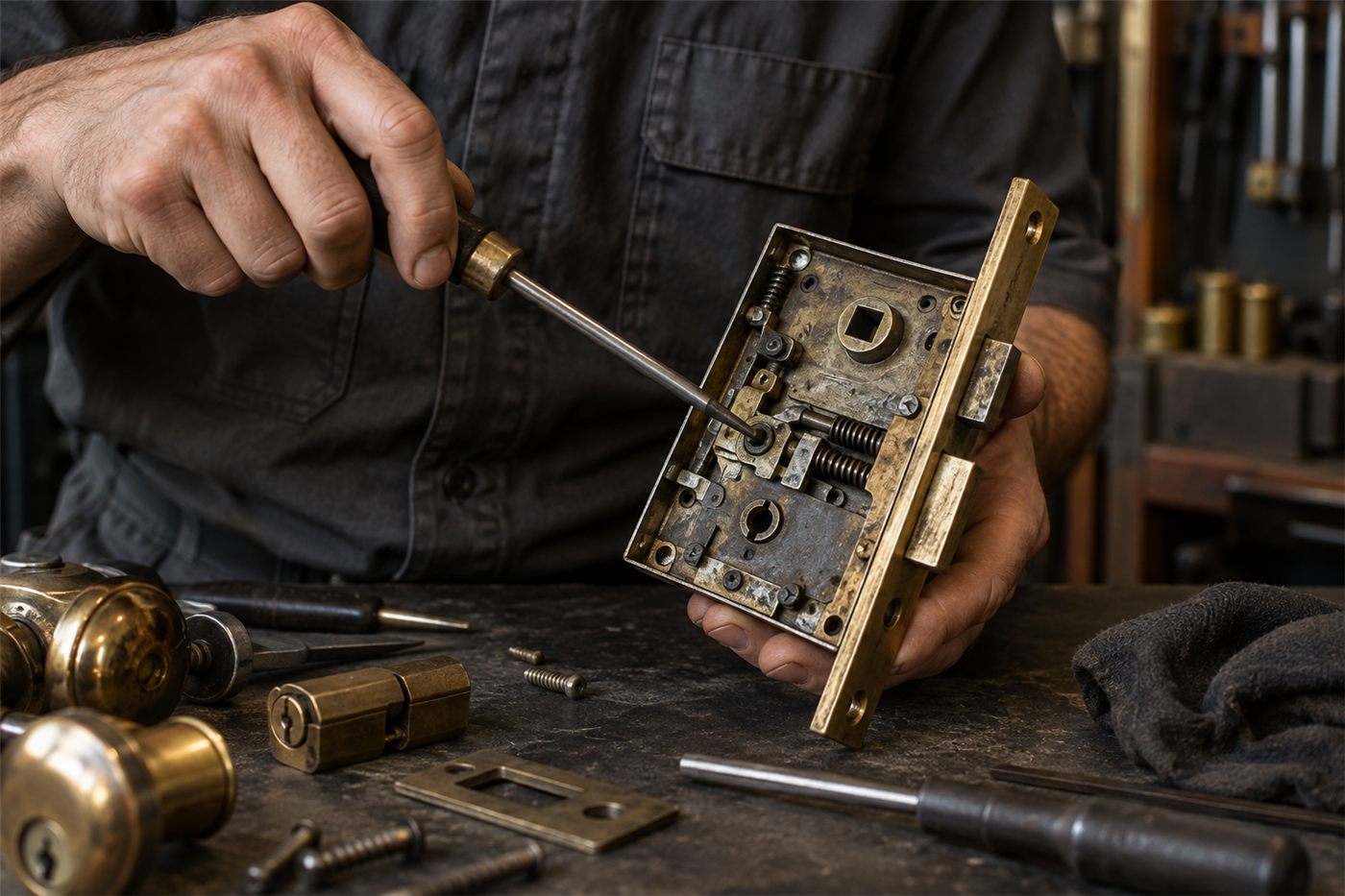
Older homes in Wilmington, Elsmere and New Castle. Mortise locks are common, and a standard bored deadbolt may not suit the door. Maintaining the mortise lock, or adding a well fitted deadbolt where the door allows, is often best.
Rural homes in Kent County. Doors out of sight of any neighbor benefit most from Grade 1 hardware and frame reinforcement, since an intruder has time and privacy.
The short version, if you read nothing else
Grade 2 suits most doors, Grade 1 suits the hardest working or most hidden ones, and Grade 3 needs an upgraded strike to be worth fitting. Whatever the grade, a reinforced strike with long screws into the framing matters more than the number on the box.
Related
The neighbouring decisions.
If you are considering electronic hardware, see the smart lock buying guide. If the door has already been forced, start with what to do after a break in.
Where we do this
Deadbolts fitted across both counties.
Questions
About deadbolt grades.
Is Grade 1 always better than Grade 2?
Grade 1 is tested to a more demanding level, so on the lock alone, yes. On a real door, a Grade 2 with a reinforced strike and long screws often outperforms a Grade 1 fitted with a flimsy strike and short screws. Do the strike first.
Is Grade 3 good enough for a front door?
It meets a basic standard, but we recommend Grade 2 or better on primary exterior doors. If you keep a Grade 3, at least upgrade the strike and screws.
Who decides the grades?
Grades come from industry standards for builders hardware, with products tested against published requirements for durability and strength. Reputable manufacturers state the grade clearly on the packaging.
Does a higher grade stop lock picking?
Not necessarily. Grades focus heavily on durability and force. Resistance to picking depends more on the cylinder. High security cylinders address picking and key copying specifically.
Should I use a double cylinder deadbolt?
Think carefully. A key needed from inside can trap people in an emergency, and some codes restrict them. Security glass or a different door design often solves the glass problem more safely.
How long should strike screws be?
Long enough to pass through the jamb and the gap behind it into the wall framing. Many good strike kits use screws of about three inches for this reason.
Can my existing deadbolt be upgraded without replacing it?
Often the biggest gain comes from the strike, screws and frame, not the deadbolt. Those can be upgraded around your existing lock. If the deadbolt itself is worn or low grade, replacement is worth considering.
Does grade matter for smart locks?
Yes. Smart deadbolts are tested and graded too. Check the grade the same way, and remember the strike and frame still matter most.