

The short answer
Rekey the day you take ownership, rekey at every turnover, keep a key log, and fit hardware that survives tenants.
Those four habits cover most of what a small landlord needs to know about locks. The first two make sure only your current tenant can get in. The third makes sure you always know who holds what. The fourth saves you from repair calls that eat into the rent.
Everything below expands on those four, in the order you will meet them: the day you buy the property, the first tenancy, the turnover, and the day to day questions that come up in between. We are locksmiths, not attorneys, so where a question touches on the law or your lease, we point you to the people who should answer it.
Day one
The day you get the keys to your rental.
You inherit every key the last owner ever handed out.
When you close on a rental property, the seller hands over a few keys. Behind those keys sits a history you cannot see: previous tenants, their friends and relatives, the seller's property manager, contractors, cleaners, the real estate agent's lockbox, and possibly a neighbor who kept one for emergencies.
If the property is vacant, rekey every exterior lock before anything else happens. If it comes with a tenant already in place, the situation is different. The tenant has a right to occupy under their lease, and changing their locks without agreement is not something to do casually. Talk to the tenant, review the lease you inherited, and if you want to rekey, arrange it together and give them new keys at the same visit. That protects both of you from keys the previous owner handed out.
Day one is also the right time to walk the property with fresh eyes. Count every exterior door, including basement, garage entry and any outbuildings. Look at the hardware on each. Note which doors have a deadbolt and which rely only on a knob lock. Check the strike plates and the frames. This inventory becomes the basis for your key log and your maintenance plan.
If you buy several properties over time, consider keying them thoughtfully from the start. A maintenance key that opens every property you own, with each tenant's key opening only their own unit, is far easier to set up now than to retrofit across a dozen doors later.
Hardware
What to fit on a rental door.
| Item | Why it matters in a rental | What to look for |
|---|---|---|
| Deadbolt on every exterior door | Knob locks alone are not enough on an exterior door, and tenants expect a deadbolt | A solid residential grade deadbolt with a full length bolt throw |
| Reinforced strike plate | Most forced entries break the frame, not the lock | A heavy strike with long screws into the framing |
| Durable knobs or levers | Rental hardware takes more use and less care | Commercial or heavy residential grade, not the lightest builder hardware |
| Rekeyable or interchangeable cylinders | Every turnover needs a rekey | Cylinders that can be rekeyed quickly, or cores that swap in seconds |
| Consistent brand across units | Spare parts and keying are simpler | One keyway across your properties where practical |
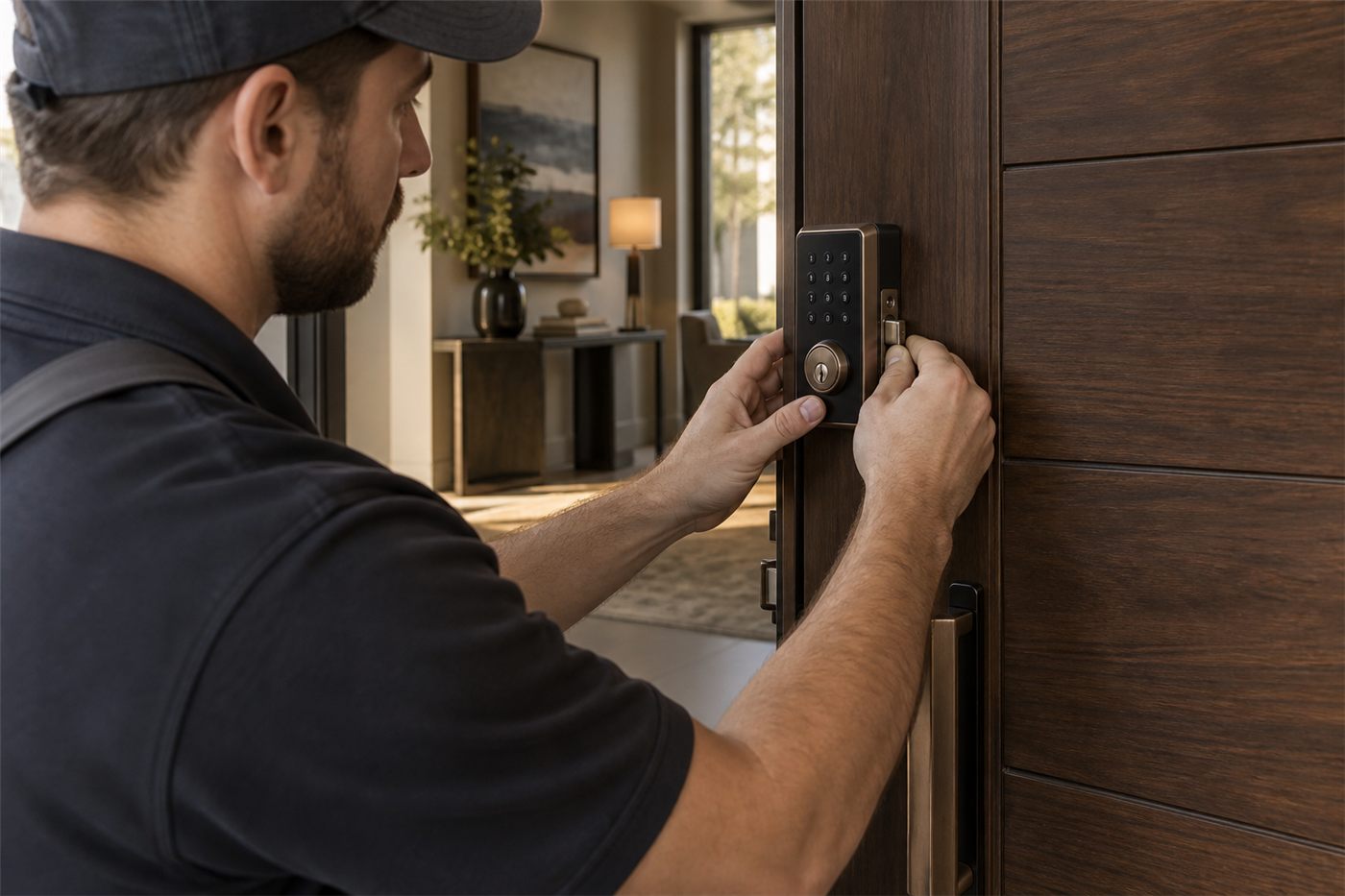
| Keypad or smart lock, optional | No keys to collect, codes change remotely | A mechanical backup cylinder and good battery warnings |
Move in
Handing keys to your first tenant.
Start the record on the first day.
The move in is where your key log begins. Before the tenant arrives, test every key on every lock. A new tenant whose key sticks in the back door on day one will call you on day two, and the repair costs more than testing did.
Decide how many keys to issue. A common approach is one set per adult on the lease, plus mailbox keys where you control them. Write the number down, have the tenant sign for them on the move in checklist, and note that the same number is expected back at move out. That signature is not a legal instrument, it is simply a clear record that avoids arguments later.
Explain how the locks work, especially anything unusual: a deadbolt that needs the door pulled tight, a storm door with its own lock, a keypad and how to change its code. A two minute walkthrough prevents a surprising number of lockout calls.
Tell the tenant what to do if they lose a key or get locked out, and what your lease says about it. Some landlords keep a spare on hand and will let a tenant in during reasonable hours. Others prefer tenants to call a locksmith directly. Whatever you choose, say it on day one, not at two in the morning.
Turnover
The turnover checklist, lock by lock.
- Collect keys at move out and check them against the log. Count what comes back against what you issued. A missing key is not a crisis, since you are rekeying anyway, but note it.
- Walk every door. Check that each lock still works smoothly, each deadbolt throws fully and each door latches without being slammed. Tenancies wear hardware, and turnover is the time to repair it.
- Reset any electronic codes. Delete every user code on keypads and smart locks, remove the tenant's app access, and change batteries.
- Remove any lockbox used for showings once the unit is let. A lockbox with a known code on an occupied unit is a gap in your own security.
- Schedule the rekey last. After cleaners, painters and repair crews are finished, so the new keys go only to you and the incoming tenant.
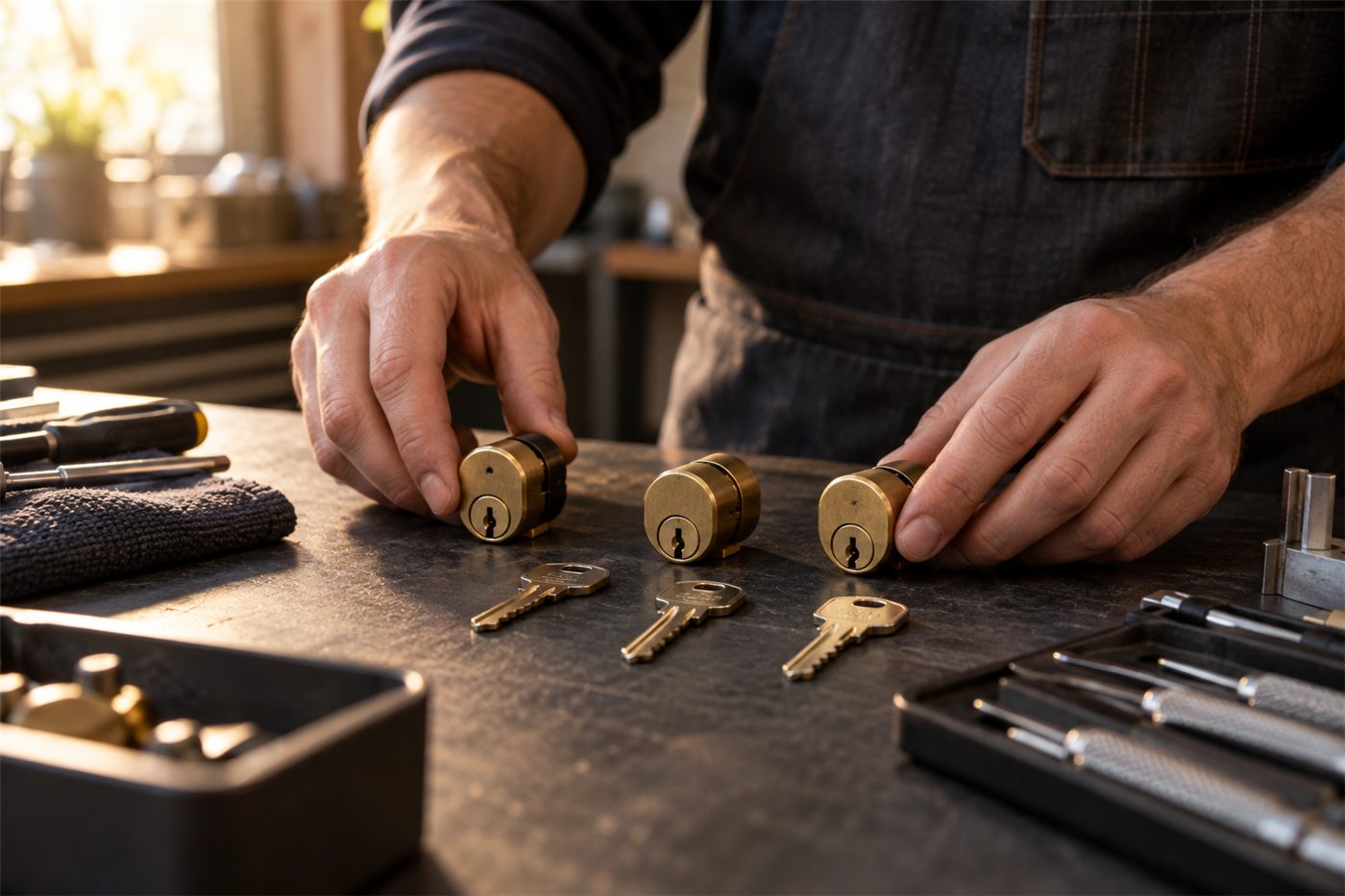
- Rekey every exterior lock, keyed alike. Front, back, side, basement and garage entry. One new key for the tenant, or keyed within your master system.
- Record the rekey. Date, unit, locks changed and number of keys cut. Keep it with the unit file.
- Test again on move in day. Two minutes with the new keys before the tenant arrives.
Between tenancies
Questions that come up mid lease.
A tenant loses their keys. If the keys were with anything showing the address, rekey promptly. Your lease may say who pays. Even when the tenant pays, you arrange it, since it is your lock and your key log.
A roommate or partner moves out. The remaining tenant may ask for a rekey. It is usually the simplest way to resolve concerns about the departed person's key, and it keeps your log accurate.
A tenant wants to change the locks themselves. Many leases prohibit tenants changing locks without consent, and a landlord usually needs a key for emergencies and agreed entry. If a tenant asks, the practical answer is often to arrange a rekey yourself and give them the new keys, keeping one for your file.
A tenant wants a smart lock. Some landlords allow it with conditions, such as the landlord having a code and the original hardware being refitted at move out. Put any agreement in writing.
A tenant is locked out. Your lease and your own policy decide how you respond. If a tenant calls a locksmith directly, the locksmith should confirm residence before opening the door, which protects your property.
Lockouts
Decide your lockout policy before the first late night call.
Every landlord eventually gets the call: a tenant standing outside in the cold, keys on the kitchen counter. How you handle it is up to you and your lease, but deciding in advance makes the moment far easier for everyone.
Some landlords live nearby and are happy to let tenants in during reasonable hours, sometimes with a set charge written into the lease for after hours trips. Others keep no spare on hand and ask tenants to call a locksmith directly. A third group fits a keypad on one entry door so a tenant who forgets keys can still get in with their code, which removes most lockout calls entirely.
Whichever you choose, write it into the lease or the move in paperwork and repeat it at the walkthrough. If tenants will call a locksmith directly, make sure they understand that a reputable locksmith will ask for ID showing the address before opening the door, and that the lock should not be drilled or replaced as part of a lockout without your agreement. A tenant who knows this in advance is far less likely to authorize a costly, unnecessary lock replacement at midnight.
The rules
Where lock questions meet the law.
Delaware has a residential landlord tenant code that covers matters such as entry, security of the premises and the end of a tenancy, and your lease adds terms of its own. The details, and how they apply to your situation, are questions for the code itself, your lease, or an attorney who works in this area. We do not give legal advice and we would rather point you to the right source than guess.
There are a few things we can say from the locksmith side. Keeping locks in working order is a basic expectation in any rental, and a lock that does not work is a repair that should not wait. Rekeying between tenants is widely regarded as good practice. And changing locks to keep a tenant out is not a shortcut around the court process. We decline those jobs, and our eviction lock change page explains how lock changes fit at the end of a lawful eviction.
If you are building your first lease, it is worth including clear terms on keys: how many are issued, whether tenants may copy them, what happens when they are lost, whether tenants may change locks, and how keys are returned. Clear terms prevent most disputes before they start.
Cost
Where landlords spend more than they need to.
| Habit | Why it costs more |
|---|---|
| Replacing locks at every turnover | New hardware each time, when rekeying the sound hardware gives the same result on keys |
| Booking each unit separately | Travel and setup repeat. Batching turnovers in one visit spreads that across units. |
| Mixed brands and keyways | Different parts for every door, more keys, harder master keying later |
| Lightest builder grade hardware | Wears out quickly under rental use and generates repair calls |
| No key log | Every lost key becomes a guess about what it opens |
| Emergency calls for planned work | A rekey booked in the daytime usually costs less than the same job at night |
The habit that saves the most
Put the rekey on the same turnover checklist as cleaning and painting. Landlords who treat it as part of every turnover never have to decide whether it is worth it, and never find themselves explaining to a tenant why an old key still worked.
Growing a portfolio
When you own more than one rental.
Once you have several units, a little structure pays off. A simple master key system lets one key, held by you or your maintenance person, open every unit, while each tenant's key opens only their own. When a unit turns over, it is rekeyed within the system, so your master keeps working. See our master key systems page for how hierarchies are planned.
For buildings with shared entrances, laundry rooms and storage, consider a restricted keyway for the common doors. Tenants cannot have copies of a restricted key cut at a hardware store, so the number of building keys in circulation stays close to the number you issued. Our restricted keyway systems page explains the idea.
Keep master keys under tight control. A master key on a key ring that goes home with a maintenance worker is the most valuable key you own. Store it securely, log who has it, and rekey the system if it is ever lost.
Finally, keep your records in one place. A spreadsheet with a tab per property, listing units, key numbers, holders, and rekey dates, is enough for most small portfolios.
Delaware specifics
Rental housing types, and what they need.
Newark student rentals. Many tenants, frequent turnover, and keys copied freely among roommates and friends. Rekeying every year at turnover is essential, and restricted keyways or keypads with individual codes can help. Check that every bedroom lock, if fitted, is included in the plan.
Wilmington row homes and conversions. Older doors, often with mortise locks, and sometimes multiple units in one building sharing a front door. Mortise locks rekey well and are worth maintaining. Shared entrances need a plan for common keys.
Suburban single family rentals in Bear, Glasgow, Middletown and Smyrna. Standard bored hardware, garage entries and sometimes a side door that tenants forget. Include every entry in every rekey, and consider a keypad on the garage entry door.
Dover area rentals near the base. Frequent moves tied to military assignments mean turnovers can come at short notice. A ready plan, and a locksmith who knows the property, keeps vacancy short.
Rural Kent County rentals. Farmhouses and outbuildings with a mix of old and new hardware. The key log matters even more when a property has barns, sheds and gates.
The short version, if you read nothing else
Rekey on purchase day and at every turnover. Keep a log of every key. Fit hardware sturdy enough for rental use. Leave the legal questions to the code, your lease and an attorney, and never use a lock change as a shortcut around the court process.
Related
Where to go next.
For the service itself, see landlord rekey service. If you are also moving into a home yourself, the new home guide covers the owner occupier side, and rekey or replace helps with hardware decisions.
Where we do this
Rental turnovers across both counties.
Questions
About locks for landlords.
Do I have to rekey between tenants?
Whether anything requires it in your situation is a question for the landlord tenant code, your lease and your attorney. As a matter of good practice, rekeying between tenants is the simplest way to make sure a former tenant's keys, and any copies they made, no longer work. It is inexpensive compared with the problems it prevents.
Is it cheaper to rekey or replace at turnover?
Rekeying is almost always cheaper when the hardware is sound, because you keep the existing locks and change only the pins. Replace when the lock is worn, damaged or not suited to the door, and use the vacancy to do it.
How many keys should I give a tenant?
A common approach is one set per adult on the lease. Record the number, have the tenant sign for them, and ask for the same number back at move out.
Can a tenant change the locks?
Check your lease. Many leases require the landlord's consent and a key for the landlord. If a tenant asks, arranging a rekey yourself and giving them new keys usually satisfies everyone.
Should I use keypads on my rentals?
They can make turnovers faster, since codes change without a visit. Choose models with a mechanical backup cylinder and good battery warnings, delete every code at turnover, and rekey the backup cylinder too.
What should I do if a tenant loses their keys?
Rekey promptly, especially if the keys were with anything showing the address. Your lease may say who pays. Update your key log afterwards.
Can you change locks to get a tenant out?
No. Removing a tenant is a court process. We change locks only after possession has lawfully returned to the owner.
Is a master key system worth it for a few units?
For two or three units, careful keying may be enough. Once you have several units or a maintenance person, a simple master system usually saves time and keys.