

Why a trip changes the picture
On an ordinary day, a house has people coming and going. Cars move in the driveway, lights go on and off, the trash goes out, packages are collected. That activity is a deterrent in itself. When everyone leaves for a week at the beach, a family visit or a trip abroad, it all stops, and the house becomes quieter than any other on the street.
Most homes are not targeted by someone who knows you are away. They are chosen because they look empty and easy. A week of newspapers on the step, a dark house every night, a garage door left open in a rush to catch a flight, a back door that was never locked because nobody uses it. Security while you travel is mostly about removing those signals and closing the gaps that ordinary life lets slide.
This guide goes through the practical steps in the order you would do them: a week or two before, the day you leave, while you are away and when you get back. Most of it costs nothing. The parts that involve a locksmith, fixing a lock that does not work properly or rekeying because you are not sure who has keys, are worth doing before the trip rather than after.
Two weeks out
Fix what you have been putting off.
The trip is the deadline for the jobs that never feel urgent.
Every house has a lock that is slightly wrong. The back door deadbolt that needs a shove. The garage entry that only has a knob lock. The sliding door latch that may or may not be catching. The basement door nobody has checked in a year. When you are home, these are nuisances. When you are away for a week, they are the way in.
A week or two before you leave, walk every exterior door and test each lock with the door closed. If a deadbolt does not throw fully without pushing the door, get it adjusted. If a door has no deadbolt, consider fitting one. If a sliding door latch does not catch, fix it or add a secondary lock. Our sliding door guide and garage entry guide cover those two common weak spots.
Think about keys, too. Who has one right now? A neighbor, a family member, a dog walker, a contractor from last year, a former housemate. If the list is longer than you would like, or you honestly do not know, a rekey before you leave means the only working keys are the ones you hand out for this trip. It is a lot more comfortable than wondering about it from a hotel room.
Check the batteries in any smart lock or keypad and replace them if they are not fresh. A lock that dies while you are away can leave a house sitter locked out, or worse, leave the lock in an unknown state.
The door walk
Every opening, not just the front door.
| Opening | What to check | Common miss |
|---|---|---|
| Front door | Deadbolt fully thrown, strike tight | Rarely missed, which is why it is rarely the way in. |
| Back and side doors | Deadbolt locked, not just the knob | Knob locked, deadbolt left open because the door is used every day. |
| Garage entry door | Deadbolt locked from the house side | Left unlocked because the overhead door feels like the security. |
| Overhead garage door | Closed, manual lock engaged or opener unplugged | Remote left in a car parked outside. |
| Sliding patio door | Latch caught, bar or pin in place | Latch flipped but not engaged. |
| Basement and cellar doors | Locked and checked from inside | Nobody has checked since last year. |
| Ground floor windows | Closed and latched | A bathroom or laundry window left open for air. |
| Sheds and outbuildings | Locked, ladders and tools stored | A ladder left against the house, or a pry bar in an unlocked shed. |
| Gates | Closed and latched or padlocked | Gate propped for the landscaper and never closed. |
Who holds a key
One trusted person, not a key under the mat.
Somebody should be able to get into your house while you are away. A pipe can burst, an alarm can go off, a storm can take out a window, a package can need collecting. The question is who, and how.
One trusted person with a real key is the best answer for most households. A neighbor you know, a family member nearby, a friend who can check on the house. Give them one key, tell them which doors it opens, and ask them to return it when you get back, or keep it permanently if that is your arrangement.
A hidden key is not a plan. Under the mat, in the planter, on the ledge above the door, in the fake rock. People who look for hidden keys know every one of these spots. A hidden key turns a locked house into an unlocked one for anyone who looks.
A lockbox is better than a hidden key but only if it is a good one, mounted securely, and the code is shared only with the people who need it. Change the code after the trip.
Temporary codes on a smart lock or keypad are ideal for house sitters, pet sitters and plant waterers. Give each person their own code, active only for the dates they need, and it expires on its own. You also see when it was used, on many models. The keyless entry guide covers the tradeoffs.
Whatever you choose, make sure the person has the right key for the right door. A house sitter who arrives to find the deadbolt locked and only has a key for the knob is locked out, and so is your cat.
Looking lived in
The house should not announce the trip.
- Stop or redirect mail and deliveries. A pile of packages on the porch is the clearest sign of an empty house. Hold the mail, pause deliveries, or ask your key holder to collect them daily.
- Put lights on timers. Varied timers in a few rooms look more natural than one lamp on all night. Smart bulbs and plugs can randomize times.
- Arrange for the lawn or snow. Long grass in summer or an unshoveled drive in winter both signal absence. Ask a neighbor or book the usual service.
- Ask a neighbor to use your driveway. A car coming and going is more convincing than any timer.
- Keep the trash cycle going. Bins out on collection day and back in afterward look like normal life.
- Close blinds partway, not fully. Fully drawn curtains all week look like nobody is home. Partly open blinds look normal and still hide valuables.
- Be careful online. Photos from the beach can wait until you are home. Posts that say where you are and for how long are a notice to anyone watching.
Smart home settings
If your locks and cameras are connected.
| Setting | What to do before you leave |
|---|---|
| Auto-lock | Turn it on, so a door left unlocked by a sitter locks itself after a short delay. |
| User codes | Remove codes that are not needed, and add a dated code for each sitter. |
| Notifications | Enable alerts for lock and unlock events, so you know when the sitter visits. |
| Batteries | Fresh batteries before the trip, and a spare set where the key holder can find them. |
| Mechanical override | Test the backup key and give it to your key holder, or keep it with you. |
| Wi-Fi and hub | Make sure the router and hub are on backup power if possible, and know what the lock does if the connection drops. |
| Cameras | Check that doorbell and yard cameras are recording and that alerts go to your phone. |
| Garage opener | Enable open door alerts or automatic close, if your opener supports it. |
A connected lock is only as good as its battery and its signal
Remote unlock is useful when a sitter is stuck outside, but it depends on the lock, the hub and your home internet all working at the same time. Treat it as a convenience, not the plan. The plan is a working mechanical key in the hands of someone you trust.
The day you leave
The last hour before a trip is chaotic, and that is exactly when doors get left unlocked. Bags go out through the garage, the back door gets opened to let the dog out one last time, and the overhead door stays up while the car is loaded. Build a final walk into your departure, and do it after the car is packed rather than before.
Go to every exterior door in turn. Lock the deadbolt, not just the knob. Pull on each door to confirm the bolt has caught. Check the sliding door latch by trying to slide it open. Close the overhead garage door and watch it go all the way down, then engage the manual lock or unplug the opener if you are away for a long time. Lock the garage entry door from inside the house.
Check windows, especially the ones opened for air during the last few days of packing. Unplug the garage remote from any car that stays behind in the driveway, or take it with you. Leave the key holder's spare somewhere they can find it, not on the doorstep. And take a photo of each locked door if it helps your peace of mind later. It is surprising how often people are certain they left a door unlocked, and a photo settles it.
While you are away
If something happens.
A camera alert or an alarm. Check the footage if you can. If you see something that looks like an attempted or actual entry, call the police first, then your key holder. Do not ask a neighbor to go in and investigate a possible break-in.
A house sitter locked out. If you have a smart lock, you may be able to unlock remotely. If not, your key holder is the backup. If neither works, a locksmith can open the door, but will need to confirm that the person has the right to enter, which usually means you confirming by phone and providing proof of ownership. Plan for this before you leave by telling your sitter what to do.
Storm damage. Delaware summers and autumns bring heavy storms, and a window or door damaged while you are away needs securing quickly. Your key holder should know who to call. The storm damage guide covers what to look for afterward.
A lost key. If your key holder loses the key you gave them, or you lose yours while traveling, think about whether it had anything identifying your address. If it did, rekey when you get home.
Coming home
The return check.
When you get back, look before you go in. Walk around the outside. Check doors and windows for pry marks, broken glass, damaged frames or anything moved. If something looks wrong, do not go inside. Call the police from outside and wait. The after a break-in guide covers what to do next.
If everything looks normal, go in and do a quick check of every room, then collect keys and remove temporary codes. Delete any sitter codes that did not expire on their own. Get the spare key back from your key holder if that was the arrangement. Change the lockbox code if you used one.
Finally, note anything that went wrong. A sitter who could not work the back door, a lock that stuck when you came home, a garage door that did not close properly. These are the things to fix before the next trip, while they are fresh.
Longer absences and second homes
Some Delaware households travel for a month or more, spend winters elsewhere, or own a second home near the beaches or on the Chesapeake. Longer absences change the plan. The house needs to be secure for weeks without anyone checking daily, and small problems have time to grow.
For long absences, make sure every exterior door has a good deadbolt with a reinforced strike, since doors that are never opened for weeks are more attractive to anyone who has noticed. Rekey before you leave if key holders have changed over the season. Arrange a regular check by someone you trust, at least weekly, and ask them to walk the whole outside and try every door. Consider a monitored alarm if you do not already have one.
For second homes, the same principles apply with an extra layer: the house is empty most of the year, keys are often shared among family members and rental guests, and nobody is nearby to notice problems. Electronic locks with codes you can manage remotely work well here, alongside a mechanical backup held by a local contact. Rekey whenever you are unsure who has keys, which for a shared family property is more often than people expect.
Winter absences bring an extra concern. Cold snaps across New Castle and Kent County can freeze exterior locks and burst pipes. A house sitter who cannot open a frozen lock cannot reach a burst pipe. Lubricate locks in the autumn and keep the heating at a safe minimum. The winter lock guide covers frozen locks.
Related
Getting the house ready.
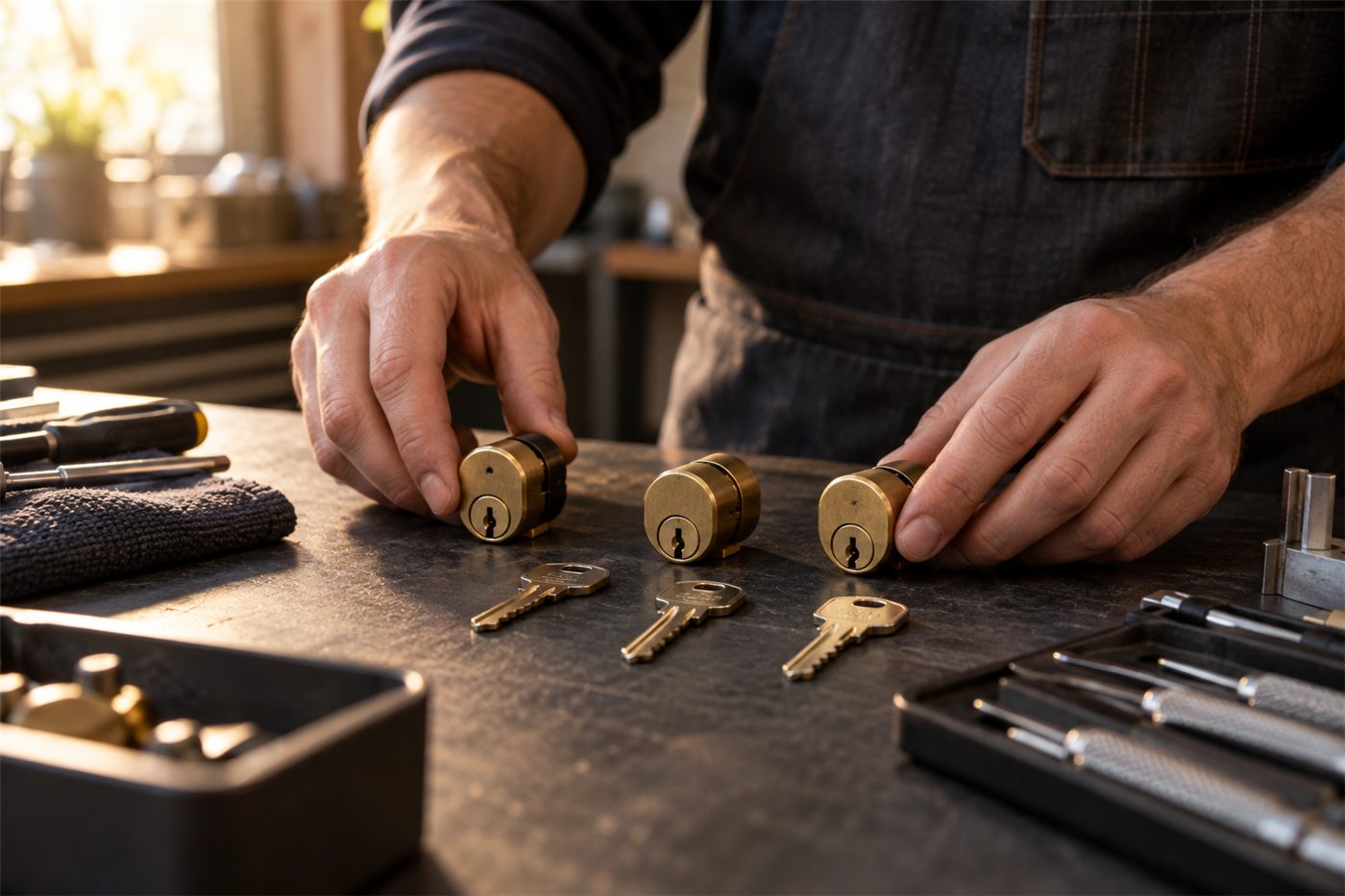 Before you go
Lock Rekeying
So only the keys you hand out this trip still work.
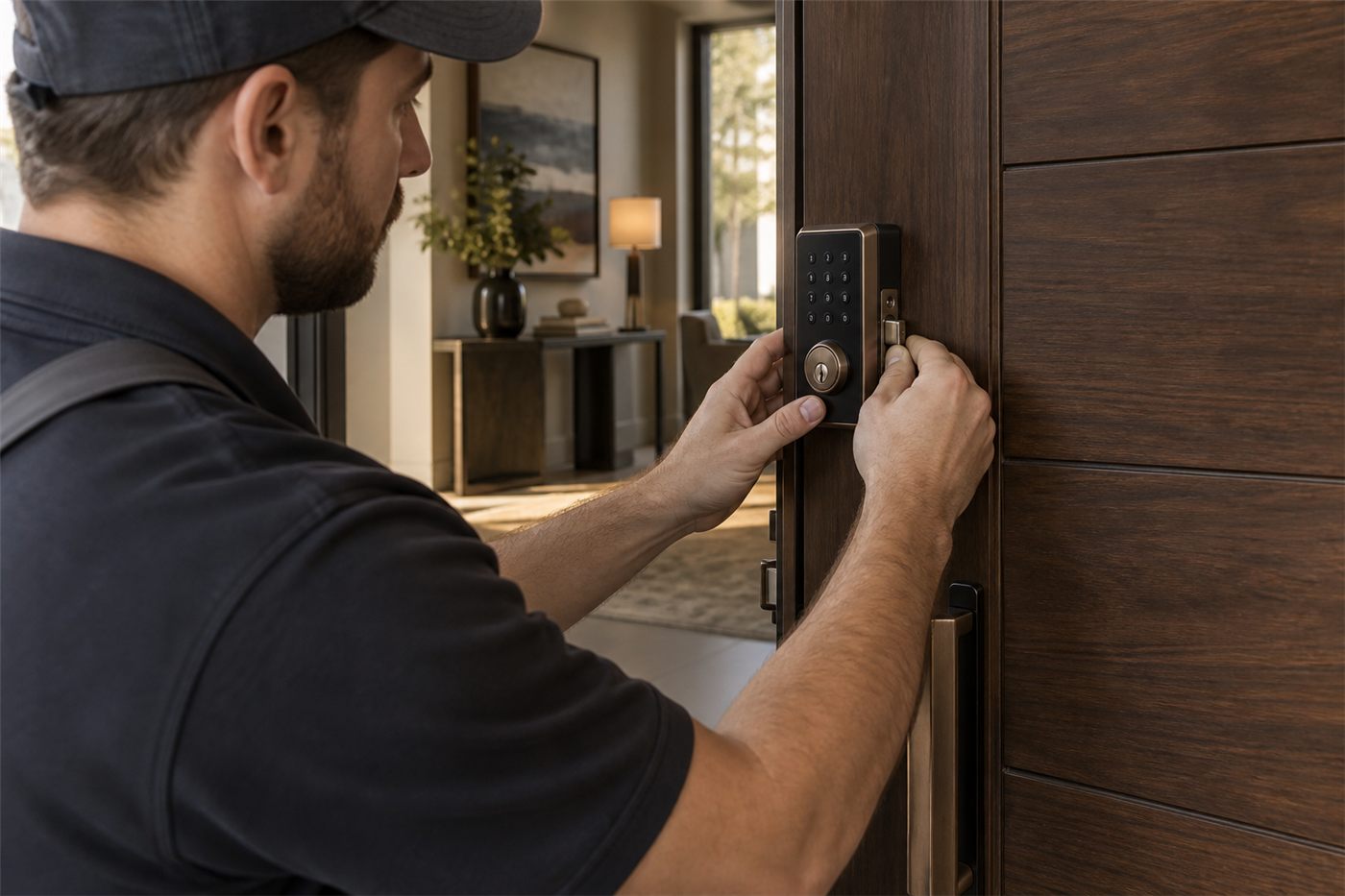 Sitters
Smart Lock Installation
Dated codes for sitters that expire on their own.
UpgradeDeadbolt Installation
For the back and garage doors that only have a knob.
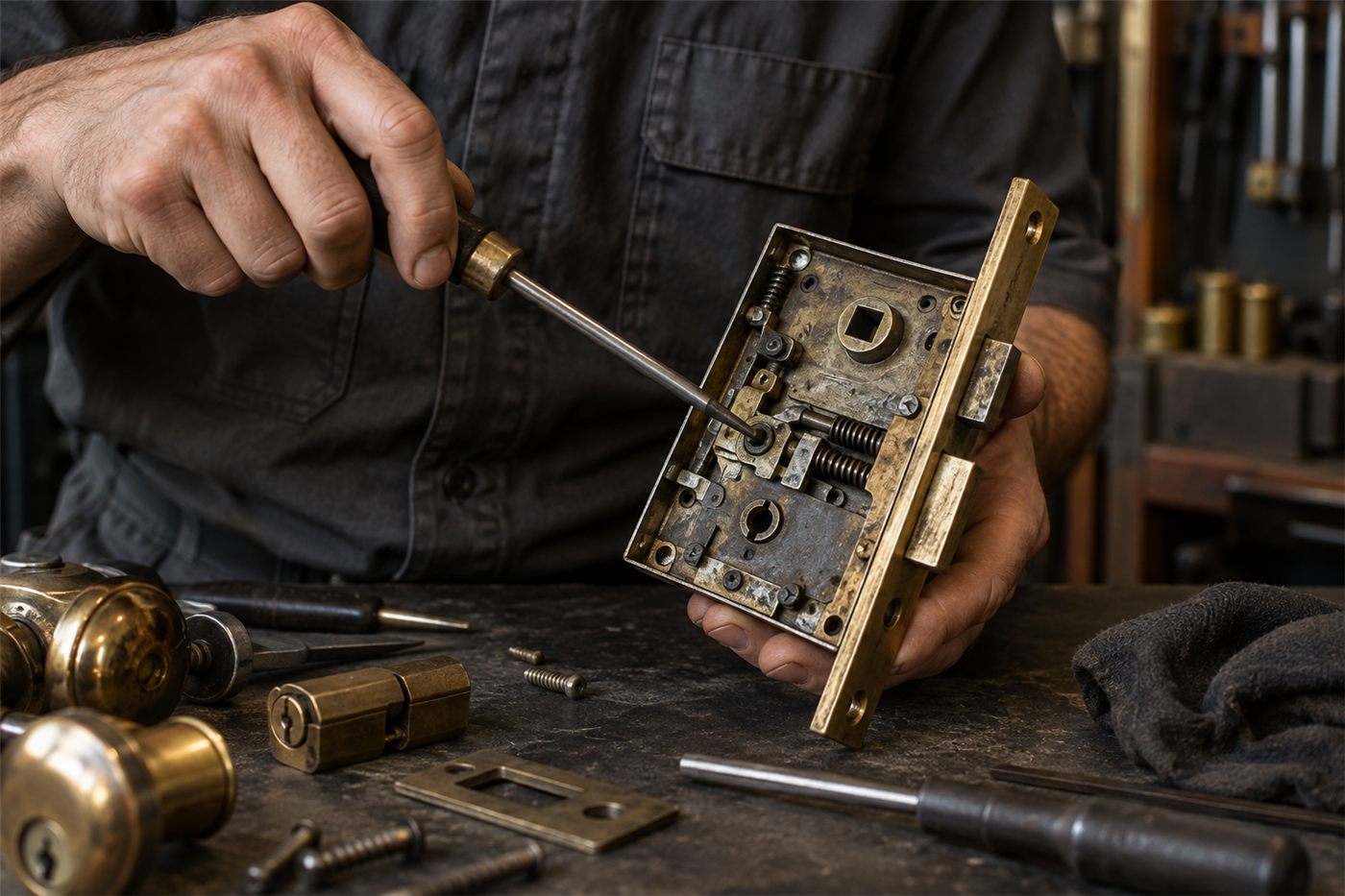 Repair
Lock Repair
The deadbolt that needs a shove, fixed before you leave.
LockoutHouse Lockout
If the sitter cannot get in.
OpeningsWindow Locks
Ground floor windows secured properly.
Where we do this
Pre-trip lock work across both counties.
Questions
About leaving the house empty.
Should I rekey before going on vacation?
If you are not sure who has keys to your home, yes. A rekey means the only working keys are the ones you hand out for the trip. If you know exactly where every key is, there is no need.
Is it safe to leave a key under the mat for the pet sitter?
No. Hidden keys are found easily by anyone who looks. Give the sitter a key directly, use a securely mounted lockbox with a code you change afterward, or give them a temporary code on a keypad or smart lock.
Should I unplug the garage door opener?
For long trips, many people do, or engage the manual lock on the door. It prevents the door being opened by a remote or a fault. Make sure your key holder can still get into the house another way.
What if my house sitter gets locked out?
Your key holder is the first backup, and a smart lock may let you unlock remotely. A locksmith can help, but will need to confirm the right to enter, so plan for that before you go by telling the sitter who to call and being reachable by phone.
Are smart locks good for vacations?
They are very useful for dated sitter codes and for seeing when doors are used. Change batteries first, turn on auto-lock, and keep a working mechanical key with someone you trust in case the lock or the internet fails.
What should I do if I see a problem on my camera while away?
If it looks like an attempted or actual break-in, call the police first and then your key holder. Do not ask a neighbor to go inside to check. Once the police have been, arrange for any damaged door or lock to be secured.
Do I need to do anything when I get back?
Walk around the outside before going in, looking for damage. Then delete temporary codes, collect spare keys, change any lockbox code, and note anything that did not work so it can be fixed before the next trip.
We have a second home. What is different?
It is empty most of the time and keys tend to be shared widely. Electronic locks with managed codes, a mechanical backup held locally, regular checks and a rekey whenever you are unsure who has keys all matter more than at your main home.