
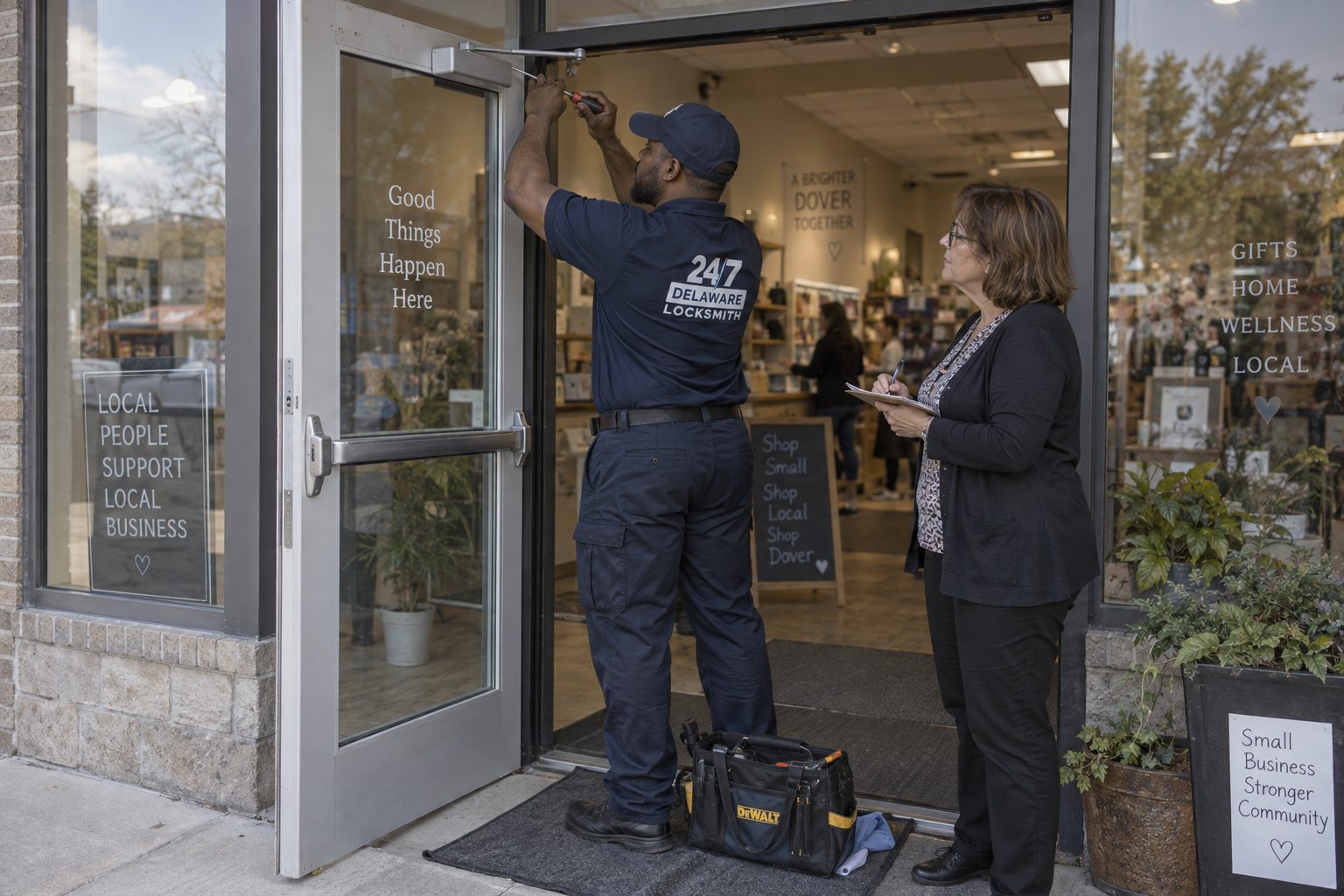
The basics
What makes a lock high security
It is not the price, the weight or the brand name on the box.
Three kinds of protection
A standard pin tumbler lock, the kind on most front doors, keeps honest people honest. It uses a single row of spring loaded pins, and a skilled person with the right tools can often manipulate it. Its keys use common blanks, which means anyone holding one of your keys for a few minutes can have a copy made almost anywhere, with no questions asked.
High security locks address those weaknesses in three ways. The first is manipulation resistance. They add features such as a sidebar, pins that must rotate as well as lift, or a second locking mechanism, so that lifting pins to the right height is not enough to open the lock. Techniques that work on ordinary locks usually fail on these.
The second is physical resistance. High security cylinders commonly include hardened steel inserts and pins that resist drilling, and a housing designed to resist pulling or twisting the cylinder out of the door. Some carry a listing under a recognized testing standard for high security cylinders, which requires the lock to resist attack for a specified time using specified tools.
The third, and for most customers the most important, is key control. High security keys are cut on restricted blanks that are not sold to ordinary key shops. Copies are made only through authorized dealers, and often only when the registered owner presents an identification card or signs for them. That turns a key from something anyone can copy into something the owner controls.
Key control
Why controlling copies matters more than picking resistance
Most people worry about a burglar picking a lock. In practice, the more common problem is a key in the wrong hands. A former employee who made a copy before leaving. A contractor who kept a key. A tenant who handed a copy to a friend. A dog walker whose key was copied by someone else. None of those people needs to pick anything. They simply use a key.
With an ordinary lock, you cannot stop that. A key that says do not duplicate on it is making a request, not enforcing a rule, and plenty of places will copy it anyway. With a high security system, the key blank itself is restricted. It is not available at ordinary counters, and the authorized dealer who can cut it follows the owner's instructions about who may order copies. Many systems use a card or a registration record so the owner can see and control how many keys exist.
This does not mean nobody could ever copy a high security key. It means copying requires much more than a trip to a hardware store, and the ordinary routes are closed. For businesses, landlords and households with many key holders, that difference is the entire value of the system.
Key control also works best when the owner keeps records. A simple list of who has each key, signed for when handed out, makes it clear which keys should come back when someone leaves. When a key is lost, the owner can decide whether to rekey the affected cylinders. With restricted keys, the decision is based on known facts rather than guesses.
Who uses them
When a high security lock is worth considering
- Businesses with employee turnover. Restaurants, retail shops, offices and warehouses hand keys to people who eventually leave. Restricted keys stop unauthorized copies from walking out the door with them.
- Landlords and property managers. Rental units see a new set of key holders with every lease. Restricted keys, combined with rekeying between tenants, keep the owner in control of how many copies exist.
- Homes with many key holders. Households with cleaners, caregivers, dog walkers, contractors and extended family often lose track of keys. Controlling copies simplifies the question.
- Rooms and cabinets with sensitive contents. Server closets, pharmacy storage, records rooms, firearm storage rooms and offices with confidential files benefit from both key control and resistance to attack.
- After a break in or a known key compromise. If a key has been copied or a lock has been manipulated, replacing ordinary cylinders with high security ones addresses both the immediate problem and the underlying weakness.
- Buildings with master key systems. A master key that opens many doors is a valuable key. Putting that system on a restricted keyway protects the master and every key below it.
Hardware
Cylinders, deadbolts and what fits your existing doors
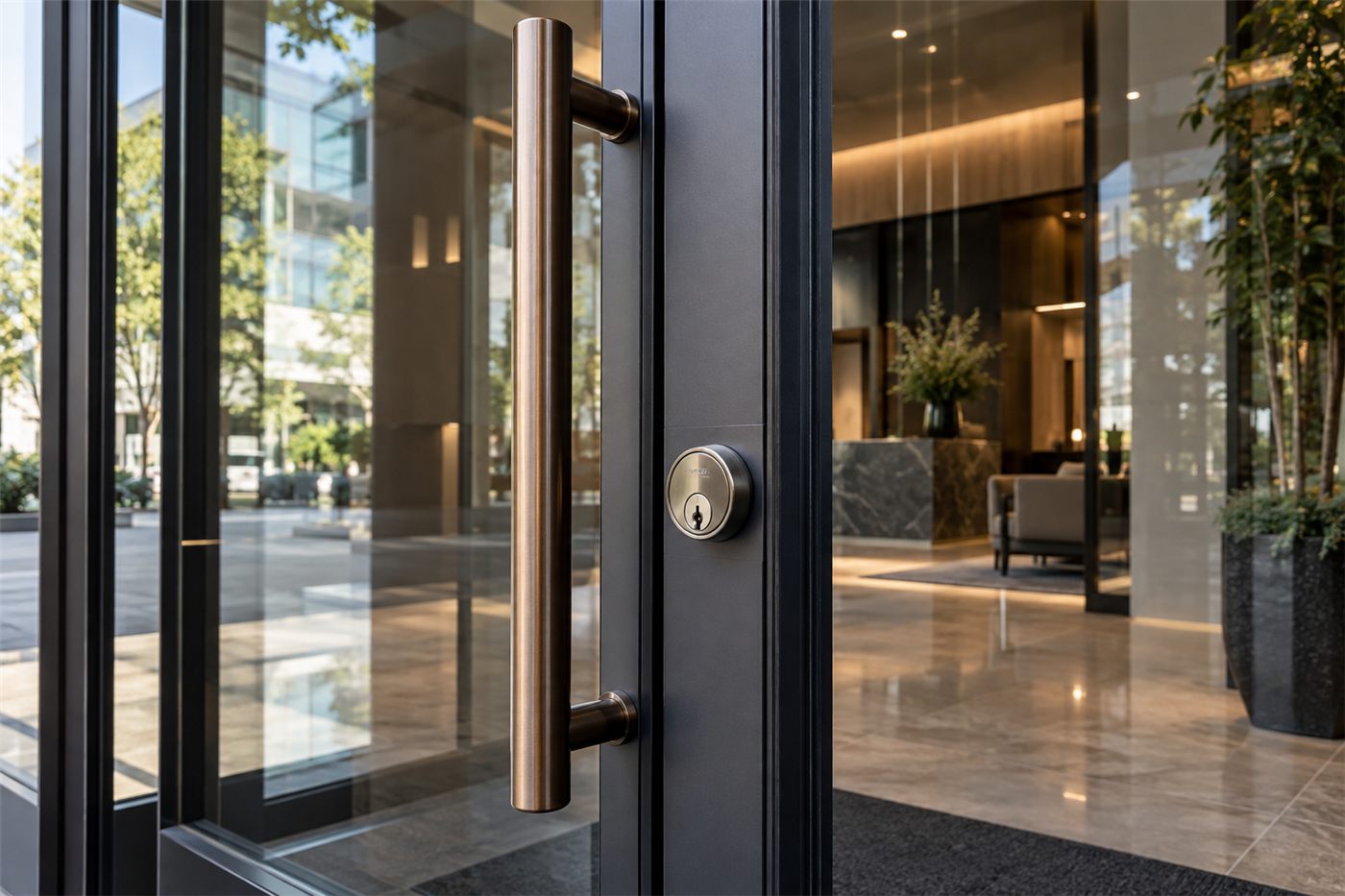
Many people assume a high security lock means replacing every piece of hardware on the door. Often it does not. High security cylinders are made in formats that fit many existing locks. A bored deadbolt can often take a high security cylinder or be replaced by a high security deadbolt that uses the same holes. Commercial doors with mortise locks can often have their cylinders swapped for high security mortise cylinders. Rim cylinders used on exit devices and surface locks also come in high security versions.
That flexibility means a business can upgrade the doors that matter most, such as the main entry, the back door and the office, without replacing everything. A home can upgrade exterior doors while leaving interior locks alone. And a property with a master key system can move it to a restricted keyway one door at a time if the budget requires.
Some doors do need new hardware. An old deadbolt with a worn housing, a lock too light to accept a high security cylinder, or a door with damaged holes may be a candidate for a complete high security deadbolt. We look at each door and tell you which approach makes sense for it.
The door and frame still matter
A high security cylinder makes the lock itself much harder to defeat. It does nothing for a weak frame, a hollow door or glass next to the thumb turn. Someone who cannot pick the lock may simply kick the door, and if the strike is held by short screws in a thin jamb, the door will open with the high security cylinder still locked. We look at the whole entry, including the strike, the hinges and the frame, and recommend reinforcement where it is needed. Our door frame security guide goes through those steps.
How it works
What a high security upgrade involves
From the first conversation to the key record.
We start by listing the doors and what each one protects. A front door, a back door, an office, a storage room and a gate all have different needs. Some need the strongest protection. Some need only key control. Some need nothing more than they already have.
Next we decide how the keys should work. Should one key open every exterior door? Should managers have a key that opens more doors than staff keys? Should certain rooms be keyed separately? These decisions shape the system, and they are easier to make before the cylinders are ordered than after.
Then we check the existing hardware to see which locks can take high security cylinders and which need replacement. We install the cylinders or locks, adjust strikes and doors as needed, and test every key in every lock it is supposed to open, and in every lock it is not supposed to open.
Finally, we set up the key record. The owner decides who is authorized to order additional keys, and we explain how copies are requested. For businesses, we suggest a simple key log. For households, a list on the refrigerator is often enough.
Compared
Standard, upgraded and high security locks
| Feature | Standard residential lock | High security lock |
|---|---|---|
| Key copies | Made almost anywhere from a common blank | Made only through authorized channels on restricted blanks |
| Picking and manipulation | Possible with common techniques | Additional mechanisms defeat common techniques |
| Drilling | Limited resistance | Hardened inserts and pins designed to resist drilling |
| Key records | None | Owner controlled records of issued keys on many systems |
| Fits existing doors | Yes | Often, as a cylinder upgrade or a matching deadbolt |
| Best suited to | Homes with few key holders and simple needs | Businesses, rentals, sensitive rooms and homes with many key holders |
Avoid these
Mistakes that waste a high security upgrade
- Upgrading the front door and leaving the back door ordinary. A burglar or a former key holder uses whichever door is easiest. Upgrade the doors that matter as a set.
- Handing out keys with no record. Restricted blanks slow down copying, but the owner still needs to know who has keys. Keep a list.
- Ignoring the frame. A lock that cannot be picked is still attached to a door that can be kicked. Reinforce the strike and hinges.
- Letting anyone order copies. Most systems let the owner decide who is authorized. Limit it to one or two people.
- Buying a lock labeled high security with no key control. Some products use the words loosely. Ask whether key blanks are restricted and how copies are ordered.
- Waiting until after a problem. The best time to set up key control is when keys are still accounted for, not after an employee leaves with one.
At home
What a high security upgrade looks like on a house
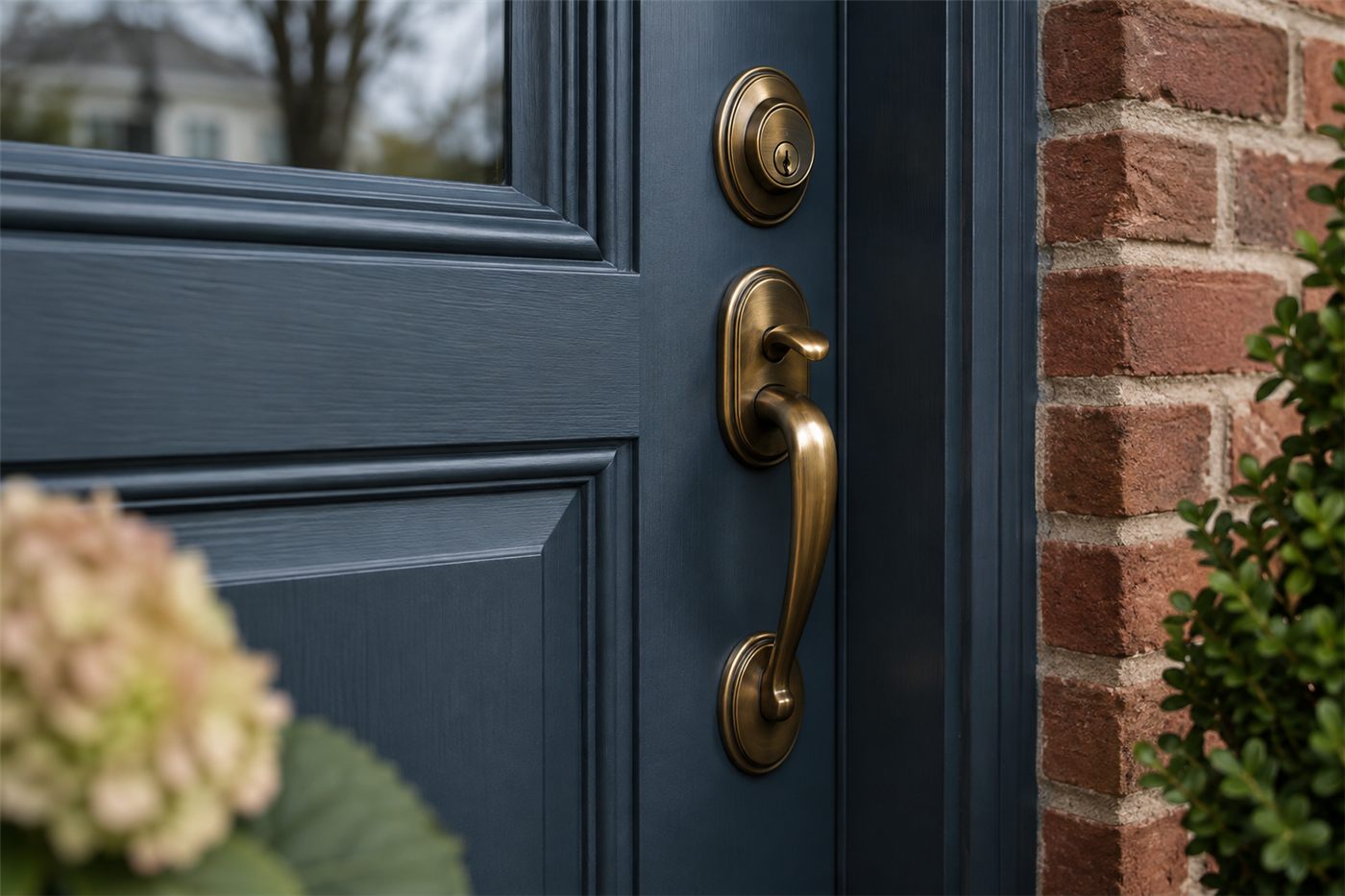
On a typical Delaware home, a high security upgrade usually covers the front door, the back or patio door and the door from the garage into the house. Those are the doors people actually use, and they are the doors where keys have been handed out over the years. Interior doors, closets and bedroom privacy locks almost never need it.
The homeowner receives a small number of restricted keys and, on many systems, a card or record that identifies them as the person who may order more. When a relative needs a key, the homeowner orders it. When a cleaner or caregiver needs access, the homeowner decides whether to give a key at all or whether a keypad on a side door would be simpler. Either way, the count stays known.
A common approach for households is to combine the two ideas. The front door gets a high security deadbolt on a restricted key that only family members carry. A side or garage entry door gets a keypad lock with individual codes for service providers. The family keeps tight control of the key, and service providers never hold one. When a service provider stops coming, their code is deleted and nothing else changes.
High security cylinders also make sense for detached garages, workshops and sheds where tools and equipment are stored. A padlock or a deadbolt on a restricted keyway protects the contents and keeps the key from being copied by someone who borrowed it for an afternoon.
Finally, there is the question of the spare. Many households keep a spare key under a mat, in a planter or in a lock box. With a high security system, losing that spare means losing one of a limited number of keys, which makes the hiding place worth rethinking. A trusted neighbor or a keypad lock is a better backup than a key under a rock.
Businesses
High security keys in a working business
For a business, the main advantage of a high security system is predictability. When an employee leaves, the manager knows exactly how many keys were issued and can collect them. When a key is lost, the manager knows which doors are affected and can decide whether to rekey. When a new employee starts, keys are ordered through a controlled process instead of a quick trip to a store.
High security systems can be combined with master key systems, so the owner carries one key that opens everything while staff keys open only the areas they need. They can also be combined with access control, where card or code readers handle the doors people use all day and a high security key handles the override and the doors that rarely open.
Storefronts along Main Street in Newark, offices in downtown Wilmington, warehouses near New Castle and small businesses in Dover and Milford all use the same logic at different scales. A two door shop may need only a few restricted keys. A building with dozens of doors may need a structured master key system on a restricted keyway. We design to the building and the way the business actually runs.
Local factors
High security locks in New Castle and Kent
Rentals, offices and homes all have reasons to consider it.
The rental market around Newark and Wilmington creates a steady need for key control, because landlords see keys change hands every year. Restricted keyways combined with rekeying between tenants give property owners a clear picture of who can enter each unit.
Businesses along Route 13 in Dover and in the commercial areas near Christiana and New Castle often have staff who work odd hours, deliveries at the back door and multiple people closing up at night. Key control keeps that manageable.
Homeowners across both counties choose high security cylinders after a break in, after a household change, or simply because they have handed out so many keys over the years that they have lost count. Upgrading the exterior doors to restricted keys resets the count to zero and keeps it there.
Questions
Frequently asked
Can someone still copy a high security key?
Copies are made only through authorized channels on restricted blanks, and most systems let the owner control who may order them. That closes the ordinary routes. It does not make copying impossible for a determined, well equipped person, but it removes the easy option that ordinary keys offer.
Do I have to replace my whole lock?
Often not. Many existing deadbolts, mortise locks and rim locks accept high security cylinders. Where the existing lock is worn or too light, a complete high security deadbolt can use the same holes in the door.
Are high security locks pick proof?
No lock is pick proof. High security locks add mechanisms that defeat the common techniques used on ordinary locks and resist them for much longer. Combined with key control and a strong door frame, they make an entry far harder to defeat.
Can a high security system work with a master key?
Yes. Many restricted keyways support master key systems, so the owner can have one key for every door while staff or tenants have keys only for their areas. The master key is protected by the same restrictions.
What happens if I lose a high security key?
Because the number of keys is known, you can decide whether the lost key creates a real risk. If it does, the affected cylinders can be rekeyed. Replacement keys are ordered through the authorized process.
Is a high security lock worth it for a house?
It depends on how many people hold keys and what the house protects. A household with many key holders, a history of lost keys or a recent break in often benefits. A household with two keys that never leave the family may not need it.
Will a high security lock stop someone from kicking in my door?
No. The lock resists picking, drilling and copying, but a kick attacks the frame. Pair the upgrade with a reinforced strike, long screws and solid hinges to address forced entry.
Can I keep my current key for some doors?
Yes. Many owners upgrade exterior and sensitive doors to restricted keys and leave interior locks on ordinary keys. We design the system around which doors matter most.
Ready to control who can copy your keys?
Call and we will look at your doors, your key holders and what each lock needs to protect.