
First, the line we hold
We do not change locks to remove a tenant
The lock change comes after the process, never instead of it.
Why this matters to you as much as to the tenant
Every so often a landlord calls asking us to change the locks while a tenant is away, to force them out or to make a point about unpaid rent. We decline those jobs, every time. Removing a residential tenant is a legal process that runs through the courts, and changing the locks on an occupied home outside that process is generally not permitted. It can expose the owner to serious legal trouble and it can leave a family without access to their belongings, medication or pets.
We are locksmiths, not lawyers, and nothing on this page is legal advice. If you are unsure where you stand, speak to an attorney who handles landlord tenant matters or contact the court handling your case. What we can tell you is how our part works: we change locks once possession has lawfully returned to the owner, and we ask to see that it has.
Holding that line protects landlords too. An owner who follows the process, and then secures the property promptly with a proper lock change, is in a far stronger position than one who took a shortcut.
Where we fit
The end of the process, and the start of the next tenancy
A residential eviction ends when the court orders possession returned to the owner and that order is carried out by the officer the court assigns. At that point the unit is back under the owner's control, and it is exposed. The former occupant may still hold keys. Copies may be spread among friends and family. The door may have been left unlocked. Every hour between possession returning and the locks changing is an hour in which someone with an old key could walk in.
That is why most landlords and property managers want the lock change to happen at the same time as, or immediately after, the unit is returned. We work with you to plan that timing. You tell us the scheduled date and time once you have it, and we arrange to be there or to follow on promptly, so the unit is secure before everyone leaves.
Once the locks are changed, the unit is ready for the next steps: inventory, cleaning, repairs and eventually a new tenant. The keys we hand you at that point are the only working keys in existence.
What we need
Before we change the locks
We ask for a few things on every eviction lock change. They are not bureaucracy for its own sake. They are how we make sure we are securing a property for its rightful owner, which is the only basis on which we do this work.
- Proof of ownership or management authority. A deed, a property tax record, or a management agreement showing you act for the owner, along with photo ID.
- Proof that possession has returned. The court paperwork showing possession was granted and the order has been carried out, or the officer present at the time confirming it.
- The address and unit details. Which doors belong to the unit, whether there are basement, garage or storage areas, and whether any common area keys were issued to the occupant.
- A contact on site. Someone from the owner or management side who can confirm the scope and receive the new keys.
If any of that is missing, we will explain what is needed and wait until it is in place. We would rather arrive a day later than change locks on a unit that has not lawfully returned.
The work itself
Rekey, replace or open
What the unit needs depends on what we find.
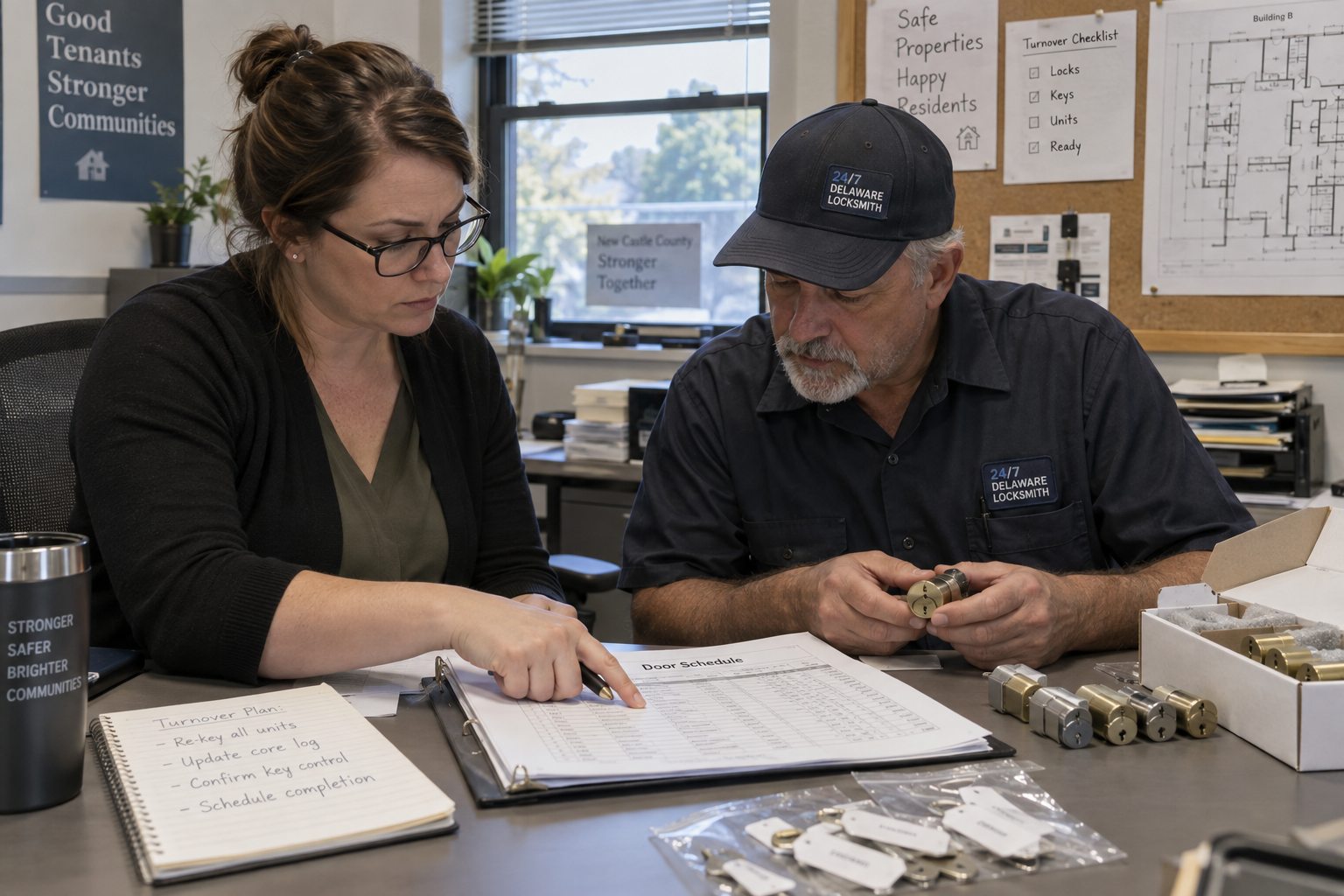
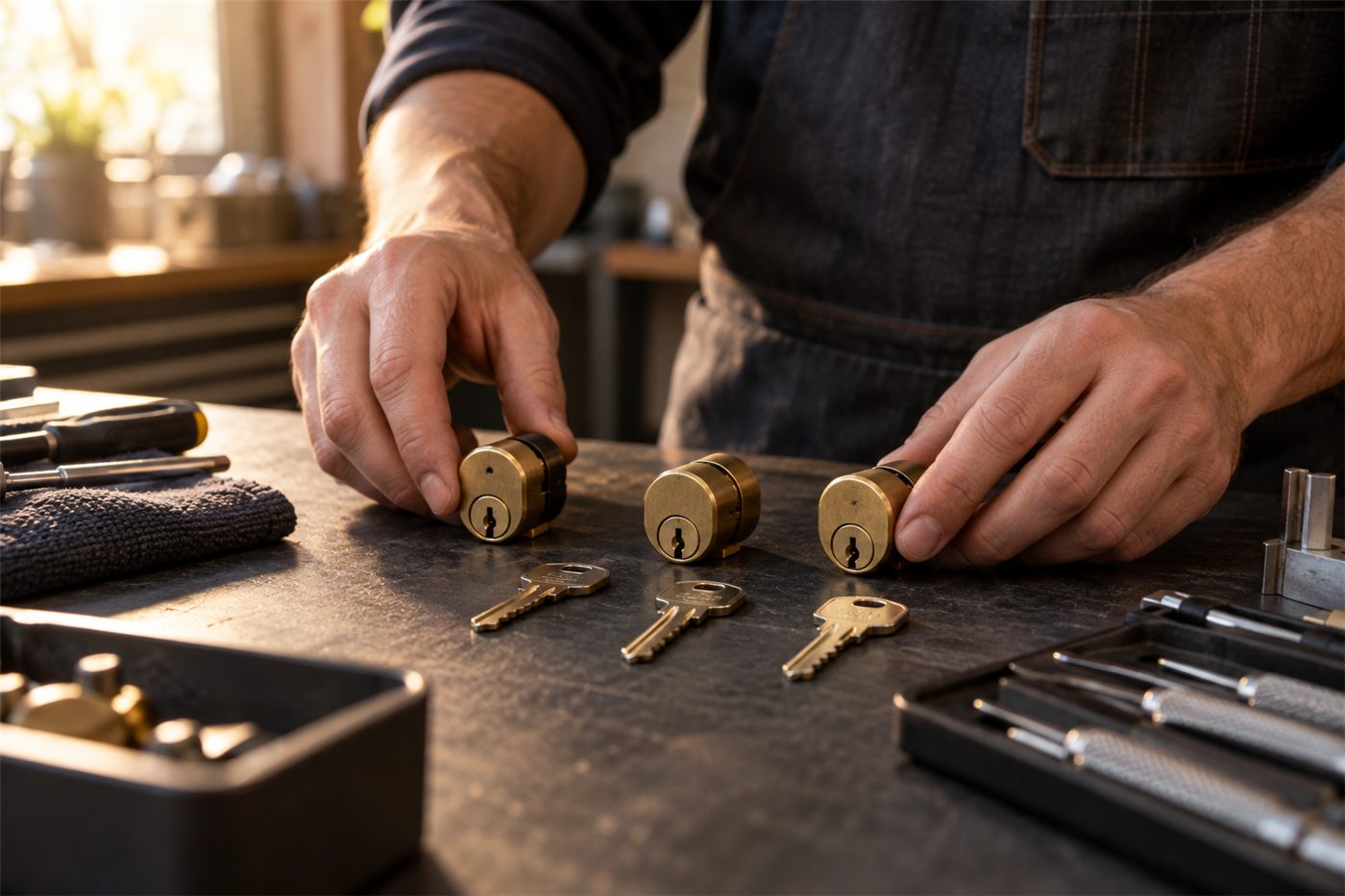
Rekeying. Where the existing locks are sound, rekeying is usually the fastest and most economical way to make every old key useless. We rekey every exterior lock in the unit, keyed alike, and hand over new keys. If the unit is part of a master key system, we rekey it within that system so your maintenance key keeps working.
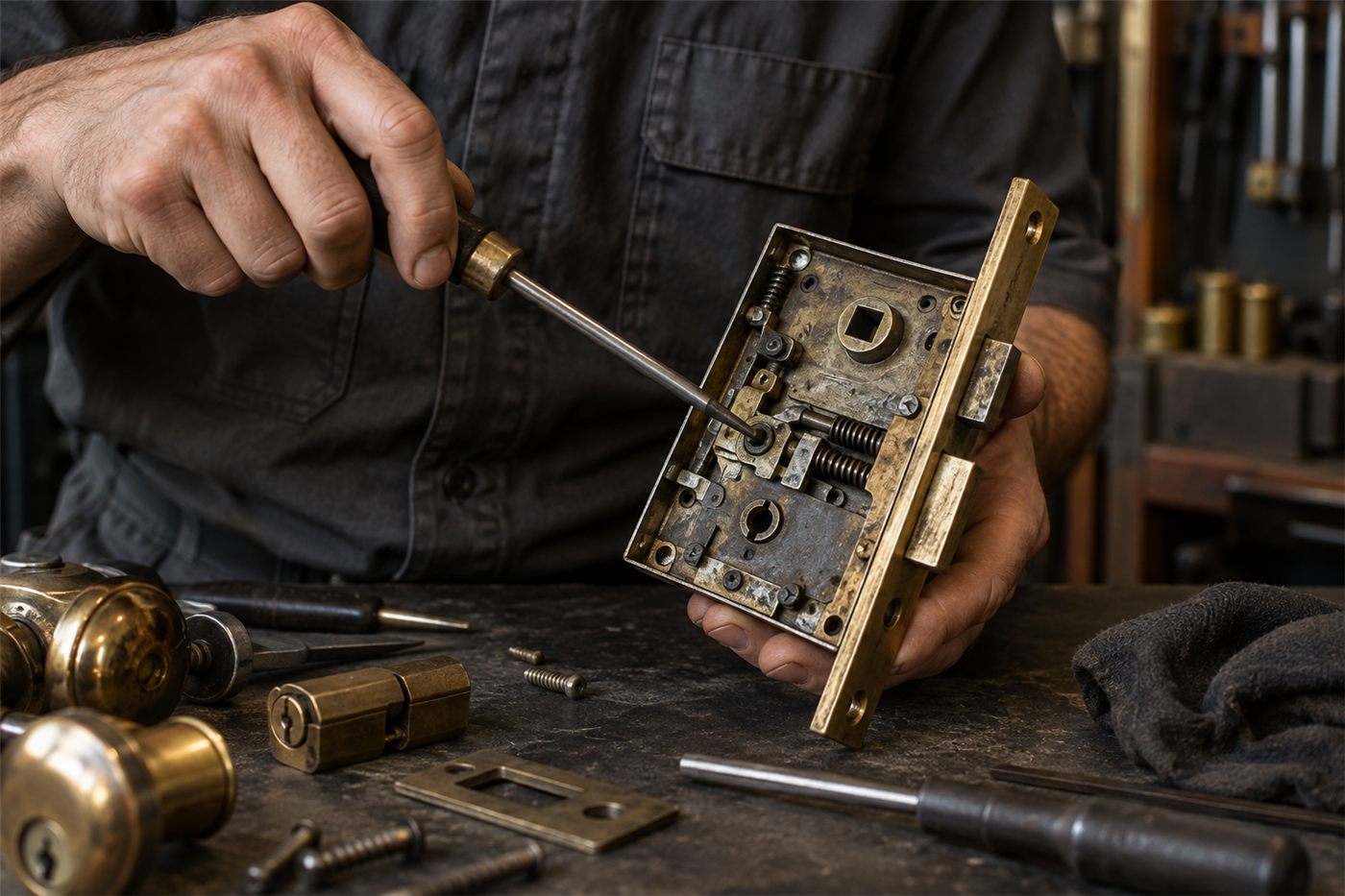
Replacement. Sometimes the locks are damaged, have been tampered with, or have been swapped by the occupant for their own hardware. Occupants do occasionally fit their own deadbolts, and in that case the owner never had keys to begin with. Replacement is the answer there, with hardware appropriate to the door.
Entry. If the door is locked and nobody present has a working key, we open it non destructively where we can, then change the lock. The officer carrying out the order may already have gained entry, but if not, we can help once the order allows it.
Other locks. Mailbox locks, storage cages, garage doors, gates and sheds may all have been accessible to the occupant. Walk through them with us so nothing is missed. A unit secured at the front door with an old key still opening the basement is not secured.
A difficult day
Keeping things calm on site
The day possession returns can be tense. The former occupant may be present, upset, or still removing belongings. Neighbors may be watching. Our role is narrow and we keep it that way: we change locks quietly, we do not take part in disputes, and we do not engage in arguments about the case.
If the situation on site becomes heated, we step back and let the officer or the owner handle it. If the former occupant asks us to let them back in for belongings after the locks are changed, we refer that to the owner, because it is the owner's decision and any arrangement for retrieving belongings should be handled according to the rules that apply and whatever the owner has agreed.
We also recommend that owners document the condition of the unit and its contents at the time of the lock change, with photographs and a written note. If belongings remain, how they must be handled is a legal question for the owner and their attorney. Keeping a record helps whichever way that goes.
Other situations
Lock changes that are not evictions
Not every landlord lock change follows a court process. Some common situations are simpler, and some need care of a different kind.
- A tenant moved out voluntarily. Keys were returned or left behind, and the lease has ended. This is a normal turnover, and our landlord rekey service covers it.
- A tenant abandoned the unit. Rent has stopped, the place looks empty, and nobody answers. Whether a unit is legally abandoned is a question to settle before changing locks, and the answer is not always what it looks like. Get advice first.
- A tenant died. Securing the unit protects the estate's belongings as well as the property. Coordinate with the family or the estate before changing locks, and make sure the right people can get access.
- A tenant asks for a lock change. For example after a relationship ends or keys are stolen. That is a lock change at the tenant's request, with the landlord's agreement under the lease, and it is common and routine.
- Commercial tenants. Commercial leases and the rules that apply to them differ from residential ones. Get advice specific to the commercial lease before any lock change.
After the change
Getting the unit ready for the next tenant
Secure first. Then decide what the doors need.
Units recovered after an eviction are sometimes in rough shape, and the doors and locks are no exception. We often find damaged frames, strike plates pulled loose, deadbolts that no longer throw fully, and doors that have been kicked or forced at some point during the tenancy.
Once the immediate lock change is done, it is worth walking the doors with us to plan any repair. Some of it can wait for the rest of the turnover work. Some of it, like a frame that will not hold a strike, should be dealt with before the unit is left empty for long, since an empty unit with a weak door attracts attention.
When the unit is ready to let, the incoming tenant should receive keys that only they and you hold. If you rekeyed on the day of possession, those keys are already the only working ones. If crews have been in and out with copies during the repairs, a second rekey before move in closes that gap too.
Planning
A simple plan for the day possession returns
Landlords who have been through this before tend to follow roughly the same plan. If it is your first time, it may help to see it laid out.
- As soon as you have a date and time, call us. The earlier we know, the easier it is to be there at the right moment rather than hours later.
- Gather your paperwork in one folder. Ownership or management documents, your ID, and the court paperwork. Bring the folder with you on the day.
- List every lock the occupant could use. Unit doors, storm doors, basement and garage entries, sheds, storage cages, mailbox, and any common area doors they had keys for.
- Bring the keys you have. Your own keys tell us immediately whether the locks are still yours or whether the occupant changed them.
- Plan for a camera or phone. Photograph the condition of the unit, doors and any belongings before and after the lock change.
- Decide who holds the new keys. Know in advance who on your side receives them and where they will be kept.
- Plan the next visit. If repairs, cleaning or an inventory will follow, decide whether crews get keys or a temporary lockbox, and when the final rekey before a new tenant will happen.
Empty units
Protecting a unit while it sits vacant
An empty home after an eviction draws attention.
Units recovered after an eviction can sit empty for a while as repairs, cleaning and any handling of belongings are worked through. An empty unit is an easy target, and word that a unit is vacant can travel quickly, particularly if the former occupant's friends or acquaintances know the building.
A few simple steps help. Make sure every door locks properly and every deadbolt throws its full length into a solid strike. Check that windows latch, especially ground floor windows and any that open onto a porch roof. If a door or frame was damaged during the tenancy, repair or reinforce it before leaving the unit unattended for long. Leave a light on a timer if the power is on, and ask a trusted neighbor or the building superintendent to keep an eye out.
If you need to give contractors access while the unit is empty, avoid handing out copies of the new key. A lockbox with a code you change when the work ends, or a temporary cylinder swapped out before the new tenant arrives, keeps control where it belongs.
For management companies
Working with property managers across many owners
Property management companies often handle possession returns for several different owners at once, each with their own properties, keys and preferences. We work with managers regularly and understand that the person meeting us on site is often not the owner.
What helps most is a clear point of contact, a copy of the management agreement or a standing authorization on file, and a consistent approach to keys. If your company uses a master key system across a portfolio, or a particular brand of hardware, tell us so the lock change fits your system rather than adding yet another key to the office. If different owners want different approaches, such as one who always wants replacement and another who prefers rekeying, note it in the job details and we will follow it.
After each job, you receive a record of the address, the date and what was changed, which you can pass on to the owner or keep in the property file.
Scenarios
Eviction lock situations compared
| Situation | What we do |
|---|---|
| Possession returned, locks in good condition | Rekey every exterior lock, new keys to owner |
| Occupant fitted their own deadbolt | Open and replace with owner hardware |
| Locks damaged or tampered with | Replace, check strike and frame |
| Unit on a master key system | Rekey within the system so maintenance access continues |
| Garage, storage or mailbox also accessible | Change or rekey those locks in the same visit |
| Landlord wants locks changed before court | We decline and recommend legal advice |
| Unit appears abandoned | Recommend advice on abandonment before any change |
Avoid these
Mistakes landlords make at the end of an eviction
- Waiting days to change the locks. Once possession returns, the unit is the owner's responsibility. An old key used in that gap can cause damage, theft or a squatting situation.
- Changing only the front door. Every entry the occupant could use must change, including basements, garages and storage areas.
- Assuming the locks are yours. Occupants sometimes change locks during a tenancy. Test your own keys before assuming a rekey is enough.
- Engaging in arguments on site. Leave the case where it belongs. Secure the property and document it.
- Skipping documentation. Photographs and a written record of the condition and any remaining belongings protect the owner later.
Local factors
Working across New Castle and Kent County
In New Castle County, eviction lock changes come mostly from property managers and landlords with units in Wilmington, Newark, New Castle, Bear and the apartment communities along Route 40 and Route 13. Larger managers often schedule several properties across the county, and we plan routes to be at each at the right time.
In Kent County, the work is more often for smaller landlords with a handful of properties in Dover, Smyrna, Camden and Milford, and for owners of rural rentals where distance matters. Telling us the scheduled time as soon as you have it lets us plan so the unit is secured without delay.
In both counties, the approach is the same: confirm possession, change every lock that matters, keep the day calm, and leave the owner with the only working keys.
Questions
Frequently asked
Will you change the locks so my tenant cannot get back in?
Only after possession has lawfully returned to you through the court process. We do not change locks on an occupied unit to remove a tenant.
What paperwork do you need?
Photo ID, proof of ownership or management authority, and proof that possession has returned, such as the court paperwork or confirmation from the officer carrying out the order.
Can you be there when the order is carried out?
Yes, where scheduling allows. Tell us the date and time as soon as you have it and we will plan to be there or follow on promptly.
Should I rekey or replace after an eviction?
Rekey when the locks are yours and in good condition. Replace when the occupant fitted their own hardware or the locks are damaged.
What about belongings left in the unit?
How remaining belongings must be handled is a legal question for the owner and their attorney. We recommend documenting everything with photographs at the time of the lock change.
Can you give legal advice about evictions?
No. We are locksmiths. For questions about the eviction process or your obligations, speak to an attorney or the court handling the case.
Do you handle commercial evictions?
We change commercial locks when the owner has lawful possession. Commercial leases have their own rules, so get advice specific to the lease first.
Can you rekey the unit within my master key system?
Yes. The unit is rekeyed so your master and maintenance keys keep working and the former occupant's keys do not.
Possession date set?
Call with the address and the scheduled time. We will plan the lock change so the unit is secure the same day.