

Why storms and locks are connected
Delaware gets its share of rough weather. Summer thunderstorms with sudden gusts, the remnants of tropical systems moving up the coast, nor'easters in the colder months, heavy snow and ice some winters, and tidal and river flooding in low-lying parts of both counties. When people think about storm damage, they think about roofs, trees and basements. Doors and locks come further down the list, until the night after, when the back door will not lock.
Storms damage doors in several ways. Wind can slam a door open against its stops, bending hinges or splitting the frame. A falling limb can strike a door or its frame directly. Wind-driven rain soaks wooden doors and frames so they swell and bind. Flood water fills lock cylinders with silt and debris and can ruin the electronics in smart locks and keypads. Power cuts leave electronic locks and garage openers running on batteries or not at all.
Any of these can leave a house or business that looks secure but is not. After a storm, streets are full of contractors, strangers and people looking for opportunities. A door that will not latch is an open invitation at exactly the time neighbors are distracted with their own damage. That is why checking doors belongs on the same list as checking the roof.
Safety first. If there is structural damage, downed power lines, gas smell or standing water near electrical equipment, stay away and call the appropriate emergency service or utility. Doors and locks can wait until the building is safe to approach.
The walk-around
What to check on every door.
Once it is safe, walk every exterior door in turn.
- Look at the door and frame from outside. Cracks in the frame, splits along the grain near the strike or hinges, dents in steel doors, broken glass in door panels.
- Close the door and look at the gap. Is it even all the way round? A gap that is wide at the top and tight at the bottom means the door or frame has shifted.
- Lock the deadbolt with the door closed. Does it throw fully without pushing the door? Does the key turn normally?
- Try the latch. Does the door latch on its own when closed? Does it stay latched when you push on it?
- Check the hinges. Loose screws, bent knuckles, a hinge pulling away from the frame.
- Look at the lock itself. Water or mud in the keyway, rust on the face of the cylinder, a keypad that is dark or unresponsive.
- Check sliding and garage doors. Sliding door latches and tracks, and the overhead garage door and its opener.
- Photograph everything. Before touching anything, photograph the damage from several angles, with the date. You may need it later.
Common damage
What you might find, and what it usually means.
| What you see | Likely cause | Usual fix |
|---|---|---|
| Door sticks, deadbolt drags after heavy rain | Wooden door or frame swollen with moisture | Often eases as it dries. If not, adjust the strike or plane the door edge once dry. |
| Door slammed open by wind, frame split at strike | Force on the latch or bolt tore the strike from the frame | Frame repair and a reinforced strike before the door can be relied on. |
| Door will not close fully after a limb strike | Frame or hinges bent out of line | Hinge and frame repair, sometimes door replacement. |
| Key will not go in after flooding | Silt and debris in the cylinder | Cleaning or replacing the cylinder. |
| Lock turns but feels gritty after flooding | Debris and early corrosion inside | Professional clean. Worsens if left. |
| Keypad or smart lock dead after water exposure | Water damaged electronics | Usually replacement. Use the mechanical override meanwhile. |
| Glass broken in a door panel | Wind, debris or a falling branch | Board up the opening tonight. Reglaze once safe. |
| Garage door off its track | Wind load or impact | Do not operate it. Call a garage door technician. |
Tonight
Securing a door that cannot be fixed yet.
Sometimes a door is too damaged to fix straight away. The frame needs rebuilding, the door needs replacing, or parts have to be ordered. In the meantime, the building has to be secure for the night.
If the door still closes but will not lock, a temporary surface bolt or hasp fitted inside can hold it shut until a proper repair. A heavy piece of furniture against an inward-opening door is a last resort for one night, but make sure there is another way out in case of fire.
If the frame is split at the strike, a strike reinforcement plate with long screws into the framing behind the damage can sometimes restore enough strength to lock the door. This is often a same-day repair.
If glass is broken, board the opening from outside with plywood screwed into the frame, not just the trim. Clear loose glass first, carefully, with gloves.
If the door will not close at all, the opening needs to be boarded or a temporary door fitted. This is a job for a contractor, but a locksmith can often help secure it for the night.
For a business, an unsecured storefront after a storm is urgent. Our emergency locksmith service handles exactly these situations, and we can usually secure a damaged door the same night so you are not sitting up guarding it.
Water
What flooding does to locks.
Flood water is not clean water. It carries silt, sand, mud, debris and whatever else it picked up on the way. When it rises above a lock, it fills the keyway and the inside of the cylinder. As it drains, it leaves that debris behind, packed around the pins and springs.
A lock that has been under flood water may seem to work at first, especially if you try it while the silt is still wet. As it dries, the silt hardens and the lock gets stiffer. Corrosion follows, particularly on steel springs and parts. Brackish or salt water from tidal flooding, which affects low-lying areas along the Delaware River and Bay, is harder on locks than fresh water.
After a flood, locks that were under water should be cleaned properly, not just sprayed. Spraying lubricant into a silted lock mixes the silt into a paste. A proper clean means removing the cylinder, taking it apart, flushing the debris out and relubricating. For many ordinary cylinders, especially if several doors were affected, replacing the cylinders is simpler and not much different in effort. We will tell you which makes sense for your hardware.
Electronic locks that were submerged should be treated as damaged. Even if they seem to work, water in the circuit board can cause failures later, sometimes locking you out. Use the mechanical override, and plan to replace the electronic unit. Our smart lock installation page covers replacements.
Do not forget the smaller locks. Padlocks on gates, sheds and trailers, mailbox locks, basement bulkhead latches and crawlspace hatches all sit low and all get flooded first. Padlocks in particular seize quickly once silt dries inside them, and a padlock that will not open is often cut off in frustration. Rinse them with clean water while the silt is still wet, let them dry, and apply a dry lubricant. If one has already seized, it is usually simpler to replace it than to rescue it.
Business owners with roll-down shutters or gates on storefronts should check the locking bars and padlocks at the base, where water and debris collect. A shutter that cannot be locked leaves the whole front of the shop exposed.
Power cuts
When the storm takes the electricity.
| Device | What happens in a power cut | What to do |
|---|---|---|
| Battery smart lock or keypad | Usually keeps working on its batteries, though connected features may stop. | Keep fresh batteries in stock, especially before storm season. |
| Hardwired electronic lock | Depends on the design. Some lock, some unlock when power fails. | Know which yours does. Ask the installer. |
| Garage door opener | Stops working unless it has battery backup. | Know how to use the emergency release, and how to lock the door manually afterward. |
| Business access control | Depends on backup power and the lock type. | Know how your system behaves and have a keyed backup for the main door. |
| Alarm system | Usually runs on backup battery for a period. | Check it rearms properly when power returns. |
The garage release catch
Using the emergency release during a power cut disconnects the door from the opener so it can be lifted by hand. Once released, the door may be easy to lift from outside until it is reconnected or locked manually. If you release it, lock the door manually or reconnect it as soon as you can. The garage entry guide covers this in more detail.
Swollen doors and wet frames
The most common storm-related lock call we get is not dramatic at all. After days of wind-driven rain, a wooden door swells, and the deadbolt that threw easily last week now drags against the strike or will not reach it at all. People force the key, and sometimes snap it.
In many cases, the door will return to normal as it dries over the following days. Resist the urge to plane the edge of a swollen door straight away, because once it dries you will have a gap. If the door has to be locked in the meantime, a small temporary adjustment to the strike, which can be reversed later, is better than removing wood from the door.
If the door does not return to normal once dry, the frame may have shifted. A settled or twisted frame needs the strike moved, the hinges adjusted, or both. Doors that swell repeatedly may need better weather protection: a storm door, a canopy, fresh paint or sealing on the top and bottom edges, which are often left unpainted and soak up water.
Never force a key in a lock that is dragging. The broken key guide explains what happens when that goes wrong.
After the storm
Contractors, documentation and scams.
Document before repairing. Photograph every damaged door, frame and lock before any work begins, and keep receipts for emergency securing and repairs. If you plan to make an insurance claim, check with your insurer what they need and whether they want to inspect before permanent repairs. We can provide a written description of the work we do.
Be careful who you let in. After storms, people knock on doors offering repairs. Some are genuine. Some are not. Some take a deposit and disappear, and some are looking at the house rather than the damage. Get repairs from people you contact yourself, check them out, and do not pay large sums in advance. Our locksmith scam guide has tips that apply to any contractor.
Keys handed to contractors. Storm repairs often involve roofers, water damage crews, electricians and carpenters coming and going for days or weeks. If you hand out keys or garage codes, keep a list and collect them. When the work is done, consider a rekey or code change. The lock rekeying page explains how simple that is.
Temporary housing. If you have to leave the house while repairs happen, make sure every door is secure before you go and that someone checks it regularly. A house under repair with workers coming and going is attractive to thieves looking for tools and materials.
Before the next one
Preparing doors for storm season.
- Fit reinforced strikes with long screws. A door that slams open in the wind is far less likely to split the frame if the strike is anchored in the framing.
- Tighten hinges, and use long screws in at least one hole per hinge. Loose hinges let a door sag and bind when wet.
- Seal the top and bottom edges of wooden doors. Unsealed edges soak up water and swell.
- Keep spare batteries for electronic locks. Check that every smart lock has a working mechanical override.
- Learn your garage door's manual release and manual lock. Practice it once in good weather.
- Trim branches over doors and entrances. The limb that falls on a door is usually the one that has been hanging over it for years.
- Know where your spare keys are. If a key is lost in the chaos of a storm, you want a spare you can find.
- Keep plywood and screws on hand if you are in a flood or wind prone area. Boarding a door is much easier if you do not have to find materials after the storm.
Delaware areas
Where storms hit doors hardest.
Riverside and bayside communities such as Delaware City, New Castle's lower areas, Leipsic, Little Creek, Bowers and around Frederica can see tidal and storm surge flooding. Locks here see more salt and silt, and doors need cleaning or replacement cylinders after significant flooding.
Older homes in Wilmington, New Castle and Elsmere have heavy wooden doors that swell with rain and older frames that split more easily when a door is slammed open by wind.
Open farmland across Kent County around Hartly, Kenton, Felton and Harrington catches strong winds with little shelter, and outbuildings, barns and sheds often lose doors or have hasps torn off.
Wooded neighborhoods in Hockessin, Greenville and Pike Creek see more falling limbs, and a branch striking a door or garage is a common source of damage after summer storms.
Related
Services for after the storm.
 Most requested
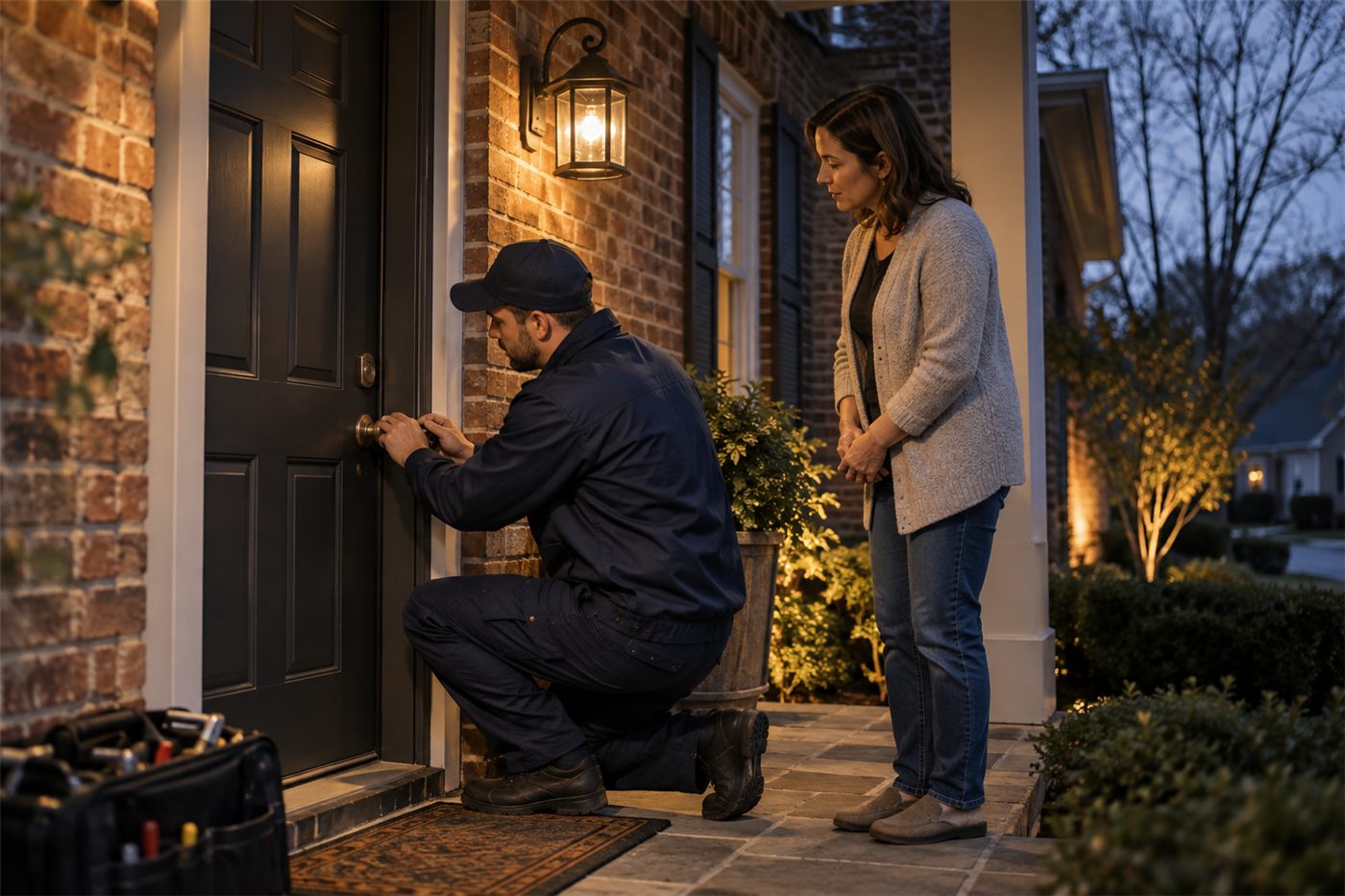
Emergency Locksmith
Securing damaged doors the same night.
 Repair
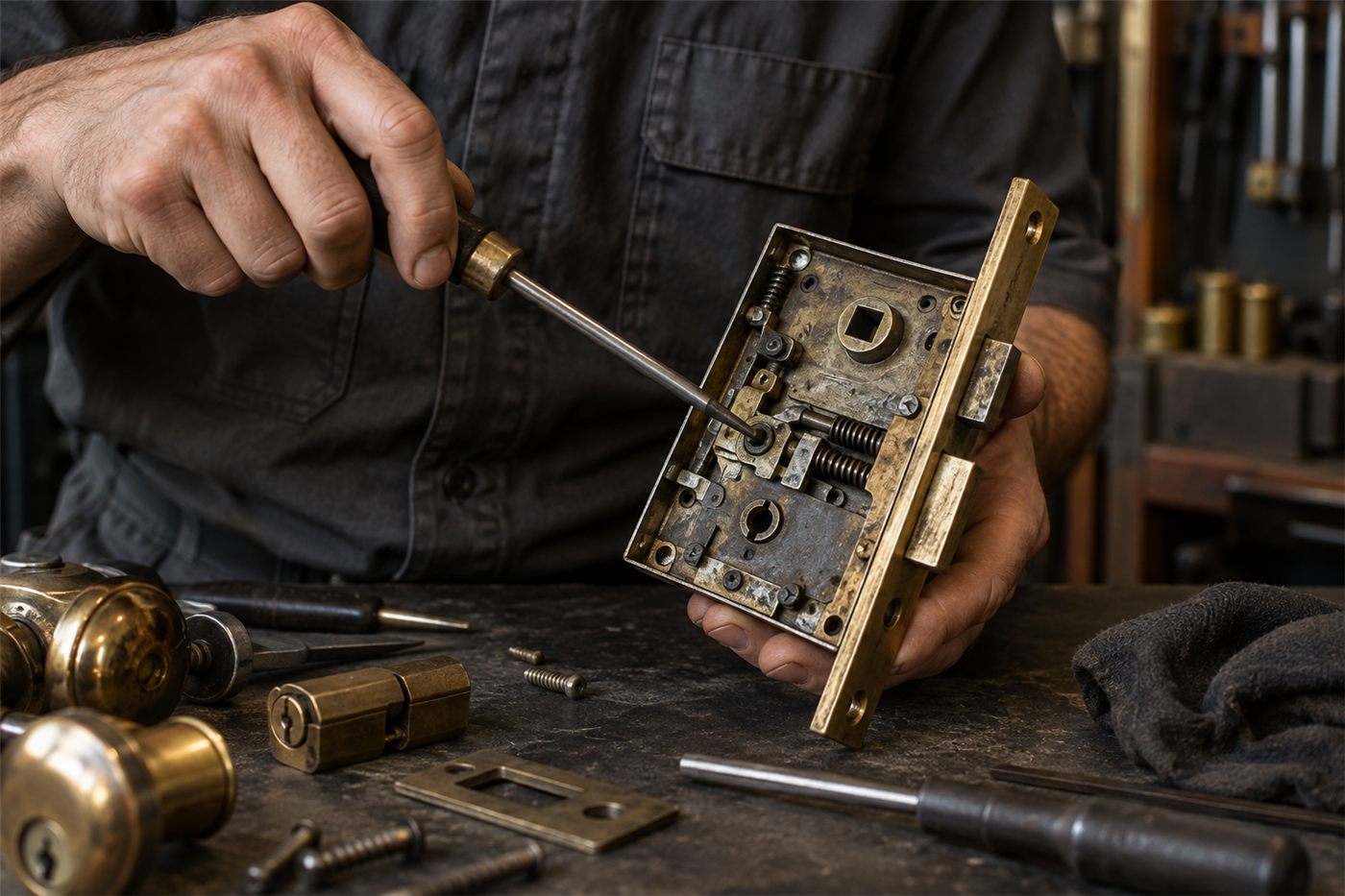
Lock Repair
Silted cylinders cleaned, dragging bolts adjusted.
ReplacementLock Change
When flood damage makes replacement the simpler path.
 Business
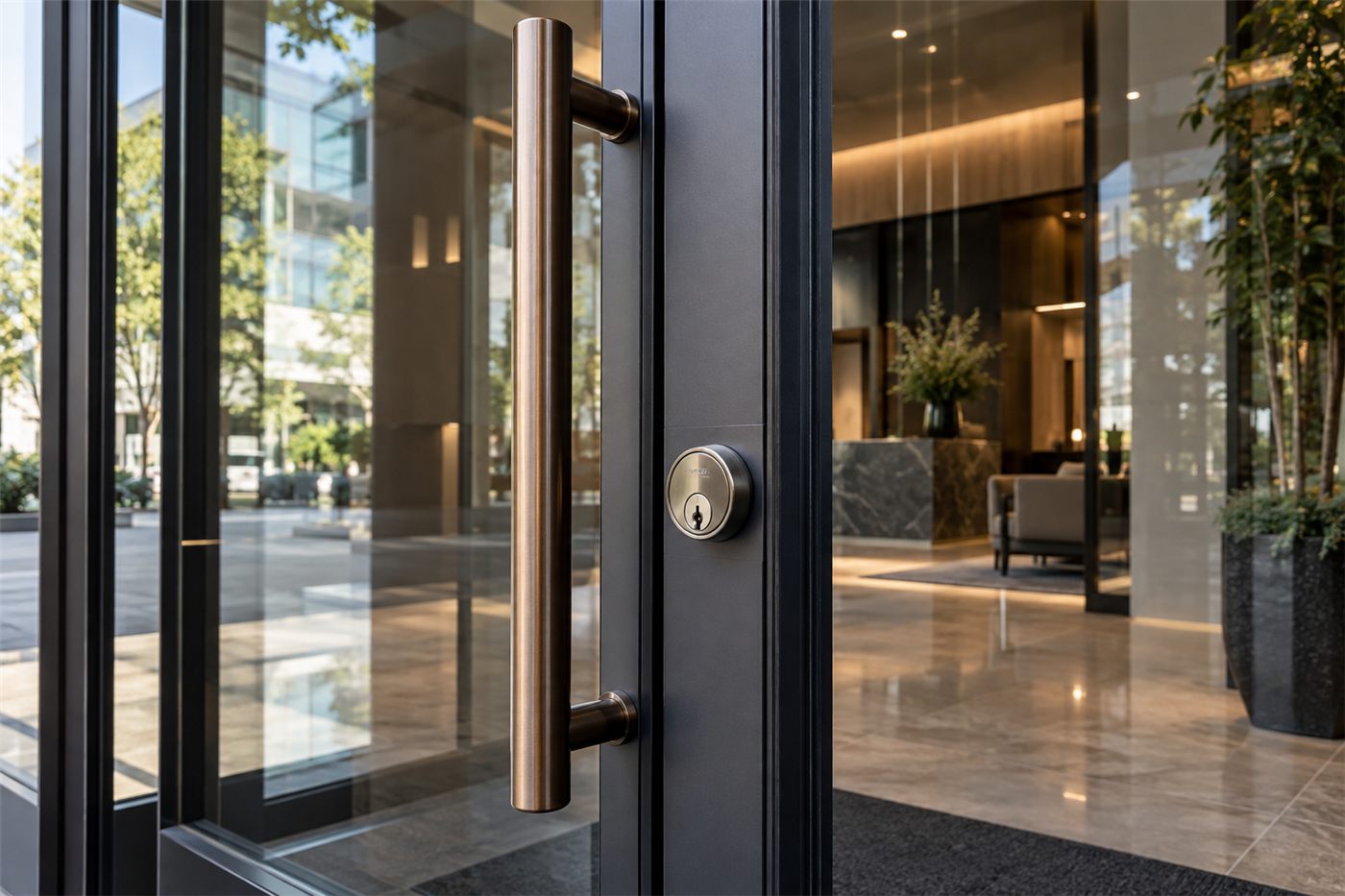
Storefront Door Locks
Getting a damaged shopfront secure again.
ReinforceDeadbolt Installation
With a strike that holds when the wind does not.
If it gets worseAfter a Break-In
If someone took advantage of a damaged door.
Where we do this
Storm damage door work across both counties.
Questions
About storm damage and locks.
My door is swollen and the deadbolt will not throw. What should I do?
Do not force the key. Wooden doors often shrink back as they dry over a few days. If you need to lock it tonight, a small temporary strike adjustment is better than planing the door. If it does not return to normal when dry, the frame may have shifted and needs adjusting.
Do locks need replacing after a flood?
Not always, but they need proper attention. Locks that were under water fill with silt, which hardens and causes corrosion. They should be taken apart and cleaned, or replaced. Submerged electronic locks should be treated as damaged even if they seem to work.
Can you secure a damaged door the same night?
In most cases, yes. We can fit temporary locks, reinforce a split strike, or help secure an opening until permanent repairs are made. For badly damaged doors, a contractor may be needed for the permanent fix.
Can I spray lubricant into a lock after flooding?
It is better not to. Spraying into a silted lock mixes the debris into a paste. The lock needs to be cleaned properly, which usually means removing and disassembling the cylinder.
What happens to my smart lock in a power cut?
Battery powered smart locks usually keep working on their batteries, though connected features may stop. Hardwired systems vary. Keep spare batteries and make sure the mechanical override works.
Should I photograph damage before calling a locksmith?
Yes. Photograph everything from several angles before any repairs, and keep receipts. If you plan to claim on insurance, check with your insurer about what they need before permanent repairs begin.
Contractors had keys during repairs. Should I rekey?
If several people had keys or codes over weeks of work, a rekey or code change once repairs are finished is sensible. It is simple and means only your household's keys work.
How can I make my doors more storm resistant?
Reinforced strikes with long screws, tight hinges, sealed door edges, spare lock batteries, a known garage manual release, and trimming branches that hang over entrances all help. Most of these are small jobs.