

Why this door gets overlooked
There are usually two doors between the street and the inside of an attached garage house. The big overhead door, and the smaller one that leads from the garage into a mudroom, laundry or kitchen. The overhead door feels like the security, because it is large and noisy and controlled by a remote. The small door feels like an interior door, and it is often built like one.
That thinking has a hole in it. If anyone gets into the garage, by an overhead door left open, a side door with a weak lock, a remote taken from a car parked in the driveway, or an opener that can be released from outside, the only thing between them and the house is that small door. And behind that small door is everything, because people arriving through the garage are out of sight of the street.
Across both counties we find the same pattern on house after house. The front door has a deadbolt, and the garage entry has a knob lock, sometimes with no key cylinder at all on the garage side. It is often left unlocked all day, because everyone uses it and nobody wants to dig for a key with arms full of groceries. That is understandable, and it can be solved without making daily life harder.
The ways in
How people get into the garage first.
Securing the entry door matters because the garage is easier to enter than most people assume.
The overhead door left open. The simplest and most common. Somebody pulls out in the morning and forgets to close it, or the door reverses on an obstruction and nobody notices. A garage standing open for an afternoon is an invitation.
A remote in a parked car. Many people leave a garage remote clipped to the visor of a car parked in the driveway. A car break-in then becomes a key to the garage, and the registration in the glove box supplies the address. Keep remotes out of cars that live outside, or use a keychain remote you carry with you.
The emergency release. Automatic garage doors have a release cord that lets the door be opened by hand in a power cut. On some doors, a hooked wire pushed through the gap at the top of the door can reach that cord and pull it. There are inexpensive shields and clips that prevent it, and they are worth fitting on any door where the release hangs close to the top panel.
The side door into the garage. Many garages have a pedestrian door to the yard. It is frequently a hollow door with a basic knob lock, never used, never checked. It is often the weakest lock on the whole property.
Windows. Garage windows are usually simple sliders or fixed panes, rarely locked, and often hidden from view by shelving on the inside and shrubs on the outside.
None of these is a reason to panic. They are a reason to treat the garage entry door as an exterior door, because functionally it is one.
What to fit
A garage entry door, done properly.
| Part | What good looks like | Common problem |
|---|---|---|
| The door itself | Solid core or steel, fitting well in its frame | Hollow interior-grade door that can be broken through with a kick. |
| Primary lock | A deadbolt keyed on the garage side | Knob lock only, or a privacy knob with no key at all. |
| Strike plate | Reinforced plate with long screws into the framing | Thin plate held by short screws in trim. |
| Hinges | Long screws in at least one hole per hinge | Short screws only, frame splits on impact. |
| Keying | Keyed alike with the front door, if you prefer one key | A different key that nobody carries, so the door stays unlocked. |
| Self-closing | Where the house requires it, hinges or closer working | Closer disconnected, door propped or left ajar. |
| Keypad or smart option | Electronic deadbolt with a mechanical override | None, so the convenient option is simply leaving it unlocked. |
The deadbolt
Why a knob lock is not enough here.
A knob lock, or a lever lock, secures the door with a spring latch, the angled tongue that clicks into the strike when the door closes. The spring latch is designed for convenience: the door locks when you pull it shut. It is not designed to resist force. It can often be slipped with a thin tool, and a firm push against a door with a spring latch and a short-screw strike can split the frame.
A deadbolt is a solid bolt that only moves when turned by a key or thumb turn. It cannot be pushed back into the door, and when paired with a strong strike, it spreads the force of an attack into the house framing. That is why every exterior door should have one, and the garage entry door is an exterior door.
The deadbolt grade guide explains the difference between grades. For a garage entry door, a good residential deadbolt with a reinforced strike is the right level for almost every home. The grade matters less than the installation. A well rated deadbolt in a thin strike with short screws is a well rated bolt in a weak frame.
Many homeowners worry that a deadbolt on this door will be a nuisance, since it is the door everyone uses. There are three good answers. Key it alike with your front door so the one key on everyone's ring works both. Fit a keypad deadbolt so nobody needs a key at all. Or accept a small habit change: the deadbolt goes on at night and when the house is empty, and the knob is enough when you are home and the overhead door is shut.
Keypads and smart locks
The door where electronic locks shine.
If there is one door in a house where a keypad or smart deadbolt makes the most sense, it is the garage entry. It is used many times a day, often with full hands, by every member of the household including children who lose keys. It is protected from rain and direct sun by the garage, which is kind to electronics. And it is the door where the alternative is so often an unlocked door.
A keypad deadbolt lets each person have a code. Children can come home from school, a dog walker can have a code that only works on weekdays with some smart models, and nobody has a key to lose. Codes can be changed in minutes if someone should no longer have access, which is much easier than a rekey.
A few cautions apply. Choose a model with a mechanical key override, so a dead battery does not mean a lockout. Garages in Delaware get cold in January and hot in July, and batteries suffer in both, so change them before winter regardless of the indicator. Check that the model is rated for the temperature range of an unheated garage. And make sure the door is aligned, because a motorized bolt dragging on a strike drains batteries and eventually jams.
Our keypad lock installation and smart lock installation pages cover fitting in more detail, and the keyless entry guide weighs up the tradeoffs honestly.
The door and frame matter as much as the lock
A good deadbolt fitted to a hollow core door is a strong bolt in a weak panel. Interior doors are often a thin skin of hardboard over a cardboard honeycomb, and a firm kick can go straight through the panel next to the lock without the bolt ever moving. If you knock on your garage entry door and it sounds hollow, the door itself is part of the upgrade. A solid core wood door or a steel door, fitted to the existing frame where possible, changes the whole picture.
The frame is the other half. Garage entry doors are frequently hung in frames fixed with finish nails and a little construction adhesive, with shims behind them and gaps where the jamb meets the framing. The strike screws on the latch side, and at least one screw in each hinge, should reach into the solid studs behind the jamb. That is a small change with a large effect, because it moves the load of any attack from a strip of trim into the structure of the house.
Check the hinge side too. Some garage entry doors open outward into the garage, which leaves the hinge pins exposed on the garage side. Pins that can be tapped out let the door be lifted from its hinges regardless of the lock. Security hinges or hinge studs solve that, and they are inexpensive to add while someone is already working on the door.
Finally, look at the gap along the latch edge. If you can see daylight or slide a card along it easily, the door is either undersized or has shifted. A large gap makes it easier to work a tool against the latch or bolt. Weatherstripping, an adjusted strike, or in some cases a latch guard plate closes that gap.
The overhead door and opener
This guide is about the entry door, but a few things about the overhead door and its opener are worth checking at the same time, because they decide how often that entry door is the only barrier.
Close it every time. Many modern openers can be set to close automatically after a set period, or to send a phone alert if the door is left open. If yours can, turn that on. It solves the most common way into a garage without any hardware at all.
Guard the release. If your emergency release cord hangs near the top of the door, fit a release shield or a simple zip tie arrangement that stops a hooked wire from pulling it, while still allowing you to pull it in a real emergency. Check the manufacturer's guidance for your opener.
Manage the remotes. Count them. Old remotes from previous owners, remotes in cars that have been sold, remotes given to a contractor. Most openers let you clear all paired remotes and re-add only the ones you have. After moving into a house, this is as important as rekeying the front door. The new home locks guide covers the rest of that list.
Manual lock on vacation. Many overhead doors have a slide bolt or a manual lock on the inside. When you are away for a long time, engaging it, or unplugging the opener, adds a layer. Our vacation guide covers the rest.
For the overhead door hardware itself, the garage door locks page explains what we can fit.
Checklist
Walk your garage tonight.
- Look at the entry door lock from the garage side. Is there a keyed deadbolt? Is there a key cylinder at all?
- Knock on the door. A hollow sound means a hollow core door. That is worth replacing with a solid one.
- Pull a strike screw. If it is short, replace it with a long screw that reaches the framing.
- Check the side door to the yard. Same questions: deadbolt, strike, door construction.
- Find every garage remote. Clear the opener memory and re-pair only the ones you can account for.
- Look at the emergency release. Could a hooked wire reach it from the top of the door?
- Check the windows. Can they be locked? Can they be seen from outside?
- Ask who uses the door. If people leave it unlocked because of the key, the solution is keying alike or a keypad, not a stricter rule.
Delaware homes
Where this comes up most.
Newer subdivisions in Middletown, Townsend, Odessa and Smyrna almost all have attached garages, and builders frequently fit the garage entry with the same passage or privacy knob used on interior doors, or with a keyed knob and no deadbolt. These are straightforward to upgrade, and many homeowners in these areas never realize the difference until someone points it out.
Established neighborhoods in Pike Creek, Hockessin and around Greenville often have larger garages with side doors, workshop areas and valuable equipment inside. Here the side door deserves as much attention as the entry door, and the garage itself may be worth locking as a room in its own right.
Kent County homes around Dover, Camden and Wyoming include plenty of detached garages and outbuildings. A detached garage has no entry door into the house, but it often holds tools that make getting into the house easier. Lock it, and do not leave ladders or pry bars accessible.
Wherever you are, the practical answer is the same. Treat every door that leads into living space as an exterior door, and give it a deadbolt, a proper strike and a key that people will actually carry.
Related
Other doors worth the same attention.
The patio door at the back is the other common weak spot, covered in the sliding glass door guide. For the frame behind every lock, see door frame security.
 Most requested
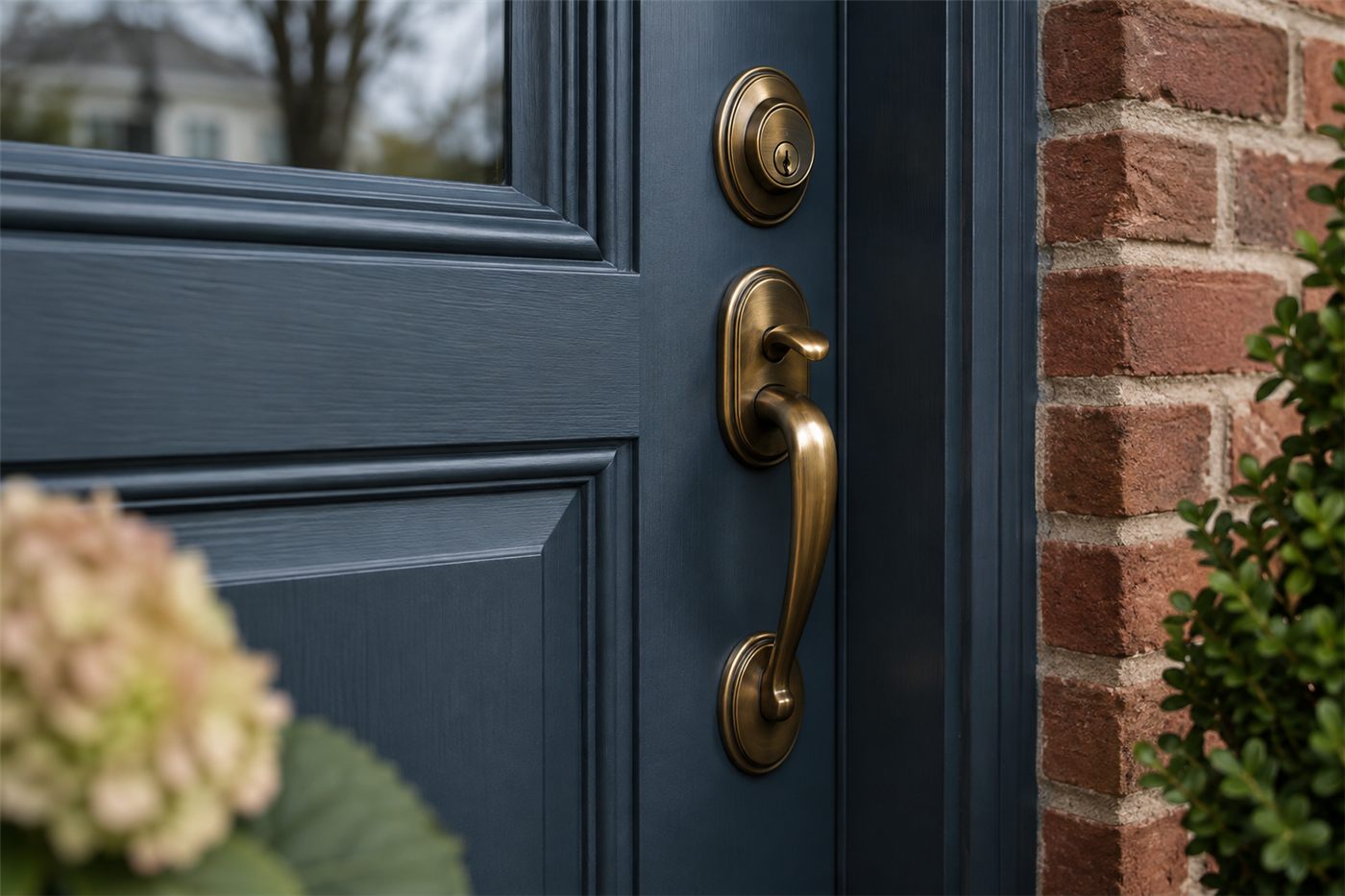
Deadbolt Installation
With a reinforced strike and long screws into the framing.
 Convenience
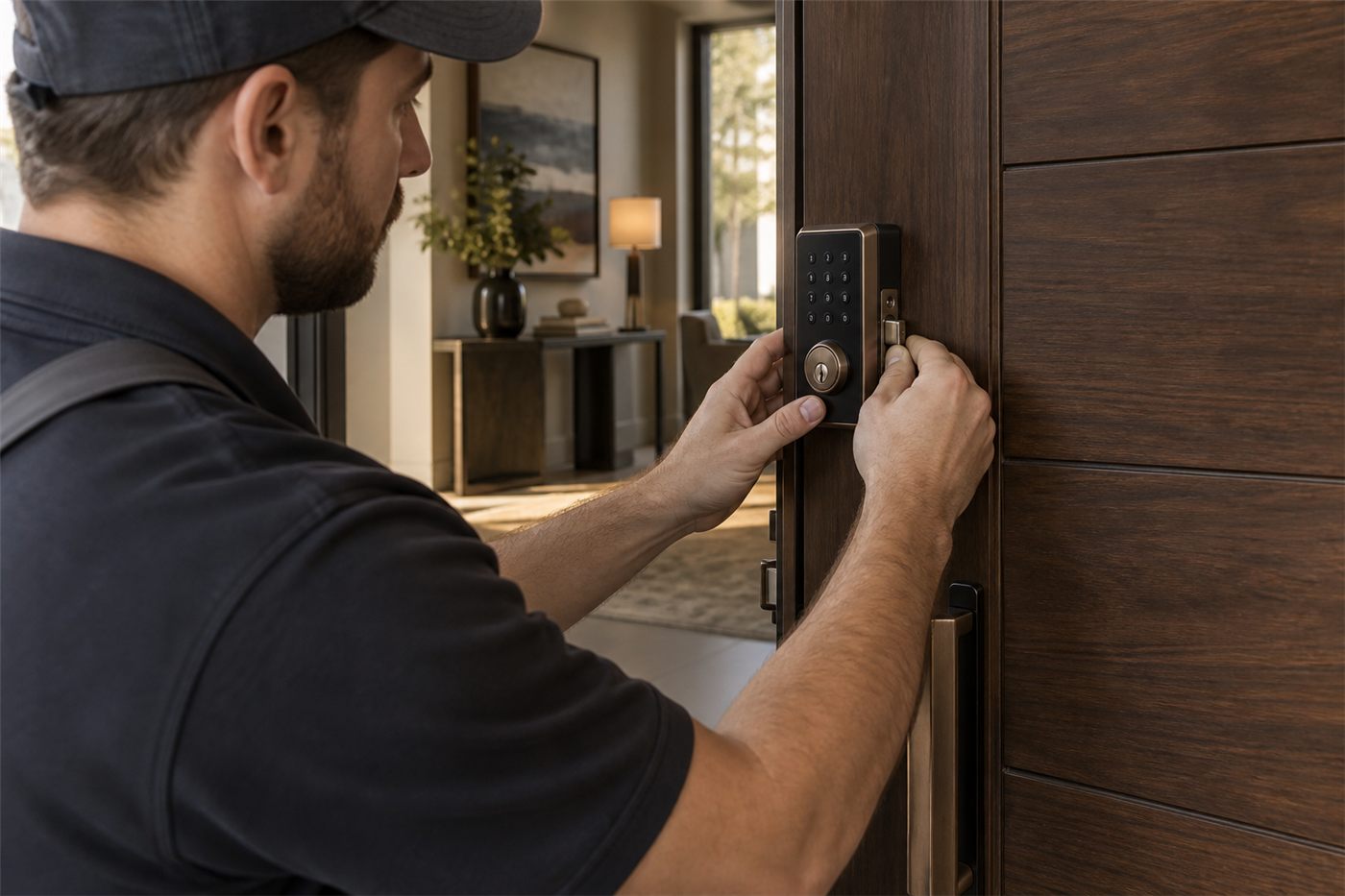
Keypad Locks
No keys for the family door, with a mechanical override.
GarageGarage Door Locks
Manual locks and hardware for overhead and side doors.
 One key
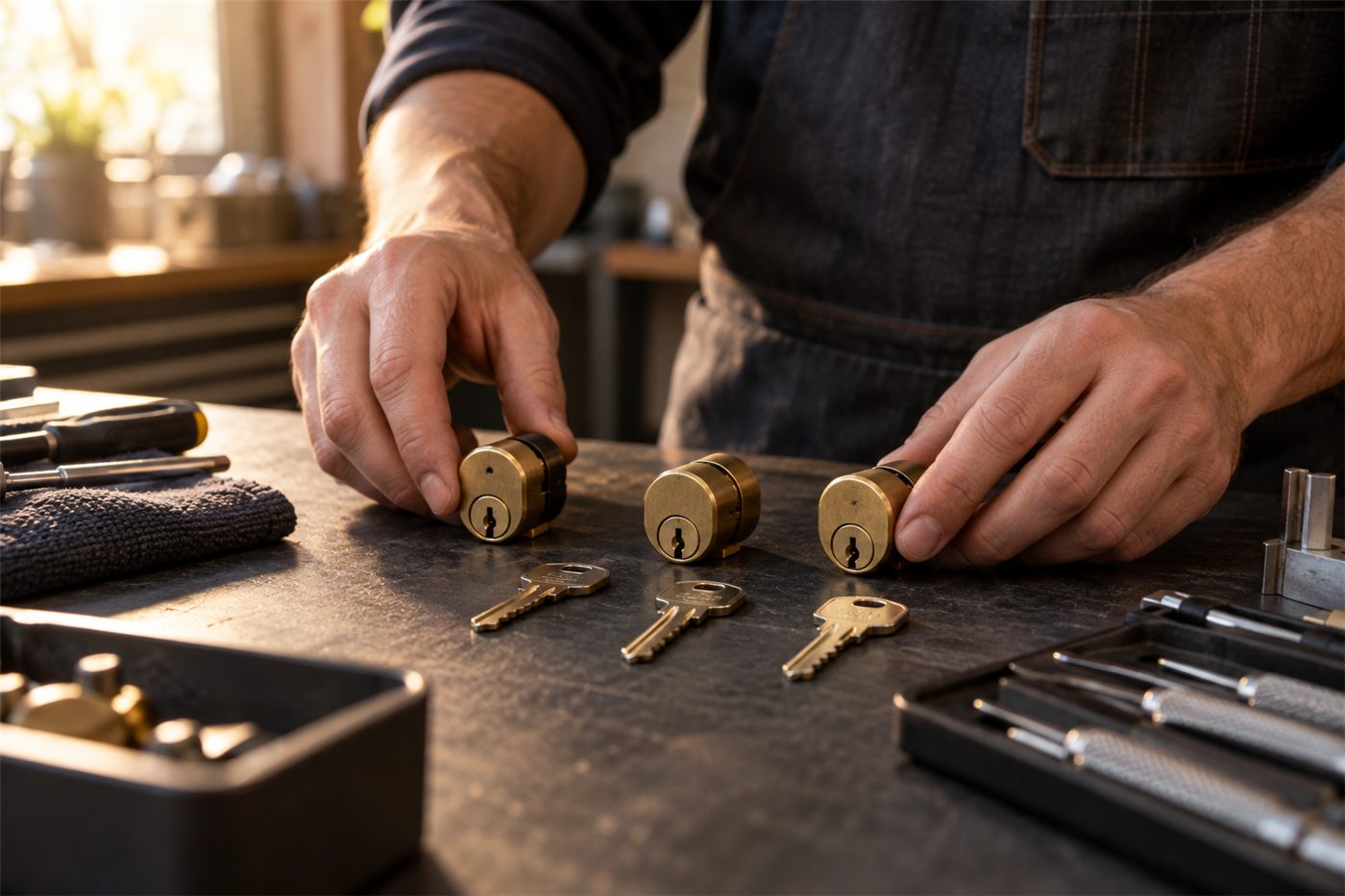
Keying Alike
Front, back and garage entry on the same key.
ReplacementLock Change
Swap an interior knob for exterior grade hardware.
All home workResidential Locksmith
Every door in one visit.
Where we do this
Garage entry upgrades across both counties.
Questions
About garage entry doors.
Does the door from the garage to the house need a deadbolt?
We strongly recommend one. If anyone gets into the garage, that door is the only barrier to the house, and people coming through the garage are out of sight. A knob lock alone relies on a spring latch, which is not built to resist force.
My garage entry door has no key on the garage side. Is that normal?
It is common, because builders often fit an interior privacy knob. It means the door can only be locked from inside the house, and it offers little resistance. Replacing it with exterior grade hardware and a keyed deadbolt is a straightforward job.
Can the garage entry be on the same key as my front door?
Usually, yes. If the cylinders share a keyway they can be rekeyed alike. If not, one cylinder can often be swapped. One key makes people much more likely to actually lock the door.
Is a keypad lock safe on this door?
A good keypad deadbolt, properly installed with a reinforced strike, is as strong as a comparable keyed deadbolt. Pick one with a mechanical override, change batteries before winter, and remove codes when people no longer need access.
Should the garage entry door be self-closing?
Some homes have self-closing hinges or a closer on this door as part of how the house was built, often related to fire separation. If yours does, keep it working rather than disconnecting it. If you are unsure what applies to your home, check with your builder or local building office.
How do I stop someone opening my garage with the release cord?
A release shield or a simple fastening that keeps the cord from being hooked from the top of the door usually solves it, while still letting you pull it in an emergency. Follow the opener manufacturer's guidance so the release still works when you need it.
We just moved in. What should we do with the garage?
Rekey the entry door with the rest of the house, clear the opener's remote memory and re-pair only your own remotes, and change any keypad code on the outside of the garage. Previous owners, their family and contractors may all have had access.
Is the side door into the garage important?
Often it is the weakest door on the property, because it is rarely used and rarely checked. It deserves a deadbolt and a proper strike just like the entry door, especially if the garage holds tools or bikes.