

The basics
Three doors, three different locks
A garage usually has more than one way in, and each needs its own answer.
The overhead door, the side door and the door into the house
When people talk about garage door locks, they usually mean the big overhead door. That is one part of it. Most attached garages have three doors that matter: the overhead door the car uses, a side or service door that people walk through, and the door from the garage into the house. Each works differently, and a weakness in any one of them undoes the others.
The overhead door is usually controlled by an electric opener, which holds the door down when it is closed. Many overhead doors also have a manual lock, either a handle on the outside with bars that slide into the tracks, or bolts on the inside that do the same. The side door is an ordinary exterior door and should be locked like one, with a deadbolt and a solid strike. The door into the house is often the most neglected lock in the home, protected by nothing more than a knob, even though anyone who gets into the garage has all the time and privacy they need to work on it.
We look at all three. Sometimes the answer is a new lock. Sometimes it is an adjustment. Sometimes it is a habit, like remembering to use the lock that is already there.
Overhead doors
Manual locks for overhead garage doors
T-handle locks have a keyed handle on the outside of the door and a mechanism on the inside that drives bars or cables out to the sides, where they slide into slots in the vertical tracks. When locked, the bars stop the door from rising. These locks are common on older doors and on doors without openers. Over time, the handles wear, the key cylinders stiffen, the cables stretch and the bars stop reaching the tracks.
Slide bolts, also called side locks, mount on the inside of the door near the bottom and slide a bar into a hole in the track. They are simple, strong and inexpensive. They can be locked only from inside, which makes them ideal for a garage that is always entered through another door or for times when the household is away.
Track locks and padlocks clamp onto the track or pass through a hole in it above a roller, stopping the door from moving. They are useful for vacations or for detached garages that are rarely opened.
One important point about manual locks on a door with an opener: if the manual lock is engaged and someone presses the opener button, the opener will try to lift a locked door. That can damage the door, the opener or the lock. Many households with openers disable or remove the manual lock for that reason. If you want both, use the manual lock only when the opener is unplugged or locked out, such as during a trip, and make sure everyone in the house knows.
The opener
What the opener does, and the weak point people overlook
An electric opener holds a closed door down through its drive mechanism. On most residential doors, that alone makes the door hard to lift from outside. Openers have also improved over the years. Modern remotes use changing codes that are much harder to capture and replay than the fixed codes of older systems. Many wall consoles include a lock or vacation button that disables the remotes while the household is away.
The weak point is the emergency release. Every opener has a release cord, usually with a red handle, hanging from the trolley on the rail. Pulling it disconnects the door from the opener so the door can be lifted by hand during a power failure. It is an essential safety feature. It is also a known vulnerability, because on some doors a person outside can reach the release through the gap at the top of the door with a hooked tool and pull it, freeing the door.
There are sensible ways to reduce that risk without disabling a safety feature. A release shield covers the release mechanism so it cannot be hooked from outside but can still be operated by hand from inside. Shortening the cord and repositioning the handle so it hangs out of reach of the top gap helps. Weatherstripping along the top of the door narrows the gap. We can recommend and install these. We do not recommend anything that stops the release from working, because the release exists so you can get the car out when the power is off.
Opener keypads outside the door are convenient, but their codes should be changed if they have been shared, and they should not be simple patterns. If the keypad is old and its code cannot be changed easily, replacing it may be worthwhile.
We are a locksmith, not a garage door company. We handle locks, keys, keypads, release shields and the doors around the garage. Springs, cables, rollers and opener repair belong to a garage door technician, and we will tell you when a problem is theirs rather than ours.
When the house will be empty for a while
A garage deserves extra attention before a trip. Use the lock or vacation button on the opener's wall console if it has one, so no remote can open the door while you are away. If the opener has no such button, unplugging it and engaging a slide bolt or a track lock does the same job, as long as nobody will need to use the garage before you return. Take any remote out of a car that will be left in the driveway or at an airport lot.
Lock the door from the garage into the house, even if you normally leave it unlocked. Check the side door. If a neighbor or relative will be checking on the house, decide which door they will use and make sure they have what they need for that door only. When you come back, remember to release any manual lock before pressing the opener button.
Into the house
The garage to house door deserves a deadbolt
It is an exterior door in everything but name.
The door from the garage into the house is often built like an interior door, with a knob lock and a light strike. Many families leave it unlocked because they come and go through the garage and the overhead door feels like enough. The problem is that once someone is inside the garage, whether through an open overhead door, a released opener or a forced side door, they are out of sight and have time. A knob lock on that door holds them back for very little of it.
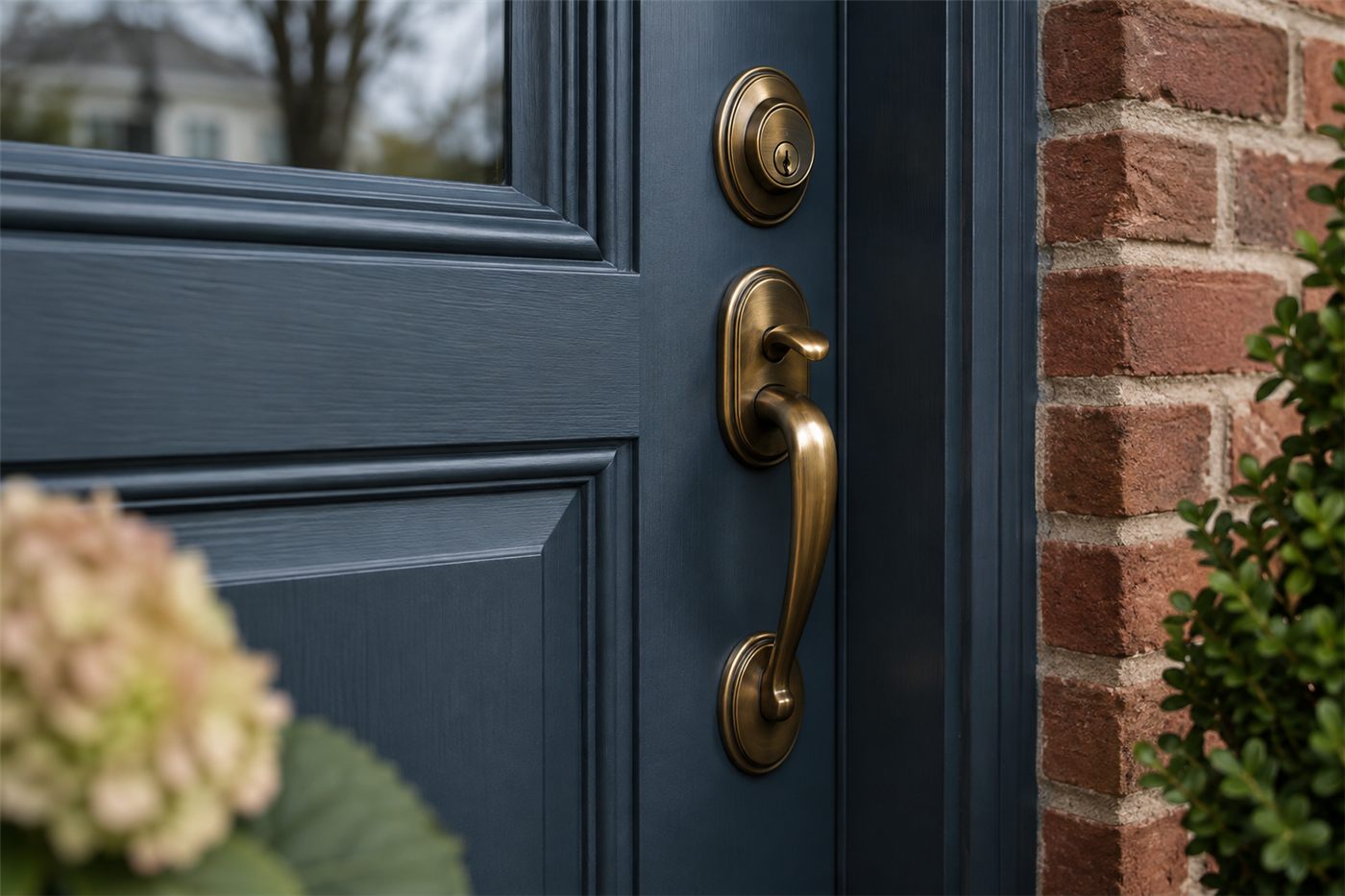
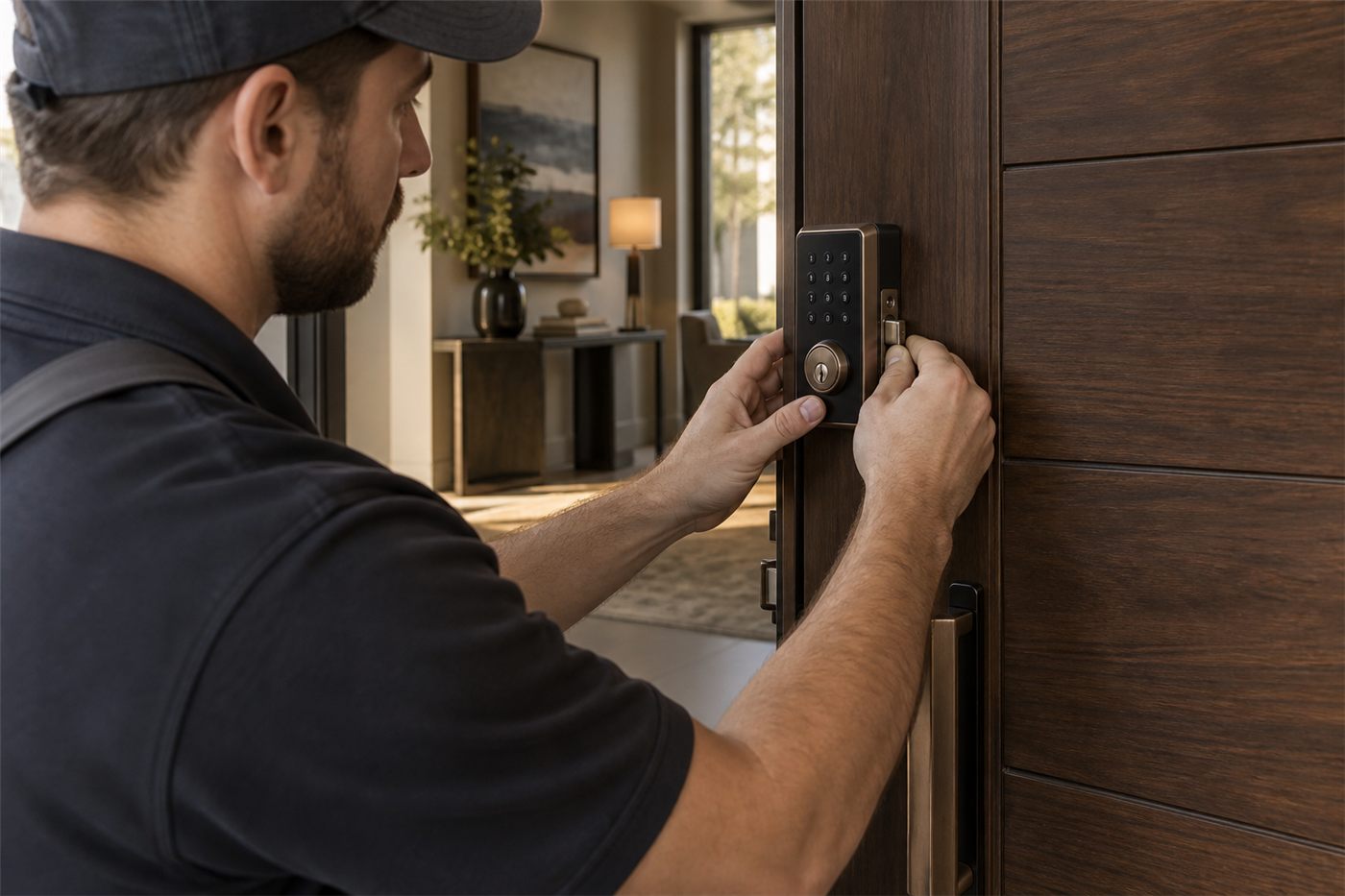
A deadbolt on the garage to house door, with a strike anchored into the framing, is one of the most useful improvements in many homes. A keypad deadbolt is often the best choice there, because family members can come in from the car without fumbling for a key, and the door can be locked without anyone needing to remember a key. Our keypad lock installation page covers that option.
Some garage to house doors have features that must be kept, such as a self closing hinge or a fire rated construction. We work with the door you have and do not remove features that were installed for safety. If you are unsure whether your door has such features, we will look.
Side doors
The garage service door
The side or service door into the garage is an ordinary exterior door, but it is often the weakest one on the property. It may face a side yard or a back yard where nobody can see it. It may be a cheaper door than the front door, installed in a thinner frame. And because it leads only to the garage, it tends to get a knob lock and nothing else.
Treat it like any other exterior door. A deadbolt with a full length bolt, a reinforced strike with long screws into the framing, and hinges secured with long screws make a large difference. If the door has glass near the lock, think carefully about what can be reached by breaking it. If the door is rotten at the bottom or split near the lock, the door itself may need replacing before any lock will hold.
Detached garages add another consideration. They often store tools, bikes, lawn equipment and sometimes vehicles, and they are farther from the house, so noise is less likely to be heard. Solid locks on both the overhead door and the side door, and a good light over each, are worth the effort.
Business garages, bays and roll up doors
Businesses with service bays, warehouses and storage units face the same questions at a larger scale. Roll up doors are often secured with a hasp and padlock at the bottom, or with a slide bolt into the guide. A padlock is only as good as the hasp it goes through, and hasps attached with exposed screws can be removed in minutes. Heavier hasps with concealed fasteners and padlocks with shrouded shackles make a real difference.
Key control matters here as well. When several employees open and close the bays, padlocks keyed alike, or keyed into the building's system, keep the number of keys manageable. When an employee leaves with a padlock key, rekeying or replacing the padlock is quick and inexpensive compared with the alternative. Our commercial locksmith page covers the wider picture for business properties.
How it works
What happens during a garage lock visit
We start by walking through the garage with you. We look at the overhead door and whether it has a manual lock, how the opener is set up and where the emergency release hangs. We check the side door and the door into the house, their locks, strikes and frames. We ask how the household uses the garage: who comes and goes, whether the overhead door is left open during the day, whether anyone uses the side door, and how often the house is empty for long periods.
Then we recommend the changes that matter most for how you actually live. For one household it might be a keypad deadbolt on the garage to house door and a release shield. For another it might be repairing a T-handle lock on a door with no opener. For a detached garage it might be slide bolts, a new side door deadbolt and a padlock hasp.
We install the agreed hardware, adjust strikes and doors so locks engage cleanly, and test every lock. If anything we find is a garage door mechanical problem, such as a broken spring or a door that is out of balance, we point it out and recommend a garage door technician rather than touching it.
Options
Garage lock options compared
| Door | Common weak point | What usually helps |
|---|---|---|
| Overhead door with opener | Emergency release reachable from the top gap | Release shield, repositioned cord, weatherstripping, vacation lock on the console |
| Overhead door without opener | Worn T-handle lock or no lock at all | Repaired or replaced T-handle lock, or slide bolts inside |
| Garage side door | Knob lock only, weak frame | Deadbolt, reinforced strike, long hinge screws |
| Garage to house door | Knob lock, often left unlocked | Deadbolt or keypad deadbolt with an anchored strike |
| Detached garage | Out of sight, rarely checked | Slide bolts, side door deadbolt, padlock hasp, lighting |
| Commercial roll up door | Worn padlock or hasp | Heavier hasp and a padlock with key control |
Avoid these
Garage security mistakes
- Leaving the overhead door open. An open garage shows what is inside and gives access to the door into the house. Close it when nobody is in the garage.
- Leaving a remote in a car parked outside. A remote in a car in the driveway opens the garage for anyone who breaks a car window.
- Ignoring the door into the house. Treat it as an exterior door.
- Engaging a manual lock with the opener active. The opener can damage the door trying to lift it. Use one or the other.
- Disabling the emergency release. Shield it instead. You need it during a power outage.
- Sharing the keypad code widely. Change it when people who knew it no longer need it.
- Forgetting the side door. It is often the easiest door on the property to force unseen.
Local factors
Garages in New Castle and Kent
Attached, detached and everything in between.
Newer neighborhoods in Middletown, Townsend, Smyrna and Camden are full of attached two car garages with openers, keypads and a builder grade knob lock on the door into the house. Adding a deadbolt or keypad deadbolt to that door is the most common improvement we make there.
Older properties in Wilmington, Elsmere and New Castle often have detached garages behind the house, sometimes on alleys, with older overhead doors, worn T-handle locks and side doors that have not been looked at in years.
Rural properties in Kent County, around Hartly, Felton, Harrington and Kenton, often have pole barns and large outbuildings with roll up doors, sliding barn doors and equipment worth protecting. Heavy hasps, good padlocks and solid side door locks do most of the work there.
Questions
Frequently asked
Does my overhead garage door need a lock if it has an opener?
The opener holds the door down on most residential doors. The bigger risks are an open door, a remote left in a car and an emergency release that can be reached from outside. A release shield and good habits often matter more than a manual lock.
Can you fix my T-handle garage lock?
Often. Worn cylinders, stretched cables and bent bars can be repaired or replaced. If the door is old and the lock parts are unavailable, slide bolts on the inside are a simple alternative.
What is a release shield?
It is a cover over the opener's emergency release that stops it from being hooked from outside through the top of the door, while still letting you pull it from inside during a power outage.
Should the door from the garage into the house have a deadbolt?
We recommend it for most homes. Anyone who gets into the garage has privacy and time to work on that door. A deadbolt or keypad deadbolt with an anchored strike is a big improvement over a knob lock.
Can my garage locks use the same key as my house?
Often, yes. Side door and garage to house door locks can usually be keyed to match the house. Some overhead door locks use their own keys.
Do you repair garage door springs or openers?
No. We handle locks, keys, keypads and release shields. Springs, cables and openers should be serviced by a garage door technician.
How do I secure a detached garage?
Use slide bolts or a manual lock on the overhead door, a deadbolt with a reinforced strike on the side door, a solid hasp and padlock where appropriate, and good lighting.
Is my garage keypad code a security risk?
Only if too many people know it or it is easy to guess. Change it when people no longer need it and avoid simple patterns.
Ready to close the garage gap?
Call and we will look at the overhead door, the side door and the door into the house.