

Why landlords rekey
The keys you handed over are not the only keys
Tenants make copies. Almost all of them, eventually.
Returned keys prove very little
At move out, a tenant hands back two keys and a mailbox key, and the file says keys returned. That tells you the tenant returned the keys you gave them. It says nothing about the copy made for a partner, the spare given to a neighbor for pet sitting, the key a dog walker still has on a ring, or the one cut at a kiosk during a lockout two years ago.
None of that is unusual or sinister. It is simply how keys spread through ordinary life. The consequence for a landlord is that every unit, after every tenancy, has an unknown number of working keys in the world, held by people you have never met.
Rekeying the unit between tenants closes that out. The new pins go in, the new tenant gets new keys, and every earlier copy becomes useless. For the incoming tenant, it means their home is theirs. For the owner, it removes a question nobody wants to answer after a break in: who else could have opened that door?
The business case
Why rekeying is usually the right tool at turnover
At turnover, a landlord has three broad options for the locks: do nothing, rekey, or replace. Doing nothing is the cheapest on the day and the most expensive if anything ever goes wrong. Replacing every lock at every turnover is thorough but costly, and it throws away hardware that is almost always perfectly good.
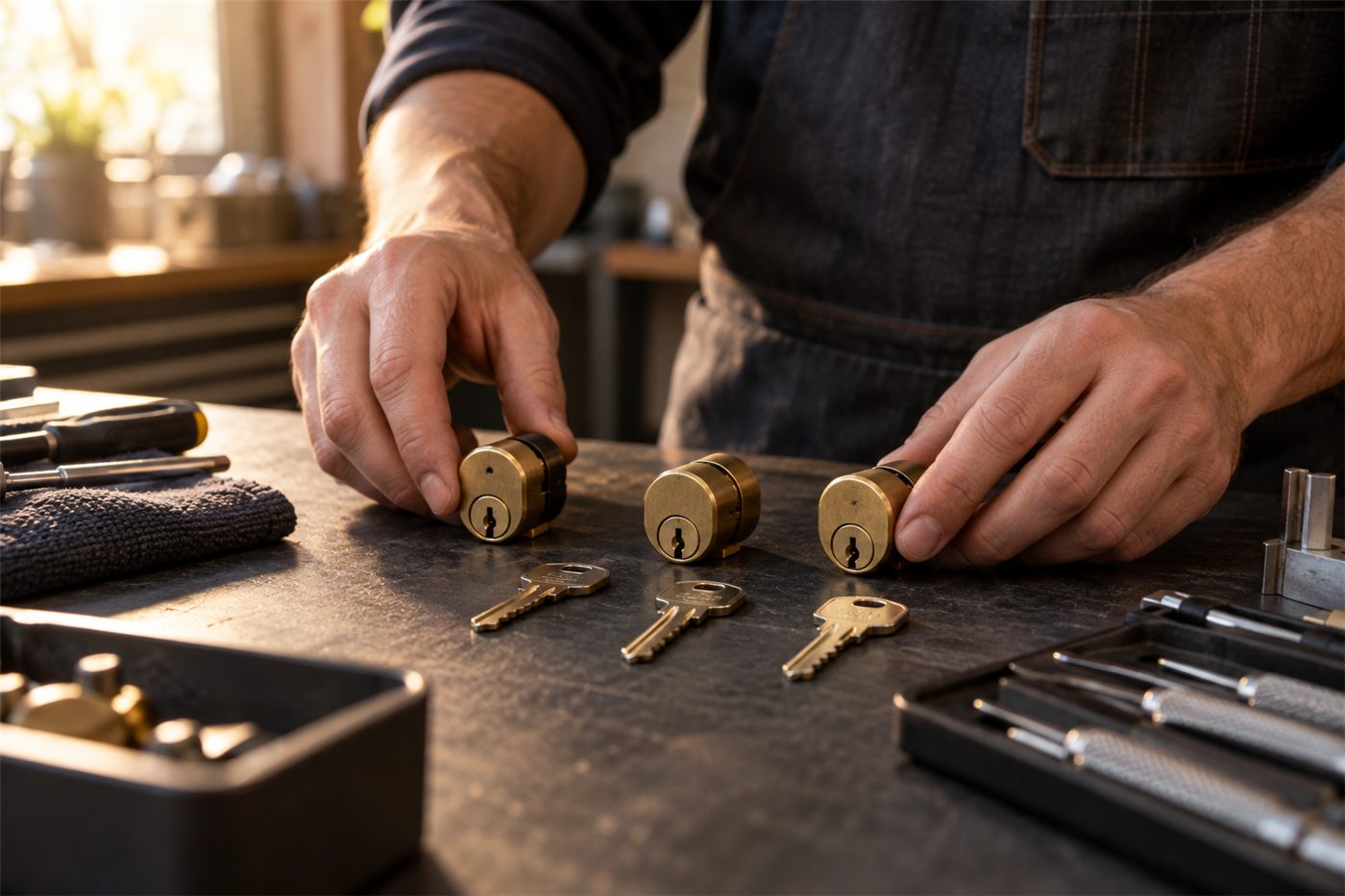
Rekeying sits between them. It keeps the existing deadbolts, knobs and levers in place and changes only the pins inside the cylinders. The security outcome for the question that matters at turnover, whether previous keys still work, is the same as replacement. The cost is a fraction, because no new hardware is bought and the labor per cylinder is modest.
Replacement still has its place. Hardware that is worn, damaged, cheap, or not suited to the door should be replaced, and turnover is the ideal time to do it because the unit is empty. We will tell you when a lock needs replacing rather than rekeying, and when it does not.
A third tool worth knowing about is the rekeyable or interchangeable core cylinder. Some landlords with many units fit hardware that can be rekeyed very quickly, or cores that can be swapped in seconds, which makes turnovers faster still. Whether that makes sense depends on the size of the portfolio and how often units turn.
How we work
A turnover rekey, start to finish
Before the visit
Tell us the address, which units are turning over, and when the unit is empty and ready. It helps to know how many exterior doors each unit has, whether there is a separate storm door, basement or garage entry, and whether the mailbox lock belongs to you or to the postal service arrangement for the building. If you manage several units, it is usually worth grouping turnovers so they can be handled in one trip.
At the unit
We walk the unit and confirm every lock that the old keys could operate. That usually means the front door deadbolt and knob or lever, the back or patio door, any side or basement entry, and sometimes a garage entry door or shed. Missing one door is the most common way a rekey fails to do its job. We then rekey each cylinder to the new combination, keyed alike so one key operates every lock in the unit unless you want otherwise.
Testing
Every rekeyed lock is tested with the new key, several times, and checked against an old key where one is available to confirm it no longer works. We also check that deadbolts throw fully and that the door latches properly, because a lock that works on the bench but fights the strike is going to generate a maintenance call from the new tenant within a week.
Handover
You receive the new keys, the number cut as you requested, and a simple record of the unit, the date and the locks that were changed. That record is useful for your files, for your insurer if they ask, and for your own peace of mind when the next tenant asks whether the locks were changed.
Multi unit buildings
Units, common doors and maintenance keys
A building is a key system, whether anyone planned it or not.
In an apartment building or a small multi unit property, the unit doors are only part of the picture. There may be a front entrance, a rear or service door, a laundry room, a trash room, a storage area and mailboxes. Tenants usually hold keys to several of these, and staff or contractors hold keys to more.
When a tenant leaves, the unit locks should change. Whether the common doors should change depends on how they are keyed. If every tenant has a common entrance key, rekeying that door at every turnover is impractical, which is why many buildings use a restricted keyway for common doors so copies cannot be made at a hardware store, or electronic access for the main entrance. Our restricted keyway systems page explains how that works.
For maintenance, a master key system lets the owner or manager open every unit with one key while each tenant's key opens only their own unit. When a unit is rekeyed, it is rekeyed within the master system, so the maintenance key keeps working and the old tenant key does not. Setting that up properly at the start makes every turnover after it simpler. Our master key systems page covers the design side.
If your building has grown a patchwork of different locks and keys over the years, turnover season is a good time to consolidate. We can survey what is there and suggest a plan that can be carried out gradually as units turn over, rather than all at once.
Beyond turnover
Other times a landlord should rekey
- A tenant reports lost or stolen keys. Especially if the keys were with anything showing the address, such as a wallet, ID or mail. Many leases address who pays in this situation. Either way, rekeying promptly protects everyone.
- A roommate or partner leaves mid lease. The remaining tenant may ask for a rekey when someone with a key moves out. How that is handled depends on the lease and the circumstances, but a quick rekey is often the simplest way to settle it.
- A property manager, superintendent or maintenance worker leaves. Anyone who held a master or unit key and no longer works for you is a reason to review the key system.
- A contractor project ends. Renovations often involve keys handed to crews and subcontractors. Once the job is finished, rekey the affected locks.
- You buy a rental property. You inherit every key the previous owner, their manager and their tenants ever handed out. Rekeying on the first day of ownership puts you in control.
- After a break in or attempted entry. Rekeying alongside any repairs, and a look at the door and frame, closes whatever gap was used or tested.
The rules
Leases, notice and entry
We change locks. The legal questions belong elsewhere.
Delaware has a residential landlord tenant code, and leases add their own terms about locks, keys, notice before entry, and who pays for what. We are locksmiths, not lawyers, and we do not give legal advice about what you are required or permitted to do. If you are unsure, read your lease, check the current code, or ask an attorney who handles landlord tenant matters.
What we can say from experience is how smooth turnovers usually run. Rekey after the previous tenant has fully vacated and returned possession, and before the new tenant receives keys. Give the new tenant new keys at move in, and note in your records that the locks were changed. Do not give a new tenant keys that a previous tenant also held.
We will not change locks on an occupied unit to keep a tenant out. Removing a tenant is a court process, and we only change locks after possession has lawfully returned to the owner. If you are dealing with an eviction, read our eviction lock change page, which explains how that works.
Keeping control
Key habits that make every turnover easier
The landlords whose turnovers go fastest usually share a few habits. None of them are complicated.
- Keep a key log for every unit. Which keys were issued, to whom, and when. A spreadsheet is enough.
- Use unmarked keys or coded tags. Keys stamped with the address or unit number become a problem the moment they are lost. A coded tag that only your log can decode is safer.
- Store office keys securely. A locked key cabinet, not a pegboard in an unlocked office or a drawer in the truck.
- Limit how many keys each tenant receives. Issue what they need, record it, and ask for the same number back.
- Book rekeys with the cleaning and painting. Put the rekey in the turnover checklist alongside paint, carpet and cleaning so it never gets forgotten.
- Avoid hidden keys and lockboxes left in place. A lockbox used for showings should be removed or have its code changed once the unit is let.
Electronic locks
Keypads and smart locks in rentals
Codes turn over too, and they are easier to forget.
More landlords now fit keypad deadbolts or smart locks on rental units. The appeal is obvious. A code can be changed between tenants in minutes without a visit, showings can be handled without handing out keys, and a tenant locked out at midnight can be given a temporary code instead of waiting for someone to drive over.
Electronic locks bring their own turnover checklist, though. Every user code on the lock must be deleted, not just the main one, because tenants often add codes for family, cleaners or friends. Any app account linked to the lock should be removed from the tenant's phone and reset to the owner. And nearly every keypad and smart lock still has a mechanical key cylinder as a backup, which carries the same copy problem as any other lock. That cylinder needs rekeying at turnover too, even if nobody used the key in years.
Batteries are the other issue. A keypad that dies in a vacant unit leaves the next showing, or the new tenant, standing outside. Changing batteries is a sensible turnover task, alongside the smoke alarms. If you are thinking about moving your units to electronic locks, our smart lock installation and keypad lock installation pages explain what to look for in hardware that will hold up to rental use.
Timing
Fitting the rekey into a tight vacancy
Most landlords want as few empty days as possible between tenants, and the rekey is one of many tasks competing for those days. A few scheduling points help it fit without delaying anything.
Rekey after the last contractor who needs a key has finished, not before. If painters, cleaners and carpet fitters are all using the old keys, rekeying on day one means handing out new keys to crews, which defeats part of the purpose. A common pattern is to rekey on the last working day of the turnover, once the unit is ready, so the only people who ever hold the new keys are you and the incoming tenant.
If the unit needs to stay secure while crews come and go, a lockbox with a code that changes when the work ends does the job. Just remember to remove it afterwards. Where turnovers are frequent, a construction core or a temporary cylinder used only during the vacancy, then swapped for the permanent one, is another option some larger owners use.
Scenarios
Landlord situations compared
| Situation | Usual approach |
|---|---|
| Single family rental, tenant moved out | Rekey every exterior lock, keyed alike, new keys to incoming tenant |
| Several units turning over the same month | Batch into one visit for lower cost per unit |
| Apartment building with shared entrance | Rekey units, protect common doors with restricted keys or access control |
| Maintenance needs access to all units | Master key system, units rekeyed within it |
| Tenant lost keys mid lease | Prompt rekey of that unit, costs per the lease |
| Newly purchased rental with unknown key history | Rekey everything on day one |
| Hardware worn or damaged | Replace during the vacancy rather than rekey |
Avoid these
Common landlord mistakes with locks
- Swapping locks between units. Moving a cylinder from one unit to another feels like a rekey but is not. Any old keys for that cylinder still work, now on a different door.
- Rekeying the front door only. Rear, side and basement doors carry the same risk. Every door the old key opened must change.
- Cutting copies from a copy. Keys cut from worn copies drift from the original cuts. Always cut new tenant keys from the code or an original.
- Leaving a showing lockbox on the door. Once the unit is rented, the lockbox and its code are a standing invitation.
- Skipping the rekey because the tenant seemed trustworthy. Trust is not the point. The copies they made and gave to others are.
Local factors
Rental turnover across New Castle and Kent County
In New Castle County, turnover follows a strong seasonal rhythm around the University of Delaware in Newark, with large numbers of leases ending in late spring and summer. Student rentals see more keys copied and shared than almost any other type of housing, which makes rekeying between tenants especially worthwhile. Wilmington's row homes and multi unit conversions, and the apartment communities around Bear, Glasgow and Christiana, produce steady turnover the rest of the year.
In Kent County, rental turnover around Dover is shaped partly by military moves connected to Dover Air Force Base and by the state workforce, with relocations arriving through the year. Smaller landlords in Smyrna, Camden, Milford and the surrounding towns often own a handful of single family rentals, and they benefit most from booking rekeys in batches when more than one property turns over.
Whatever the portfolio, the aim is the same: every tenant starts with keys that only they hold.
Questions
Frequently asked
Is rekeying enough between tenants, or should I replace the locks?
Rekeying is enough when the hardware is in good condition. It makes every old key stop working. Replace only when the lock itself is worn, damaged or not suitable for the door.
Can you rekey several units in one visit?
Yes, and it is the most efficient way to do it. Tell us which units are empty and when, and we will plan the visit around them.
Can my maintenance key keep working after a rekey?
Yes, if the units are on a master key system. Each unit is rekeyed within the system so the master still works and the old tenant key does not.
Will you change locks to keep a tenant out?
No. We only change locks after possession has lawfully returned to the owner. Removing a tenant is a court process.
Do you provide a record of the rekey?
Yes. You receive a simple record of the unit, the date and the locks changed, which is useful for your files and for answering tenant questions.
What about mailbox locks?
That depends on who owns the mailbox. Many individual and cluster mailboxes can be rekeyed or have the lock replaced. Ask when you book and we will check what applies at your property.
Who pays when a tenant loses keys?
That is set by your lease and any applicable rules. We simply do the work and invoice whoever arranges it.
How many keys should I give a new tenant?
Enough for the adults on the lease, recorded in your key log. Issuing a known number makes it easier to ask for the same number back at move out.
Turnover coming up?
Tell us the units and the dates. We will rekey around your schedule and leave you with a record.