

Why a lock needs a schedule at all
A door lock looks like a single solid object, but inside it is a collection of small springs, pins, cams and a bolt that slides in and out thousands of times a year. It is exposed to rain blowing against the door, summer humidity, winter cold, pollen, road dust and whatever is in your pocket along with the key. None of that is a problem on any one day. Over a few years it adds up to a lock that feels gritty, then stiff, then unreliable.
The frustrating part is that the failure almost always arrives at a bad moment. The key snaps on the way to work. The deadbolt refuses to throw the night before a trip. The back door that nobody uses turns out to be seized when somebody needs it. A maintenance schedule is not about perfection. It is about noticing the small change before it becomes the big one.
The good news is that locks need very little. You do not need special training or a toolbox full of equipment. You need a dry lubricant, a screwdriver, a few minutes, and a reminder on your calendar. Below is the schedule we would follow in our own homes, adjusted for the way Delaware weather treats doors.
One rule before anything else: no heavy oil in a lock cylinder. Household oils and the familiar penetrating spray feel like they help at first, because they are wet and slippery. Within weeks they become sticky, catch dust and pocket lint, and turn into a paste that makes the pins drag. If a lock has had oil sprayed into it over the years, it usually needs a proper clean rather than more of the same.
The schedule
What to do and how often.
| When | Task | What you are looking for |
|---|---|---|
| Monthly, in passing | Lock and unlock each exterior door with the door closed | Any new stiffness, any need to push or pull the door to make the bolt move. |
| Monthly, in passing | Glance at your keys | Bends, cracks near the shoulder, cuts worn round. |
| Each spring | Clean and dry-lubricate every keyed cylinder | Pollen and winter grime removed, smooth key entry. |
| Each spring | Tighten handle and deadbolt screws | Wobbly knobs and levers, loose interior thumb turns. |
| Early summer | Check strike alignment after the humid months begin | Latch or bolt dragging as wooden doors swell. |
| Autumn | Second clean and lubricate before cold weather | Keyways clear before moisture can freeze inside them. |
| Autumn | Replace batteries in smart locks and keypads | Fresh cells before cold weather shortens battery life. |
| Yearly | Inspect strike plates and screw length | Short screws into trim only, cracked wood around the strike. |
| Yearly | Review who has keys | Keys given out and never returned, copies nobody can account for. |
| Every few years | Professional service on heavy-use or older locks | Worn pins, tired springs, mortise mechanisms that need a clean. |
The monthly check
Thirty seconds per door.
The whole point is to notice change early, not to fix anything.
Most people only ever operate their locks with the door closed, which is exactly the right way to test them, but they do it in a hurry and never pay attention. Once a month, take a moment at each exterior door and turn the key slowly. Feel for the point where it resists. Listen for a grinding sound. Notice whether the bolt slides smoothly into the frame or catches at the end of its travel.
Then do the same thing with the door open. If the lock turns easily with the door open but fights you with the door closed, the lock is fine and the door is the problem. The bolt is rubbing against the edge of the strike hole because the door has dropped, the frame has shifted, or the strike was never quite in line. That is a completely different fix from a dirty cylinder, and it is worth knowing which one you have before reaching for any spray.
Take the side door, the garage entry door and any basement or cellar door as seriously as the front. These are the ones that get neglected, because they are used less. Neglected locks seize, and a door that cannot be locked easily is a door that stops being locked at all.
While you are there, look at your keys. Hold each one against the light. A key that has started to bend, or shows a hairline crack near the head, is on borrowed time. Replacing a worn key costs very little. Extracting a broken one from the lock is a service call.
Spring and autumn
The twice-yearly clean.
Twice a year, give every keyed cylinder a proper clean and a light dry lubricant. Spring and autumn are the natural times in Delaware. Spring clears out the grime of winter and the first coat of pollen that settles on everything in April. Autumn prepares the lock for cold nights, when any moisture sitting inside the keyway can freeze and stop the pins from moving.
Start by blowing out the keyway. A can of compressed air works well, but even a few firm puffs from a drinking straw aimed into the keyway will shift loose dust. Then apply a small amount of dry lubricant. Powdered graphite is the traditional choice and works well in a pin tumbler cylinder, though it can be messy on light-colored doors. A dry PTFE spray is cleaner and easier to control. Either way, a small amount is plenty.
Insert your key and work it in and out of the lock several times, turning it fully each way. This spreads the lubricant along the pins and the plug. Wipe the key clean afterward, and wipe any excess from the face of the cylinder. You should feel an immediate difference in how smoothly the key goes in.
Do not forget the latch and the bolt. With the door open, extend the deadbolt and apply a little lubricant to the sides of the bolt. Press the latch in and out a few times. For these moving surfaces a light silicone spray is fine, since they are not the delicate pin chamber. Wipe off any excess so it does not attract dirt.
Finally, tighten the screws. Knobs and levers work loose with use, and a loose handle puts strain on the internal spindle and the latch. A few turns with a screwdriver on the interior side of each lockset keeps everything aligned. Do not over-tighten, especially on the deadbolt, where too much pressure can make the bolt bind.
Summer: the swelling season
Wooden doors and frames absorb moisture from the air, and a humid Delaware summer can make a door grow just enough to change how the lock meets the frame. The result is familiar to anyone who lives in an older house: a front door that shuts easily in March and needs a shoulder in July.
In early summer, repeat the open-door and closed-door test on every exterior door. If the bolt has started to drag against the strike, the adjustment is usually small. Sometimes tightening the hinge screws, especially the top hinge, lifts the door back into line. On other doors the strike plate needs to be moved slightly or its opening enlarged a little with a file. Both are modest jobs, but the file work is worth leaving to someone who has done it before, because a strike opened too far makes the door rattle.
Fiberglass and steel doors move less than wood, but their frames are still wood in most houses, and the frame can move too. Houses in newer subdivisions around Middletown, Bear and Smyrna often go through their first seasons of settling, and the locks feel it before anything else.
Humidity also affects sliding doors, garage doors and gate latches. Sliding glass door latches are especially prone to misalignment when the track collects dirt and the door no longer rolls fully home. Our sliding glass door guide covers those in detail.
Once a year
The strike plate and the keys.
Strike plates. Once a year, remove one screw from each deadbolt strike plate and look at its length. Many houses are built with short screws that only reach into the thin trim around the door, rather than into the solid framing behind it. A lock is only as strong as the wood holding its strike. Swapping short screws for long ones that reach the framing is one of the most useful things you can do for your door, and it takes minutes. The door frame guide explains why this matters so much.
While the plate is off, look at the wood around it. Cracks, soft spots or a split along the grain mean the frame has taken a hit at some point, or has simply worn. That is worth repairing before it becomes a door that can be pushed open.
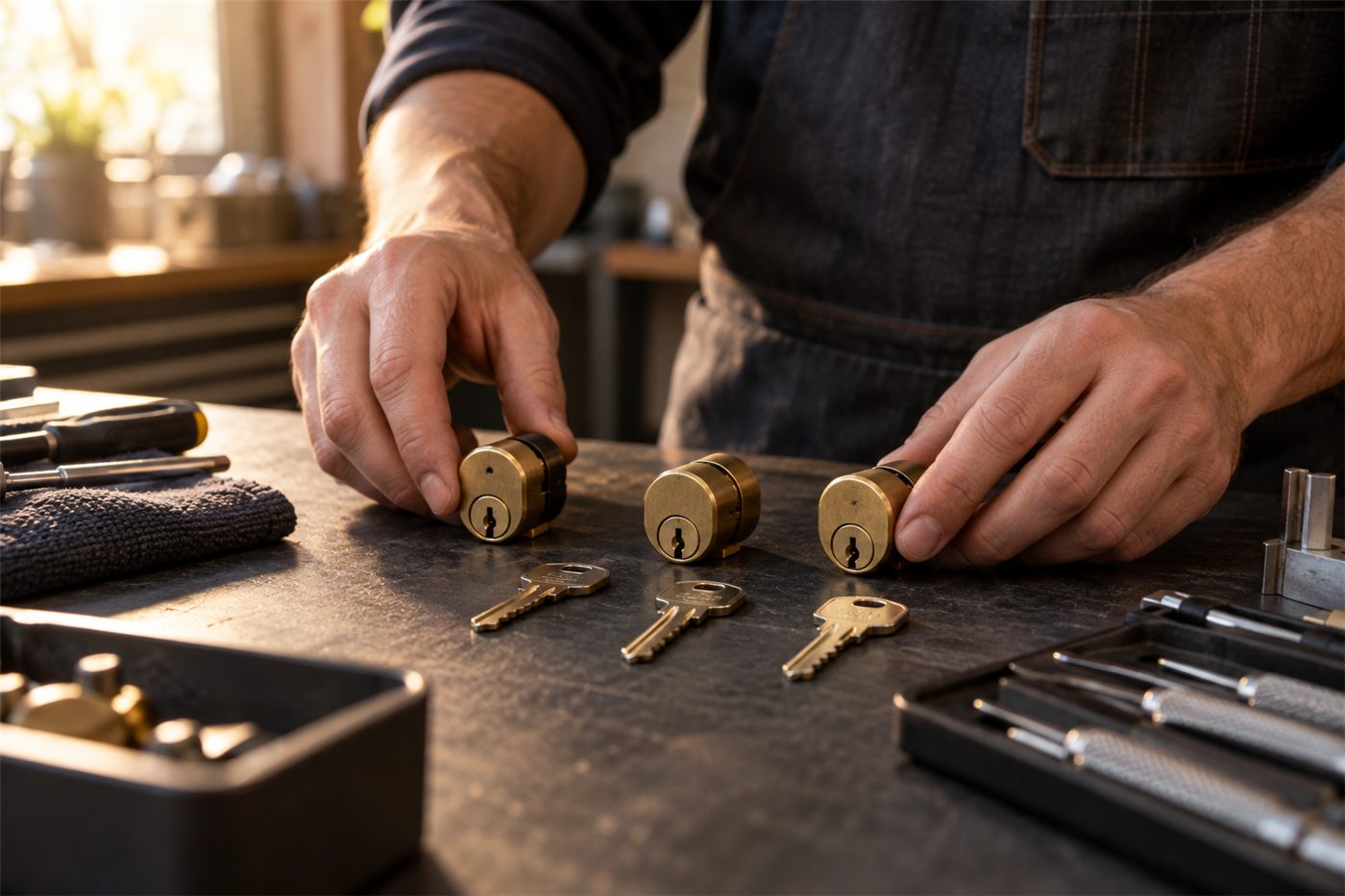
Keys. Once a year, make a list of everyone who has a key to your home. Family, a neighbor, a dog walker, a cleaner, a contractor from two summers ago. If the list includes people who no longer need access, or you honestly cannot remember who has copies, a rekey resets it. That is not a maintenance task in the mechanical sense, but it is maintenance of your security, and it belongs on the same calendar entry.
Master keys. Pick the best key you have for each lock, ideally an original from the manufacturer or one cut to the code, and keep it somewhere safe as the key you copy from. Every future copy should be made from that key, not from the worn one on your key ring.
Electronic locks
Smart locks and keypads need a different routine.
| Item | How often | Why |
|---|---|---|
| Batteries | When the app or lock warns, and before winter regardless | Cold weather shortens battery life, and a lock that dies overnight is a lockout. |
| Mechanical key override | Test twice a year | The backup key is useless if its cylinder has seized from never being used. |
| Firmware and app updates | As the manufacturer releases them | Updates can fix bugs and security weaknesses. Read the notes before updating. |
| User codes | Review every few months | Remove codes for people who no longer need them, just as you would collect keys. |
| Bolt alignment | Seasonally | A motorized bolt that drags against the strike drains batteries fast and may jam. |
| Keypad surface | Wipe clean occasionally | Worn buttons can reveal the digits in a code. Change codes if wear is visible. |
The motor is not as strong as your hand
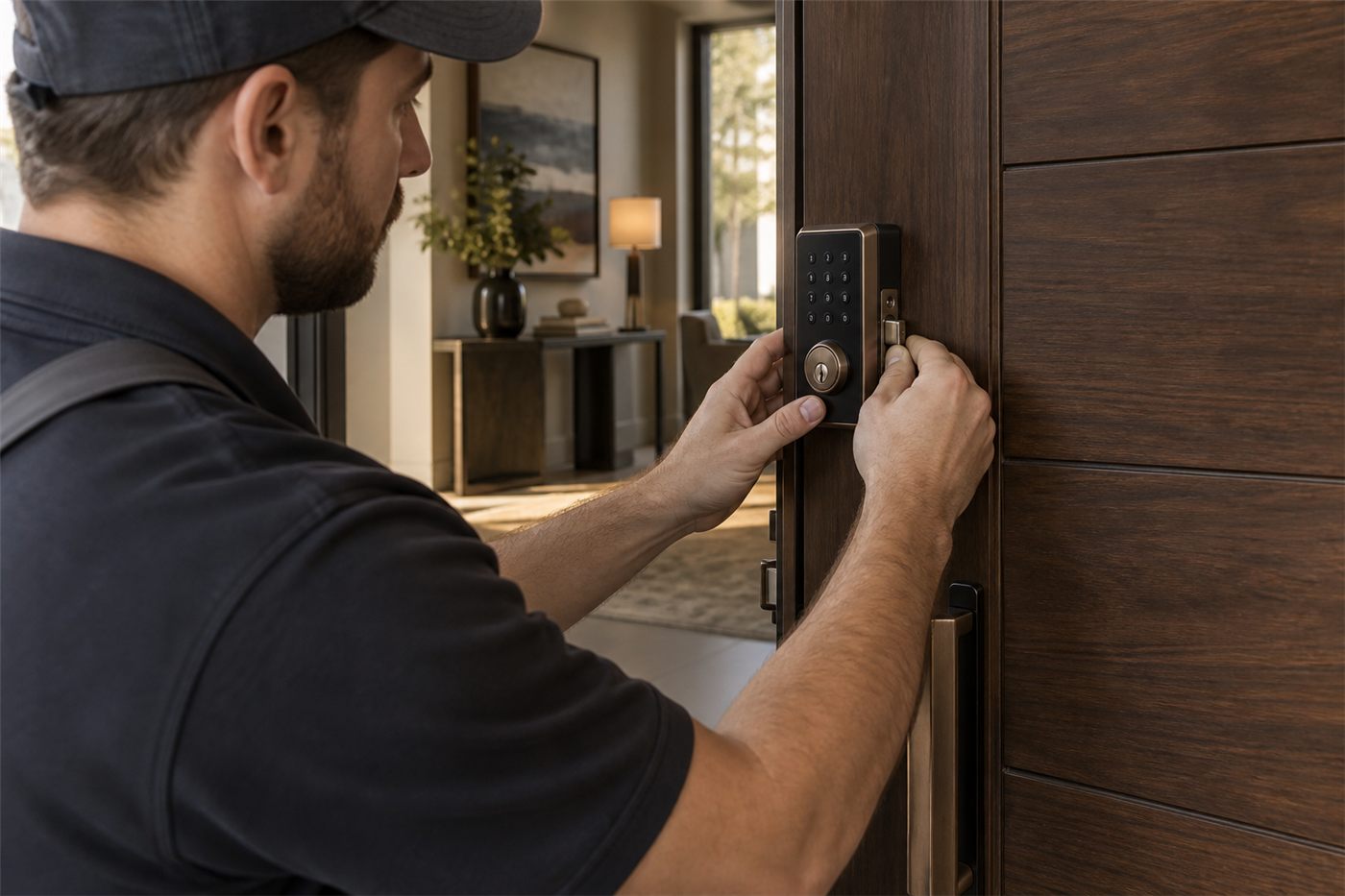
A manual deadbolt that drags a little can still be forced closed by a person. A motorized one often cannot. It tries, fails, reports an error, and drains its battery trying again. Before blaming the smart lock, check the door alignment. Most smart lock complaints we see are really strike plate problems.
If you are shopping for one, the smart lock buying guide covers what to check before you buy.
When to call
Signs the schedule is not enough.
- A lock that stays stiff after cleaning. If a proper clean and dry lubricant make no difference, the pins or springs inside may be worn or damaged.
- A key that goes in but will not turn. This can be a worn key, a failing cylinder or a misaligned bolt. Forcing it is how keys break.
- A knob or lever that droops. A handle that no longer returns to level has a broken internal spring. It will not fix itself.
- A deadbolt that will not fully extend. A partial throw looks locked but offers little resistance. That is worth fixing promptly.
- Visible damage. Pry marks near the lock, a bent strike or scratches around the keyway may mean someone has tried the door.
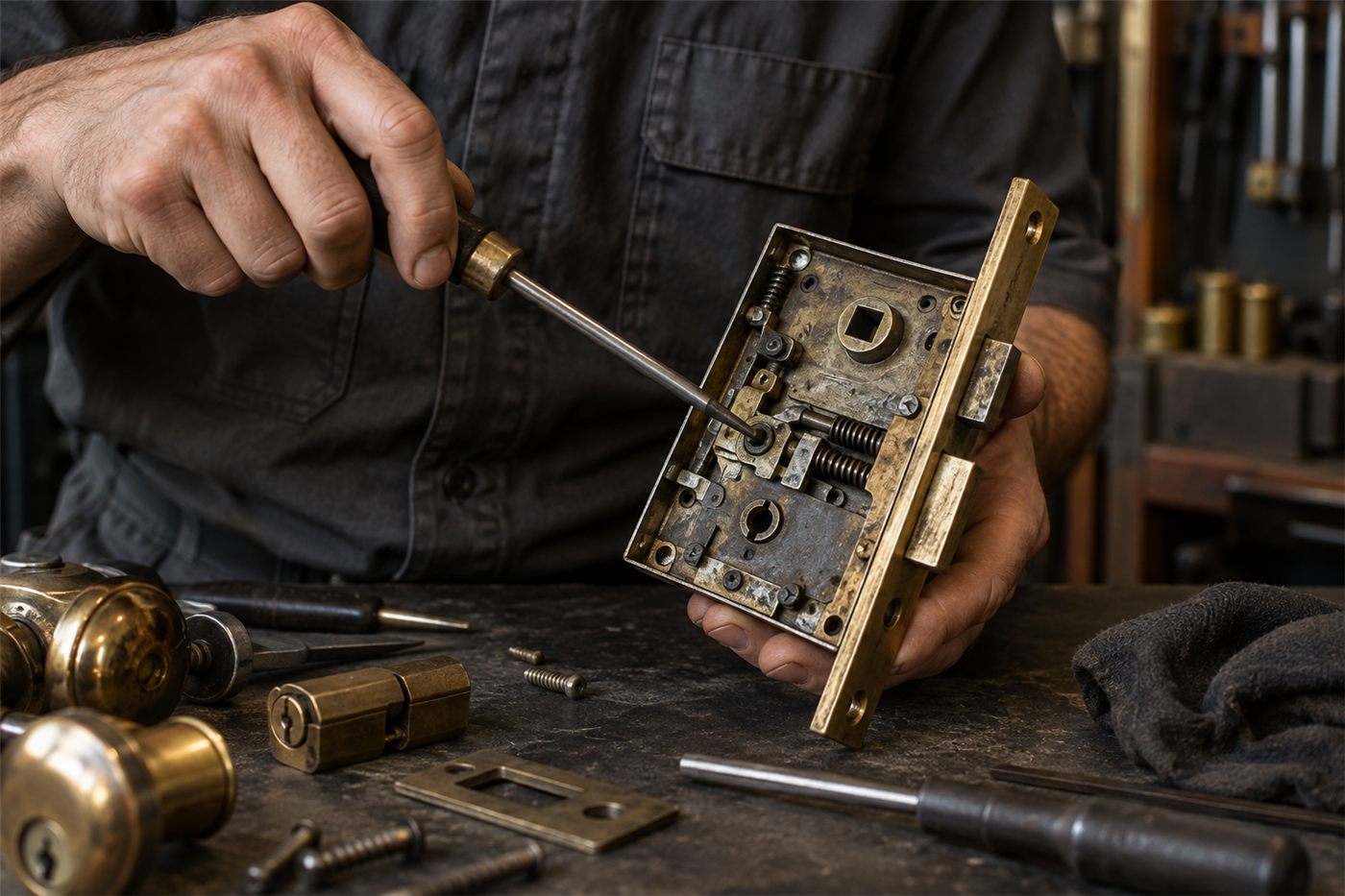
- Old mortise locks behaving oddly. These are serviceable and often worth rebuilding, but they need to come out of the door to be cleaned properly.
- Anything involving glue, oil buildup or a broken key. These need a proper clean or extraction rather than more spray.
Our lock repair work covers all of these. In many cases the repair is small, a clean, a strike adjustment, new springs, and the lock goes on working for years. When hardware is genuinely at the end of its life, we will say so plainly.
What maintenance cannot fix
A maintenance schedule keeps good hardware working. It does not turn weak hardware into strong hardware. If your front door is secured only by a knob lock with no deadbolt, cleaning that knob every spring keeps a spring latch working smoothly, and a spring latch is easy to defeat. If your deadbolt is low grade and mounted in a thin strike with short screws, lubricating it does nothing about the way doors are actually forced.
So treat the yearly check as a chance to ask a bigger question. Is this the right lock for this door? Is there a deadbolt on every exterior door, including the garage entry? Would a reinforced strike make a meaningful difference here? The answers do not have to change this year, but they are worth knowing. The deadbolt grade guide explains what the grades mean in plain terms.
Maintenance also cannot fix a key control problem. A beautifully lubricated lock is no more secure if a former tenant, contractor or housemate still holds a key. Mechanical care and key control are two halves of the same job.
Related
When maintenance turns into repair.
Cold weather is its own subject, covered in winter lock problems. If a key has already snapped, go to key broke off in the lock.
 Repair
Lock Repair
Stiff cylinders, drooping handles and bolts that drag.
 Key control
Lock Rekeying
When the yearly key review turns up too many copies.
UpgradeDeadbolt Installation
For exterior doors that only have a knob lock.
 Electronic
Smart Lock Installation
Fitted to a door that is aligned first.
KeysKey Duplication
Fresh keys cut from a good original.
All home workResidential Locksmith
Everything we do for homes in both counties.
Where we do this
Lock servicing across both counties.
Questions
About looking after locks.
What is the best lubricant for a door lock?
For the cylinder, a dry lubricant: powdered graphite or a dry PTFE spray. Both reduce friction without leaving a wet film that collects dirt. For the outside of the bolt and latch, a light silicone spray is fine. Avoid heavy household oils in the keyway, since they gum up over time.
Is penetrating spray bad for locks?
It is a good product for freeing a stuck bolt on a machine, but it is not a lock lubricant. It leaves a residue that attracts dust, and over months a lock treated with it regularly can become stiffer than before. If that has been your habit, a proper clean is the way back.
How often should I lubricate my locks?
Twice a year suits most Delaware homes, in spring and autumn. Doors that face the weather directly, or that see very heavy use, may benefit from an extra application in midsummer. More is not better, since excess lubricant just collects grime.
My lock works fine with the door open but not closed. Why?
The lock itself is fine. The bolt is catching on the strike because the door or frame has shifted. Tightening the hinge screws sometimes fixes it. Otherwise the strike needs adjusting. Do not keep forcing the key, since this is one of the most common reasons keys snap.
Do smart locks need maintenance?
Yes, and in some ways more. They need fresh batteries, a working mechanical override, a periodic review of user codes, and good door alignment so the motor is not straining. Test the backup key cylinder a couple of times a year so it has not seized when you need it.
Can I service an old mortise lock myself?
You can keep the cylinder clean and lubricated like any other. The mechanism inside the case is more involved, with small springs and levers, and it usually needs to come out of the door for a proper service. Many older mortise locks are well built and worth rebuilding rather than replacing.
How do I know when a lock needs replacing rather than servicing?
If it stays gritty or unreliable after a proper clean, if it is loose in the door and will not stay tight, or if it was very low quality to begin with, replacement is usually the honest answer. If it was well made and simply neglected, servicing often brings it back.
Should maintenance include changing the keys?
Not on a fixed schedule, but reviewing who has keys every year is sensible. If the answer is uncertain, a rekey resets it without replacing the hardware. Combine it with a service visit and it adds little time.