

The short answer
If a child, a vulnerable adult or a pet is inside, call emergency services first, then us. If nobody is inside, try every door, check for a spare, and call a locksmith. Do not break a window unless someone inside is in danger.
A running car that is locked is not, in itself, an emergency. Modern engines idle for a long time without harm, and the car is secure. The clock that matters is fuel, and in some places, exhaust. Those give you time to get help calmly rather than reaching for a rock.
The situation changes completely if anyone is inside. Heat builds quickly in a closed car in the sun, even on mild days, and cold can be dangerous too. In that case, time is the priority, and emergency services can act faster and with authority to break glass if needed.
First, the emergency test
Is anyone inside the car?
This one question decides the order of every call.
A child or infant inside. Call the police emergency line immediately. Say that a child is locked in a car, give the location, and describe the child's condition. Emergency responders will come and can break a window if needed. Then call us if you want, but do not wait for a locksmith while a child is in distress. Stay by the car, talk to the child through the glass, and keep them calm.
A pet inside. Pets suffer quickly in heat. Call emergency services or animal control as well as us, especially on a warm or sunny day. If the car is running with the air conditioning on, the situation may be less urgent, but air conditioning can cycle off, and some cars shut the engine down after a period of idling.
A vulnerable adult inside. Someone who cannot open the door themselves, perhaps through illness or disability, is treated like a child. Call emergency services first.
Nobody inside. Take a breath. The car is safe, locked and running. You have time to try the simple things and call for help.
Why it happens
How a running car ends up locked.
People who lock themselves out of a running car often feel foolish. They should not. Several common features make it surprisingly easy.
- Warming up in winter. On cold Delaware mornings, many people start the car, lock it out of habit, and go back inside. With a keyed ignition, the key is in the car. The door closes behind them, locked.
- Automatic door locks. Many vehicles lock the doors automatically when shifted out of park or above a certain speed, and some relock after a short time if no door is opened after unlocking. A driver who jumps out to clear the windshield or open a gate can find the doors locked on return.
- A door locked with the interior button. Pushing the lock button on the door panel and then closing the door locks it on many cars. Some cars prevent this when the key is inside. Many do not, particularly with a keyed ignition.
- Push button start cars left running. On many push button vehicles, the engine keeps running if the fob leaves the car. If a second fob or a phone key in the car is present, or if the car does not check, it may even allow the doors to lock.
- Children and pets. A toddler playing with the lock button or a dog stepping on the switch is a classic cause.
- Remote start systems. A car remote started from inside the house stays locked while running, by design. That is normal, and the fob unlocks it. Problems arise when the fob is locked inside a different car or lost.
While you wait
What to check in the first five minutes.
Try every door and the trunk. Auto locking does not always lock every door. On an SUV or hatchback, an unlocked rear hatch is as good as an unlocked door.
Look for a spare. Is there a spare key at home, with a partner, or at work? If someone can bring it quickly, that may be the fastest answer.
Check your phone. Many newer vehicles come with a manufacturer app that can unlock the doors remotely if the account is set up. Some subscription connected services can also unlock the car on request. If you have either, now is the moment.
Check your roadside coverage. Some insurance policies, auto clubs and credit cards include lockout help. They may send a provider, or reimburse you for one you choose. Check the terms.
Note the fuel level. If you can see the gauge, it tells you how long the engine can keep running. A near empty tank means the engine will stop sooner, which is not dangerous, but a car that runs out of fuel may need attention afterwards.
Think about exhaust. If the car is in a garage, even with the door open, move away from it and keep others away. Exhaust fumes build up in enclosed spaces and are dangerous. If the car is in a closed garage, open the garage door from outside if you can do so safely, and do not go in.
Options
Ways back in, compared.
| Option | When it works | Drawbacks |
|---|---|---|
| Unlocked door or hatch | If any door was missed by auto locking | None, check first |
| Spare key | If someone can bring it in reasonable time | Depends on distance and availability |
| Manufacturer app or connected service | If your car and account support remote unlock | Needs setup in advance and signal for the car |
| Roadside assistance | If you have coverage | Wait times vary, especially at busy times |
| Mobile locksmith | Most vehicles, day or night | A call out cost, which coverage may reimburse |
| Emergency services | A child, vulnerable person or pet at risk | For genuine emergencies only |
| Breaking a window | Only when someone inside is in danger and help cannot arrive in time | Glass everywhere, a costly repair, a car that cannot be secured |
How we open it
Getting in without damage.
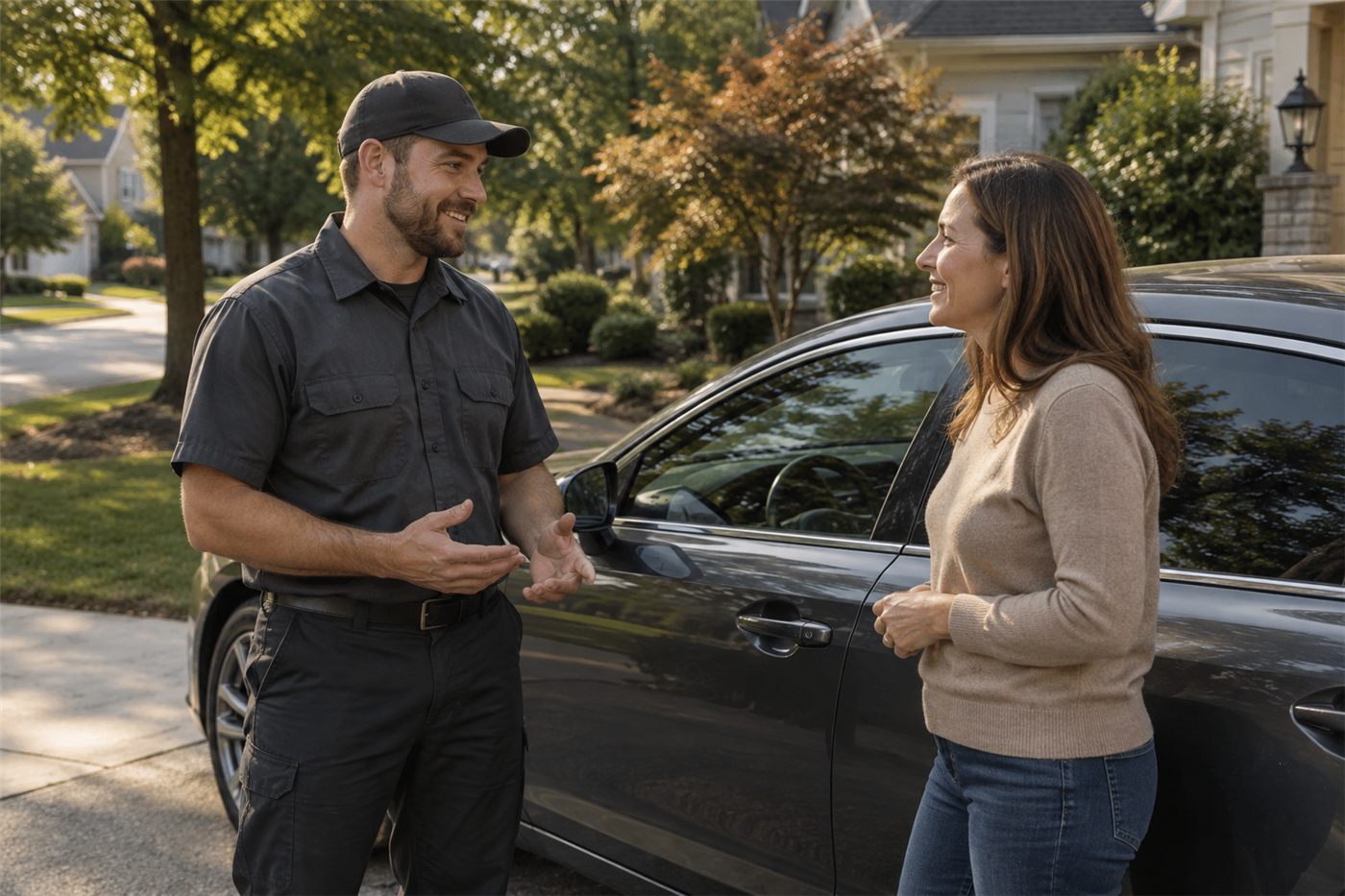
A running car is opened the same way as any locked car. We use a protected wedge to create a small, controlled gap at the top of the door frame, then a long reach tool to press the unlock button or pull the interior handle. Paint and weatherstripping are protected, and on most vehicles the job is quick once we are there.
The engine running actually makes one thing easier. The car is awake, so pressing the power unlock button inside usually unlocks every door at once. On some vehicles, we can also work the lock mechanism directly.
Before handing the car over, we check ID against the registration or insurance card, which are usually in the glove box and reachable once the door is open. That is the same check we do on every car.
If the car's alarm sounds when the door opens, it stops once the key is used or the alarm times out. If the engine stalls when the door opens, which occasionally happens on cars with certain security settings, it will restart normally with the key.
What not to do
The shortcuts that cost more.
- Breaking a window when nobody is at risk. A side window costs far more to replace than a lockout visit, leaves glass in the car, and means driving an unsecured car until it is fixed. Save it for real emergencies.
- Coat hangers and wire. Modern doors are full of wiring for windows, locks, speakers and side airbags. Poking a wire down inside the door can damage those, and it often scratches glass and tears weatherstrip without ever reaching the lock.
- Prying the door with a screwdriver. This bends the door frame, chips paint, and can leave a door that whistles and leaks for years.
- Buying a slim jim. Old videos show a flat bar sliding down beside the window. On modern cars, it is more likely to damage wiring and linkages than open anything.
- Leaving the car running unattended in public for long. A running car attracts attention. Stay with it, or nearby where you can see it, until help arrives.
Push button start
When the fob is inside and the engine is on.
Push button start cars are designed to prevent many lockouts. They often refuse to lock if they detect the fob inside, and they warn you if the fob leaves while the engine runs. Those protections are good, but not perfect.
A weak fob battery can stop the car detecting the fob inside, so the doors lock anyway. A fob inside a bag with other electronics or metal can be hard for the car to read. A second fob elsewhere in the car can confuse matters. And a driver who locks the car with the door button, rather than the fob, may bypass some checks.
The reverse also happens. A passenger leaves with the fob in a pocket, and the driver, still in the car, finds the engine running with no key. The car usually keeps running until switched off, then will not restart. That is not a lockout, but it is a similar puzzle, and the fix is to get the fob back or bring a spare.
For push button cars, opening the door is the same process described above. Afterwards, replace the fob battery if it seemed weak, since that is the most common reason the car locked with the fob inside.
Afterwards
Stopping it happening again.
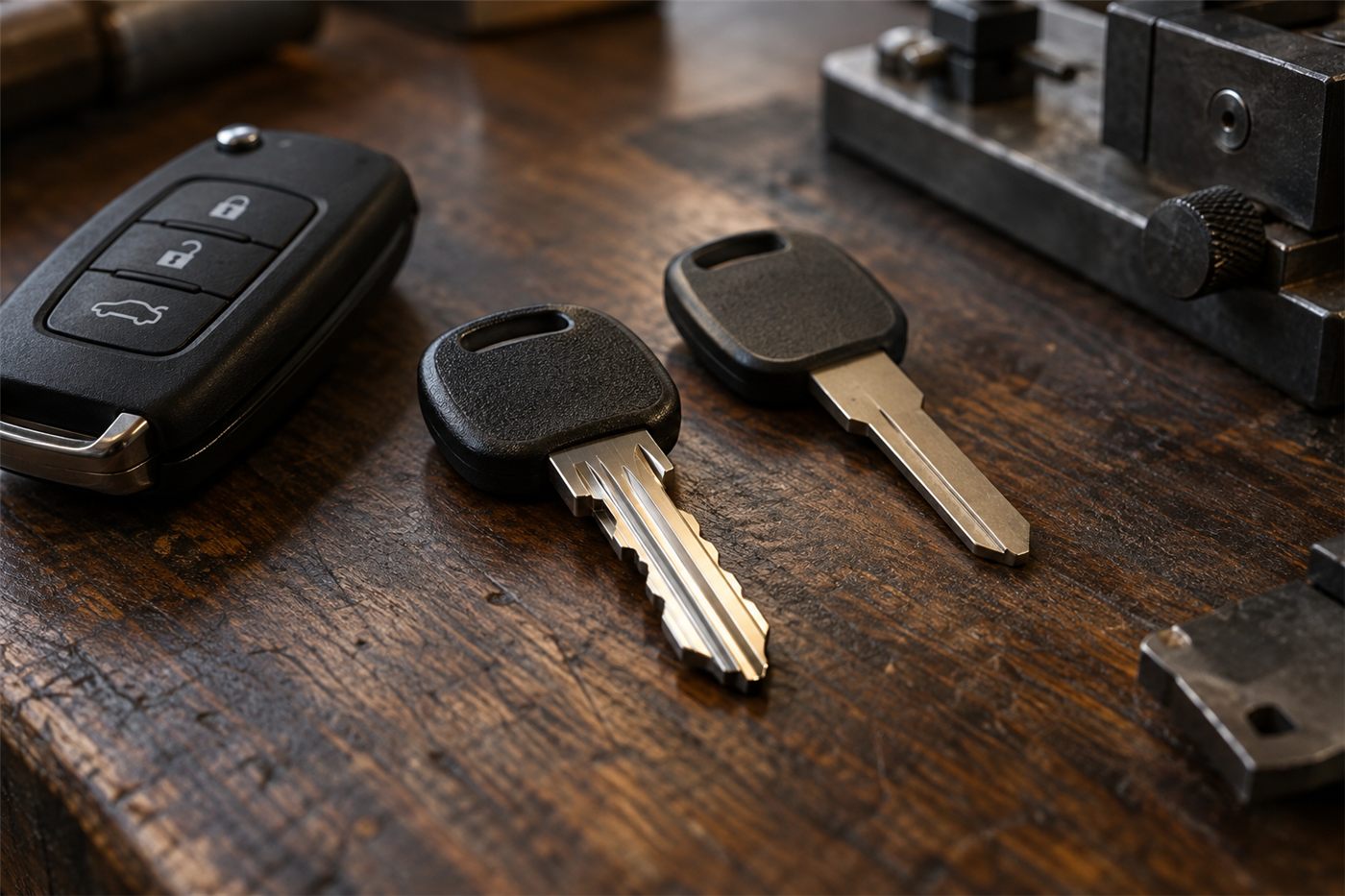
- Make a spare key. Keep it at home, or with someone nearby, not in the car. A spare turns the next lockout into a short wait. Our spare key guide covers why this is worth doing now.
- Set up the manufacturer app. If your car supports remote unlock, set it up and test it while nothing is wrong.
- Use remote start instead of idling unattended. If you warm the car in winter, a remote start keeps the car locked with the key in your hand.
- Learn your car's auto lock settings. Many cars let you change when doors lock automatically. Adjusting them can prevent a surprise lockout.
- Keep the key on you, always. Even when you step out for a moment to scrape ice or open a gate.
- Replace weak fob batteries promptly. Especially on push button cars that rely on detecting the fob inside.
Your own safety
Waiting safely, especially at night.
The car is fine. Make sure you are too.
Most of the attention in a running car lockout goes to the car. Spend a moment on yourself. If you are on a road shoulder, stand well away from traffic, behind a barrier if there is one, and never between the car and passing vehicles. Turn on your phone's location sharing with someone you trust, and tell them where you are.
At night in an empty lot, wait somewhere lit, ideally inside a nearby business or a friend's car. The running car will not go anywhere. If someone approaches offering to help open the car, be cautious. A person who unexpectedly produces tools and then asks for payment is not the same as a locksmith you called and can identify.
When help arrives, it is reasonable to confirm who they are before they touch the car. A reputable locksmith will tell you the company name when you call, and the person who arrives should be able to confirm the job you booked. If anything does not match, you are entitled to decline.
In winter, dress for waiting. People lock themselves out of a warming car precisely because it is cold, and they are often standing outside in house clothes. Go back indoors if you are at home, and watch the car through a window.
Cost
What affects the cost of opening a running car.
| Factor | Effect |
|---|---|
| Time of day | Late night and holiday visits usually cost more than daytime ones |
| Location | Easy access at home or in a lot is simpler than a tight garage or a busy roadside |
| Vehicle | Most cars are routine. A few luxury or specialist vehicles take more care. |
| Roadside coverage | May cover or reimburse part or all of the cost |
| Additional work | If a key is also lost or damaged, key replacement is a separate job |
A lockout should never become a big bill
Opening a locked car is a routine job. If a quote on the phone is vague, or climbs sharply once the technician arrives, ask why. Our locksmith scam guide explains what to watch for.
Delaware specifics
When and where it happens here.
Winter mornings everywhere. The single biggest cause in both counties is warming up the car on a frosty morning. Driveways in Middletown, Bear and Dover see a run of these calls on the first cold snap each year.
Gas stations along Route 13, Route 1 and I-95. Drivers step out to pump fuel, the door closes, and the car locks. Stay with the car and tell the station staff what has happened while you wait.
Farm gates and driveways in Kent County. Drivers hop out to open a gate with the engine running, and the auto lock catches them. Rural locations can mean a longer wait, so a spare kept at home, and a phone signal, matter more.
Summer road trips. Cars packed for a trip, running with the air conditioning on for a pet or a sleeping child, then locked by accident. In heat, if anyone is inside, call emergency services first.
The short version, if you read nothing else
If anyone is inside and at risk, call emergency services first. If not, the car is safe while you try the doors, look for a spare, check your app and call a locksmith. Keep away from exhaust in garages, and do not break glass unless someone is in danger.
Related
The neighbouring guides.
For any car lockout, see locked out of your car. If the car will not start once you are back in, key will not turn in the ignition may help.
Where we do this
Running car lockouts across both counties.
Questions
About keys locked in a running car.
Is it dangerous to leave the car running while I wait?
Not usually, if it is outdoors and nobody is inside. Modern engines idle for long periods without harm. Keep away from the exhaust, stay near the car, and never let it idle in a closed garage with people nearby.
Will the car run out of fuel?
Eventually, if the tank is low and help takes a long time. That is not dangerous, but it may mean the car needs fuel before it will restart.
A child is locked inside. Who do I call first?
Emergency services, immediately. They can act fastest and can break glass if needed. Stay with the car and keep the child calm.
Can you open the car without damaging it?
Yes, for most vehicles. We use a protected wedge and a long reach tool to unlock the door from inside, with paint and weatherstripping protected.
Why did my push button car lock with the fob inside?
Usually a weak fob battery, or the fob sitting where the car cannot read it well. Replace the fob battery after the lockout.
Should I break a window?
Only if someone inside is in danger and help cannot arrive in time. Otherwise, a lockout visit costs far less than a window and leaves the car secure.
Can my car be unlocked through an app?
Many newer vehicles support remote unlock through a manufacturer app or connected service, if it was set up in advance. Check now and set it up so it is ready next time.
Do you need proof the car is mine?
Yes. We check ID against the registration or insurance card before handing the car over.