
First steps
What to do in the first five minutes
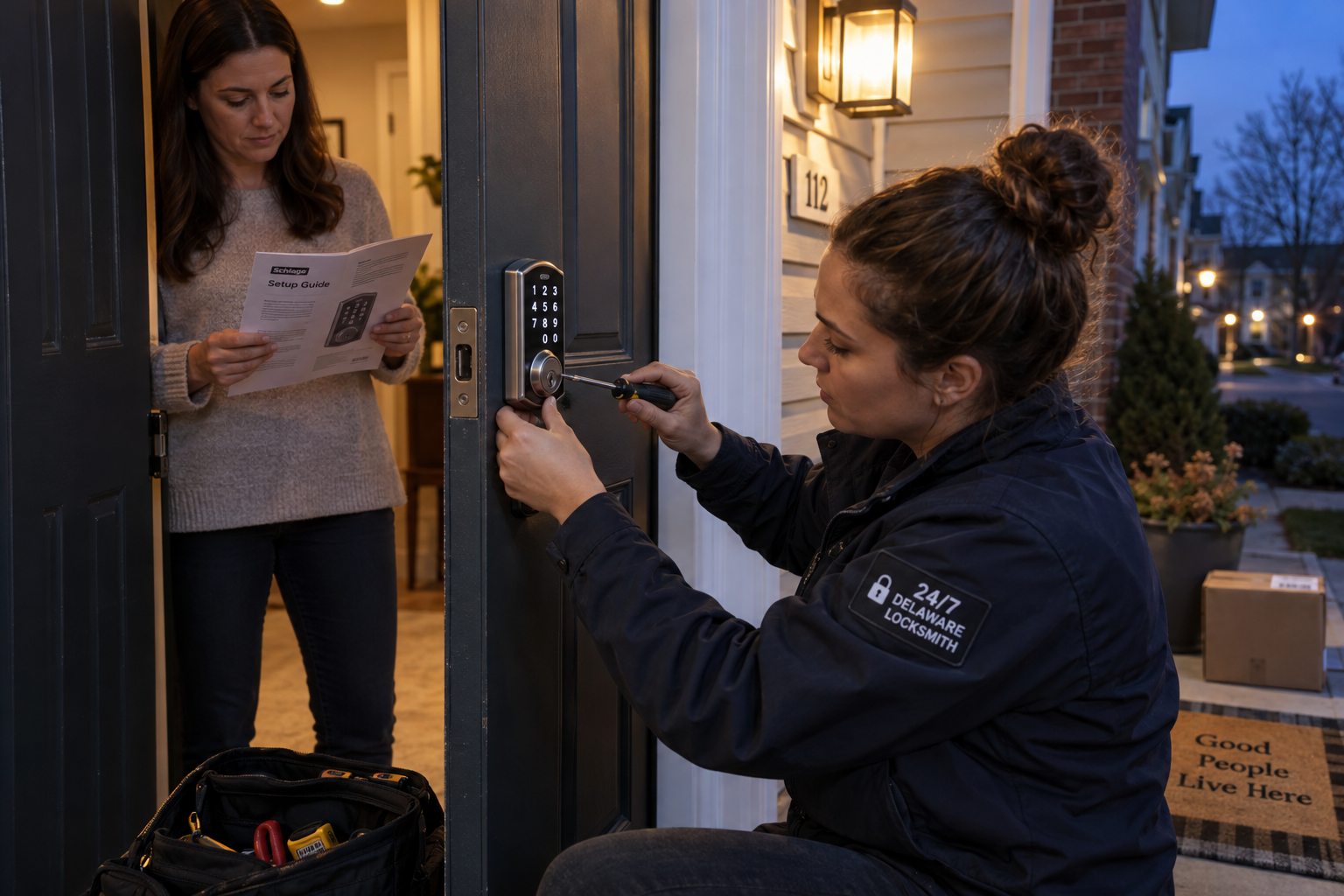
The fragment is easiest to remove before anyone tries to help.
Stop, look and keep the other half
When a key snaps, the first instinct is to grab the broken end with fingernails, tweezers or a pair of pliers. Sometimes that works, if the fragment sticks out far enough to grip firmly. More often, the tool slips and nudges the fragment a little deeper into the keyway, where the pins close around it and hold it tighter. Every attempt that fails makes the next one harder.
Look at the keyway first. If you can see a clear piece of the key sticking out, and you can grip it firmly without pushing, a steady straight pull may bring it out. If the fragment is flush with the face of the lock or below it, stop. Anything you push against it will drive it in further.
Keep the part of the key still in your hand. It shows us the key blank, the cuts closest to the head and sometimes a code stamped on the bow. Together with the extracted fragment, it lets us cut a new key accurately. People throw the handle away in frustration more often than you would think.
Notice the position of the lock. If the key broke while the lock was turned partway, the plug may be stuck off center, which changes how the fragment comes out. If the door is locked and you are outside, the call is a lockout as well as an extraction, and we handle both together.
Avoid these
What not to put in a lock with a broken key
- Superglue on a stick or another key. This is the most common home remedy and the most destructive. The glue runs past the fragment into the pins and the plug, sets hard, and turns a simple extraction into a lock replacement.
- A second key pushed in beside the first. The keyway has room for one key. A second one only presses the fragment against the pins and can bend it.
- Lubricant sprayed in to loosen it. A light shot of dry lubricant can help in some cases, but heavy oil sprayed into the keyway washes grit onto the pins and makes the fragment slippery and harder to grip. Leave it to us.
- Hammering or tapping the lock. Tapping can shift the pins, but it can also mushroom the face of the plug or drive the fragment deeper.
- Drilling. Drilling destroys the lock. It is never the first step for a broken key.
- Continuing to use the door. Slamming a door with a fragment inside can shift it. Secure the door another way until the key is out.
Why keys break
A snapped key is usually a symptom
Keys are made of brass or nickel silver, and they are designed to be strong enough for normal turning. A key that breaks was usually asked to do more than turn. Understanding which cause applies to your lock matters, because an extracted fragment and a new key will not help if the same thing breaks the next key in a month.
Worn keys and weakened blades. Every key flexes a little each time it turns. After years, the metal near the shoulder, where the blade meets the head, develops tiny cracks. Eventually it snaps under an ordinary turn. Old keys that have been in daily use for a decade are the most common cause of the calls we get.
Copies of copies. A key copied from a worn key, then copied again, drifts further from the lock each time. The cuts are slightly off, so the key only works with extra force. Extra force, applied every day, finds the weakest point.
A lock that has become stiff. Dirt, old oil, worn pins or a failing cylinder make a lock hard to turn. People compensate by twisting harder until something gives, and it is usually the key.
A door that pulls on the bolt. When a door sags or a strike drifts out of line, the bolt drags on the frame. The key has to overcome that drag as well as turn the lock. Many broken keys in deadbolts come from this. If you have to push or pull the door to lock it, that is the warning sign.
Cold weather. Metal becomes a little more brittle in severe cold, and locks that have taken in moisture can partly freeze. A key forced against a frozen lock on a January morning is a common Delaware call. Our winter lock problems guide covers how to thaw a lock safely.
The wrong key. A key for a similar lock may slide in and partly turn before binding. Forcing it can break it.
How it works
How we remove a broken key
We start by looking at the fragment and the keyway with good light. The goal is to understand where the fragment sits, which way the cuts face and whether the plug is centered. If the plug is turned off center, we bring it back to the position where a key can be removed before trying to extract anything.
Most extractions use thin, hardened tools with small hooks or barbs along one edge. The tool slides into the keyway alongside the fragment, catches the cuts of the key and draws it out. It takes patience rather than force. On some locks, a pair of these tools used together works better. On others, a spiral style extractor bites into the brass. The keyway shape and how the key broke decide which tool we use.
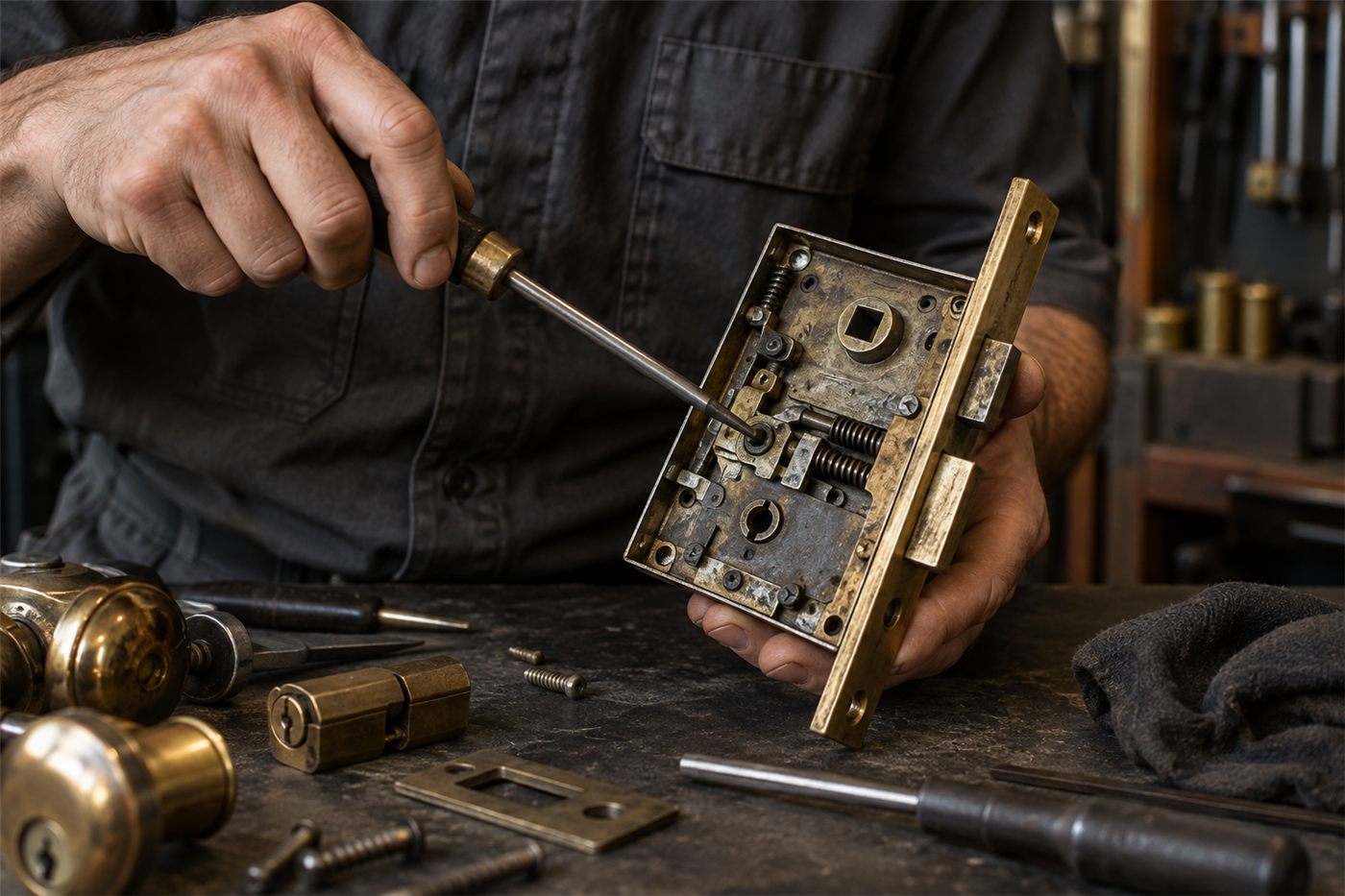
When a fragment will not come out through the keyway, for example when it is bent, wedged or trapped behind a damaged pin, we remove the cylinder from the door and work on it directly. That often lets us push the fragment out from the back of the plug or open the cylinder and remove it cleanly. The cylinder then goes back into the door with its pins intact.
After the fragment is out, we check the lock. We look for damaged pins, a worn plug, grit and signs that the lock was stiff before the key broke. We clean and lubricate the cylinder with a dry lubricant and test it with a key cut to the lock.
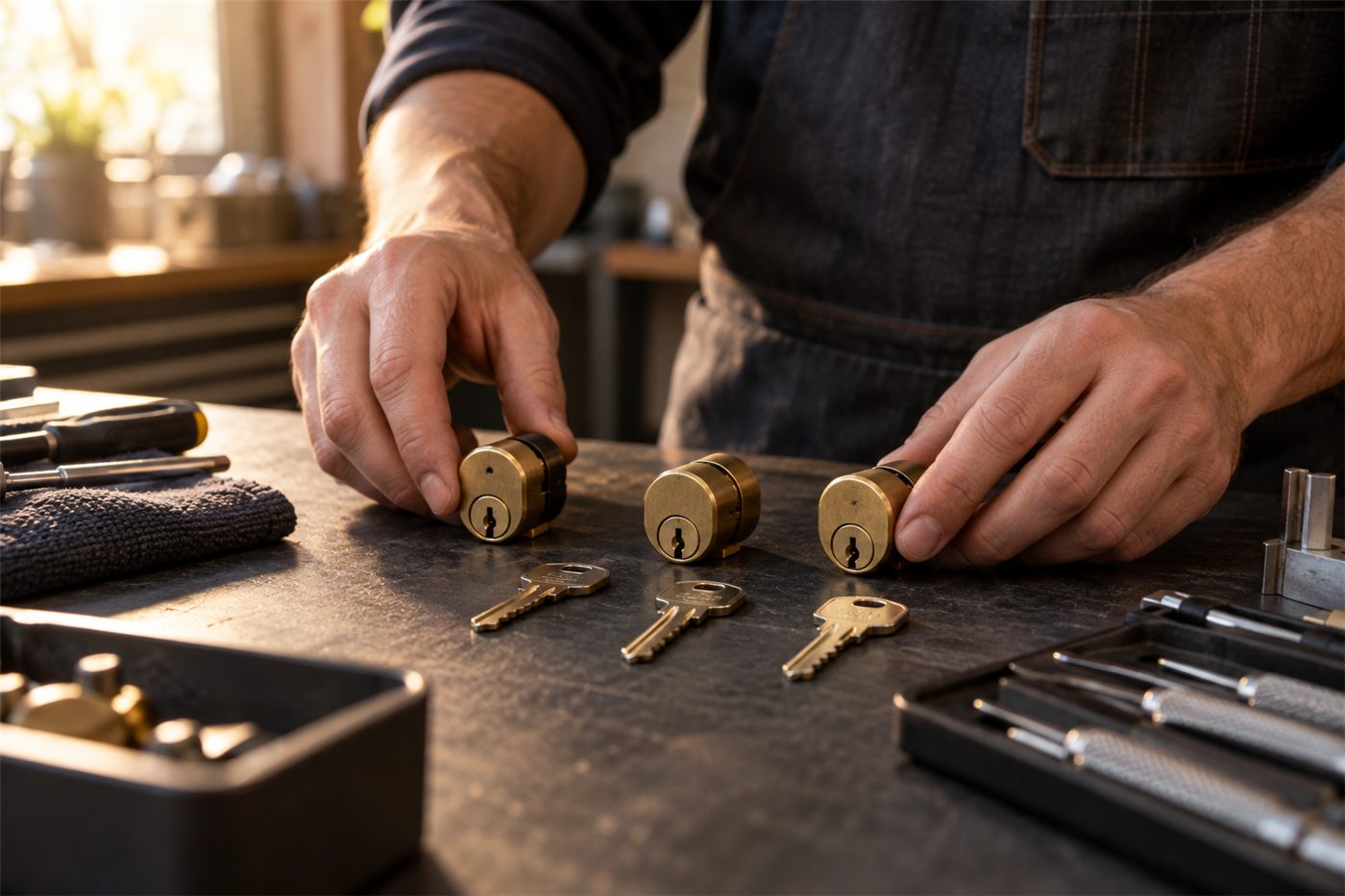
Finally, we cut a new key. Where possible we cut it to the lock's code or decode the lock itself, rather than copying the broken key, which may be worn. Then we test it several times, with the door open and closed. If the door was pulling on the bolt, we adjust the strike or the hinges so the next key does not meet the same fate.
Vehicles
Keys broken in car doors and ignitions
Different locks, different risks, same patience.
Car locks use wafers rather than pins, and many car keys are cut with a groove along the side rather than notches on the edge. Extraction tools for vehicles are shaped for those keyways. A key broken in a door lock is usually removed through the keyway, and if it cannot be, the door lock can often be removed from inside the door panel.
Ignition breaks need more care. An ignition with a broken key may be stuck in the on or accessory position, which can drain the battery. The fragment is removed through the keyway where possible, and the ignition is checked to be sure it still turns and releases properly. If the key broke because the ignition was worn and stiff, we discuss ignition repair rather than just replacing the key.
Many modern car keys contain a transponder chip in the head. If the head is intact, the chip is usually fine, and a new blade can often be cut and fitted to it or a new key programmed. If the head is cracked or lost, a new transponder key is needed. Our car key replacement page covers that.
Other locks
Padlocks, mailboxes, cabinets and commercial doors
Keys break in every kind of lock, not just front doors. Mailbox keys are thin and often old, and they snap in cluster box compartments and wall mounted mailboxes regularly. File cabinet and desk keys are small and easily bent. Padlock keys are often forced when the shackle is rusted. Commercial doors with heavy use see keys break in mortise cylinders and exit device cylinders, often during a busy opening or closing.
The approach is the same in each case. Look before acting, avoid pushing the fragment deeper, and let the right tool draw it out. Commercial mortise cylinders can usually be unscrewed from the lock body if the fragment will not come out through the keyway. Mailbox and cabinet locks are often simple enough that a replacement cylinder is practical if extraction damages the lock. For mailbox locks, remember that the compartment lock and the carrier's master door are different, and only the compartment lock is yours to service.
For businesses, a broken key at opening time is urgent. The door may be locked with staff and customers waiting, or unlocked and unable to be secured at closing. Tell us which it is when you call so we can plan around it.
Rentals and shared buildings
If you rent, a key broken in the unit door or the building entry is usually something the landlord or property manager wants to know about. Many leases ask tenants to report lock problems, and some managers have a preferred way of handling them. It is worth a quick call or message to the manager before or while we are on the way, especially if the lock may need a new cylinder. If the manager would rather send their own service, that is their decision to make, and we will tell you honestly whether the situation can wait.
In shared buildings, a key broken in a common entry door affects everyone who uses that door. Until the fragment is out, other residents may not be able to use their keys at all. If the door is part of a master key system, the replacement key has to fit that system, which means the building owner or manager needs to be involved. We extract the fragment the same way, but the new key or any new cylinder must come through whoever controls the system.
For condominium and townhouse communities, the same idea applies to shared mail areas, pool gates and storage rooms. Check who owns the lock before any part of it is replaced, and keep the extracted fragment and the head of the key so the owner can see what happened.
Outcomes
What usually happens after a broken key call
| Situation | Usual outcome |
|---|---|
| Old worn key snapped in a healthy lock | Fragment removed, lock cleaned, new key cut to the lock |
| Key snapped in a stiff or gritty lock | Fragment removed, cylinder serviced or repaired, new key cut |
| Key snapped because the door drags on the bolt | Fragment removed, strike or hinges adjusted, new key cut |
| Glue or debris already in the keyway | Cylinder often needs replacement or rekeying with a new cylinder |
| Key snapped in a car ignition | Fragment removed, ignition checked, new blade or programmed key as needed |
| Key snapped with the door locked and you outside | Entry gained, fragment removed, new key cut, door tested |
Prevention
How to keep the next key in one piece
Replace keys that show wear. Look at the shoulder of your most used keys. If you see a crack, a bend or cuts that have gone round and shiny, get a new key cut to the lock before the old one breaks. It costs far less trouble than an extraction.
Do not copy copies. When you need a new key, have it cut from the lock or from the original code rather than from the oldest key on the ring. Each generation of copying adds error.
Pay attention to stiffness. A lock that needs more effort than it used to is telling you something. Clean it with a dry lubricant, and if it stays stiff, have it looked at. Our key will not turn guide explains how to tell a lock problem from a door problem.
Fix the door. If you have to lift, push or pull the door for the deadbolt to lock, the strike or hinges need adjustment. That adjustment protects every key that will ever turn in that lock.
Lighten the ring. A heavy ring of keys hanging from a car ignition or a door lock puts constant leverage on the key in use. It wears ignitions and weakens keys.
Keep a spare. A spare key kept with a trusted person turns a broken key from an emergency into an inconvenience.
Local factors
Broken keys across New Castle and Kent
Old locks, cold mornings and busy doors.
Older homes in Wilmington, Elsmere, Claymont and New Castle often have original locks and keys that have been copied many times over the decades. These produce a steady number of broken key calls, usually on a key that finally gave out after years of extra force.
Apartment complexes in Newark, Bear, Glasgow and Dover see keys break in mailboxes, building entry doors and unit deadbolts, often with a tenant standing outside late at night.
Cold snaps across Kent County bring calls from farms, homes and businesses where a key was forced against a partly frozen lock. Commercial areas along Route 13 and Route 40 see keys break in heavily used storefront and back doors.
Questions
Frequently asked
Will I need a new lock after a key breaks inside?
Usually not. Most fragments can be removed without damaging the lock. A new lock is needed when the lock was already failing, when the fragment is jammed behind broken pins, or when glue or debris was put into the keyway before we arrived.
Can I use superglue to pull the key out?
We strongly advise against it. Glue flows past the fragment into the pins and plug and sets hard. What was a simple extraction becomes a lock replacement.
Can you make a new key from the broken pieces?
Often, yes. The head and the extracted fragment together show the full cut pattern. Where the key was worn, we prefer to cut the new key to the lock or its code so the new key is accurate rather than a copy of the wear.
The key broke with the door locked. Can you still get me in?
Yes. We handle the lockout and the extraction together, opening the door without damage whenever possible and then removing the fragment and cutting a new key.
Why did my key break when it was not even old?
A newer key usually breaks because the lock or the door made it work too hard. A stiff cylinder, a strike that drags on the bolt, a partly frozen lock or the wrong key are the common causes. We look for the cause while we are there.
My car key broke in the ignition. Will the car still start?
Not until the fragment is removed and a working key is available. If the key has a transponder chip, the new key must be programmed or the chip transferred. We check the ignition after removing the fragment to make sure it was not the cause.
Is it safe to leave the fragment in overnight?
It is usually safe to leave it until we arrive, as long as the door is secure. Avoid using the lock, slamming the door or trying more tools, since each of those can make the extraction harder.
Can you remove a key broken in a padlock or mailbox?
Yes. The same extraction methods work on padlocks, mailbox compartments, file cabinets and desks. On simple locks, replacing the cylinder is sometimes more practical than extracting a badly wedged fragment.
Key snapped in the lock?
Call before anyone reaches for the glue. We will pull the fragment and cut you a key that works.